$5.00M
1
2

$5.00M
1
2
Trader mode: Actionable analysis for identifying opportunities and edge
This market will resolve to "Yes" if either Israel initiates a drone, missile, or air strike on Iranian soil or any official Iranian embassy or consulate, or Iran initiates a drone, missile, or air strike on Israeli soil or any official Israeli embassy or consulate, by 11:59 PM ET on the listed date. Otherwise, this market will resolve to "No". For the purposes of this market, a qualifying "strike" is defined as the use of aerial bombs, drones or missiles (including cruise or ballistic missiles
Prediction markets currently show a near-universal belief that the current period of quiet between Israel and Iran will not last. Traders on Polymarket are giving a 100% probability that either nation will launch a drone, missile, or air strike against the other's soil or official diplomatic buildings by June 30, 2026. In simple terms, the collective intelligence of thousands of bettors sees another military exchange as essentially guaranteed within the next two years.
The market's certainty stems from a long-running shadow war that escalated into direct attacks this year. In April 2024, Iran launched over 300 drones and missiles at Israel in retaliation for a strike on an Iranian diplomatic compound in Syria. Israel then responded with a limited strike inside Iran. This established a new, dangerous precedent of direct strikes between the two nations.
Three main factors support the market's bleak outlook. First, the core conflict remains unresolved. Israel views Iran's nuclear program and its support for militant groups like Hezbollah as existential threats. Iran is committed to opposing Israeli influence in the region. Second, both governments have shown a willingness to use military force for deterrence. Third, the "rules of engagement" have changed. The April 2024 strikes crossed a previous red line, making future direct action more politically thinkable for both sides.
While the market expects an incident well before the June 2026 deadline, several shorter-term events could trigger it. Any major action by Israel against Iranian nuclear facilities or senior military commanders would be a clear catalyst. Similarly, a significant attack by an Iran-backed group like Hezbollah on Israel could provoke a direct Israeli strike on Iran in response. Political instability in either country, such as a change in leadership, could also alter calculations and increase risks. The market will react sharply to any official threats or military movements reported by credible sources.
Prediction markets have a strong track record in forecasting geopolitical events with clear, binary outcomes, often outperforming expert polls. However, this forecast comes with significant caveats. The 100% probability is partly a function of how these markets work; traders are effectively betting on when a strike will happen, not if. The real uncertainty is about timing and scale. Markets can also be slow to price in successful diplomacy, though current odds suggest traders see little chance of a lasting diplomatic breakthrough. This prediction reflects a sober consensus that the underlying tensions are too severe for the recent calm to hold.
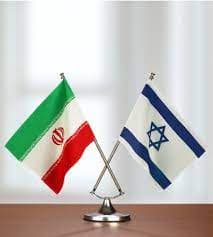
Prediction markets are pricing in near certainty that the Israel-Iran ceasefire will be broken. On Polymarket, the contract "Israel x Iran ceasefire broken by June 30, 2026?" is trading at 100%. This price indicates traders see a military strike between the two nations as virtually guaranteed within the next 31 days. The market has attracted $5.0 million in volume, signaling high trader conviction and liquidity. This extreme pricing reflects a consensus that the current period of restraint is a temporary pause, not a durable peace.
The 100% price is a direct reaction to the unprecedented escalation in April 2024, when Iran launched a direct missile and drone barrage from its own territory against Israel. This crossed a long-standing threshold of shadow warfare. Israel's calibrated response, striking an air defense radar site inside Iran, established a new precedent for direct state-on-state attacks. Traders are betting this precedent has permanently rewritten the rules of engagement. The market sees the stated red lines from both governments, particularly regarding nuclear advancements and attacks on diplomats, as too volatile to hold. Historical patterns show that periods of heightened tension between these adversaries, especially after a direct exchange, rarely de-escalate to a stable status quo.
Given the current 100% price, the only movement possible is downward. A significant de-escalation would be required to shift this market. Key dates to watch are the expiration on March 31, 2026, and the June 30, 2026, event deadline. A sustained period of public diplomatic dialogue, perhaps mediated by a major power, could introduce doubt. More likely, a specific event could trigger the predicted strike sooner. The market is heavily focused on two catalysts: an Israeli strike on Iran's nuclear facilities, which recent IAEA reports suggest are advancing, or an Iranian-backed militia attack that Israel attributes directly to Tehran. The market's certainty suggests traders believe diplomatic channels are too weak to prevent one of these scenarios from materializing within the contract's timeframe.
AI-generated analysis based on market data. Not financial advice.
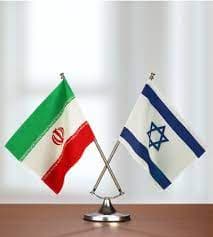
This prediction market addresses the possibility of renewed direct military conflict between Israel and Iran. It specifically tracks whether either nation will conduct a drone, missile, or air strike against the other's sovereign territory or official diplomatic missions by a specified deadline. The market definition includes strikes using aerial bombs, drones, or cruise and ballistic missiles. The context for this market is a period of heightened tension following a significant escalation in April 2024, when Iran launched a direct missile and drone attack on Israel from its own soil, and Israel responded with a limited counterstrike on Iranian military infrastructure. This exchange broke a long-standing precedent of shadow warfare and proxy conflict, creating a new and volatile phase in their rivalry. Interest in this market stems from the global economic and security implications of open war between two regional powers, one a nuclear-armed state and the other widely believed to be pursuing nuclear capabilities. Analysts monitor diplomatic channels, military posturing, and actions by allied proxy groups to assess the risk of another breach in the undeclared ceasefire that followed the April exchanges.
The Israeli-Iranian conflict is a decades-long strategic rivalry that has largely been fought through proxies and covert operations, avoiding direct state-on-state military engagement. Iran's 1979 Islamic Revolution established a regime ideologically opposed to Israel's existence. Iran subsequently built a network of allied militias across the Middle East, including Hezbollah in Lebanon and various groups in Syria, Iraq, and Yemen, to pressure Israel indirectly. Israel, for its part, has conducted numerous airstrikes against Iranian weapons shipments and military infrastructure in Syria, and is widely believed to be responsible for sabotage attacks inside Iran, such as the assassination of nuclear scientists and cyberattacks on nuclear facilities. A major precedent for direct confrontation was set on April 13-14, 2024. Iran launched over 300 drones and missiles directly from its territory at Israel in retaliation for an April 1 airstrike on an Iranian diplomatic compound in Damascus that killed senior IRGC officers. Israel, with allied help, intercepted most of the projectiles. Days later, on April 19, Israel conducted a limited strike on an Iranian air defense radar site near Isfahan. This exchange marked the first time Iran attacked Israel from its own soil and Israel struck back directly on Iranian territory, breaking a long-standing taboo.
A renewed strike breaking the current tense ceasefire could trigger a full-scale regional war, drawing in Hezbollah and other Iranian proxies and potentially involving the United States. Such a conflict would immediately threaten global oil supplies, as approximately 20% of the world's oil passes through the Strait of Hormuz, which Iran could attempt to block. Major shipping routes in the Red Sea, already disrupted by Houthi attacks, would face further instability. The humanitarian impact would be severe, with potential for high casualties in Israel, Iran, and neighboring countries. Politically, a war could destabilize governments across the Middle East, strain the NATO alliance over differing levels of support for Israel, and derail diplomatic efforts on other regional issues. For global markets, the certainty of spiking oil prices and supply chain disruptions would fuel inflation and threaten economic stability worldwide.
As of late April 2024, a fragile de-escalation is in place following the direct exchanges in mid-April. Israeli officials have signaled that their response to Iran's attack is complete for now, but they reserve the right to act against future aggression. Iranian officials have stated they consider the matter concluded unless Israel provokes them again. However, tensions remain extremely high. Low-level conflict continues on other fronts, particularly between Israel and Hezbollah along the Lebanon-Israel border, and between Israel and Iranian proxies in Syria. The international community, led by the United States and European powers, is engaged in intense diplomacy to prevent any miscalculation that could reignite direct strikes.
The immediate trigger was an Israeli airstrike on April 1, 2024, that destroyed Iran's consulate building in Damascus, Syria, killing seven Iranian military officials, including senior commanders from the Islamic Revolutionary Guard Corps. Iran stated this attack on its diplomatic facility justified its direct retaliation against Israel two weeks later.
Prior to April 2024, Israel had never publicly claimed a direct military strike on Iranian soil. Its campaign against Iran's nuclear program and regional influence was conducted through covert operations inside Iran and airstrikes on Iranian assets and proxies in third countries like Syria, Iraq, and Lebanon.
The United States is Israel's principal military ally and provided critical assistance in intercepting Iranian drones and missiles in April 2024. Simultaneously, the U.S. has pressured Israel to show restraint to avoid a wider war. The U.S. maintains significant military forces in the region which could be drawn into a conflict.
Yes, the April 2024 crisis demonstrates this. The Israeli strike on Iran's consulate in Damascus was viewed by Iran as an attack on its sovereign territory, due to the diplomatic status of the facility. This perception directly led to Iran's unprecedented attack on Israeli soil, bringing the two countries to the brink of war.
Iran's primary capabilities include a large arsenal of ballistic missiles (like the Emad and Sejjil), cruise missiles, and drones (such as the Shahed-136). It also commands a network of proxy forces on Israel's borders, most formidably Hezbollah in Lebanon, which possesses a vast rocket arsenal capable of striking anywhere in Israel.
Educational content is AI-generated and sourced from Wikipedia. It should not be considered financial advice.
2 markets tracked

No data available
| Market | Platform | Price |
|---|---|---|
![]() | Poly | 100% |
![]() | Poly | 99% |


No related news found
Add this market to your website
<iframe src="https://predictpedia.com/embed/5TO_fU" width="400" height="160" frameborder="0" style="border-radius: 8px; max-width: 100%;" title="Israel x Iran ceasefire broken by...? "></iframe>