$9.49M
1
3

$9.49M
1
3
Trader mode: Actionable analysis for identifying opportunities and edge
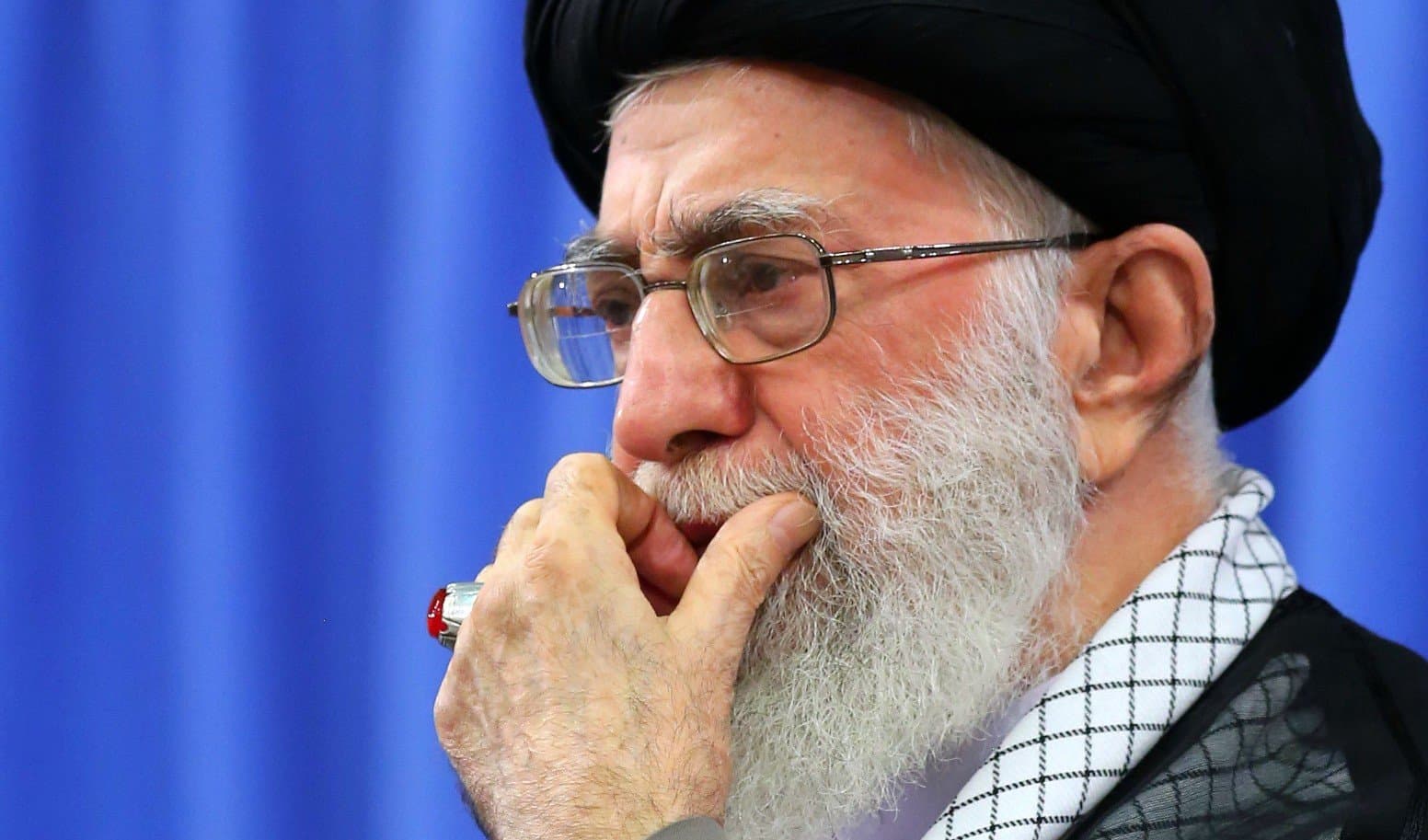
This market will resolve to "Yes" if it is confirmed that Ali Khamenei has left Iran for any length of time by January 9, 2026, 11:59 PM ET. Otherwise, this market will resolve to "No". In cases where Ali Khamenei may have exited Iranian airspace on a plane, he must be confirmed to have exited the plane in a country other than Iran for this market to resolve to "Yes". If Ali Khamenei exits Iranian maritime territory on a boat to international waters, this market may resolve to "Yes". If it is
Prediction markets currently give a roughly 1 in 3 chance that Iran's Supreme Leader, Ali Khamenei, will leave the country by the end of this year. With about 37 cents paying out a dollar for a "yes" outcome, traders collectively see a departure as unlikely, but not impossible. This reflects a significant level of uncertainty around the travel plans of a leader who almost never leaves Iran.
Two main factors explain the low probability. First, there is strong historical precedent. Khamenei, who is 85, has not traveled outside Iran since 1989, the year he became Supreme Leader. His last known trip was a pilgrimage to Saudi Arabia over three decades ago. His sustained absence from the global stage is a well-established norm.
Second, his travel is constrained by practical security concerns and political symbolism. As the ultimate authority in Iran's system, his presence inside the country is seen as vital for stability. A departure could be interpreted as a sign of weakness or crisis, which the government would likely want to avoid. While rumors about his health occasionally surface, the regime has a strong incentive to demonstrate his control from within Iran's borders.
The market resolves on December 31, 2024, so the timeline is immediate. The main event to watch is any official announcement from Iranian state media regarding Khamenei's schedule or location. Unverified social media reports or rumors from opposition groups might cause temporary shifts in the market odds, but confirmation would require an official source or credible international news verification. A sudden, unexplained absence from public view in the coming weeks would be the primary signal that could increase market probability.
Markets are generally reliable at aggregating known information, like the decades-long precedent of Khamenei not traveling. For an event this specific and rare, however, the prediction is more a reflection of that established pattern than an insight into secret plans. The main limitation is that true "black swan" events, like a sudden medical evacuation or an unforeseen political rupture, are by definition almost impossible to price accurately in advance. The market is good at telling us what the baseline expectation is, but major surprises can still happen.
Prediction markets assign a 37% probability that Supreme Leader Ali Khamenei will leave Iran by December 31. This price indicates traders view his departure as unlikely within the timeframe. With $7.8 million in total volume across related markets, this is a highly liquid contract, suggesting significant capital and attention are focused on the question. The low probability reflects a strong consensus that Khamenei will remain inside the country.
The 37% price is anchored in Khamenei's historical behavior and the political structure of Iran. The Supreme Leader has not traveled abroad since 1989, a 35-year precedent that shapes market expectations. His role as the ultimate authority within Iran's system reduces any functional need for foreign travel, and his advanced age and reported health issues make complex international logistics less probable. Furthermore, leaving the country could be perceived internally as a sign of instability or vulnerability, especially during ongoing regional tensions and domestic unrest. Markets are pricing in the immense symbolic and security risks such a move would entail for the regime.
A sudden, severe escalation in regional conflict that directly threatens Tehran could force a reassessment of security protocols, making a contingency evacuation plausible. Unverifiable rumors about a significant deterioration in Khamenei's health could also cause temporary volatility in the market, as traders speculate on the need for specialized medical treatment unavailable in Iran. However, any sustained price movement toward "Yes" would require credible, official confirmation of travel plans, which most analysts consider a remote scenario. The market will remain sensitive to any visual evidence or high-level diplomatic reports suggesting preparations for a trip, but the overwhelming institutional inertia favors the "No" outcome.
AI-generated analysis based on market data. Not financial advice.
This prediction market addresses whether Iran's Supreme Leader Ali Khamenei will physically leave the country by January 9, 2026. The market resolves to 'Yes' if Khamenei is confirmed to have departed Iran for any duration, including brief visits to other nations or travel to international waters. The question is significant because Khamenei has not left Iran since becoming Supreme Leader in 1989, a period exceeding 35 years. His travel history stands in contrast to other global religious and political leaders who undertake regular state visits. The topic gained attention in recent years due to Khamenei's advanced age, reported health issues, and the political instability in the Middle East. Observers monitor this because a departure could signal a major shift in Iranian policy, a health crisis requiring specialized treatment abroad, or an attempt to secure assets or family members outside the country. The market essentially bets on whether a 35-year pattern of strict domestic confinement will be broken within the specified timeframe.
Ali Khamenei succeeded Ruhollah Khomeini as Supreme Leader on June 4, 1989. Public records and Iranian state media indicate he has not traveled internationally since that date. His last known trip abroad was a 1989 visit to the Soviet Union as president, before his elevation to Supreme Leader. This self-imposed confinement established a powerful norm. His predecessor, Khomeini, also traveled very rarely after the 1979 Revolution, spending most of his time in Tehran or Qom. The precedent is deeply rooted in the Islamic Republic's ideology, which views the Supreme Leader as the guardian of the revolution who must remain close to its heartland. Historically, other Iranian heads of state, like the Shah, traveled extensively, which revolutionaries criticized as being out of touch. Khamenei's stay-at-home leadership is a deliberate contrast. The only similar modern precedent is North Korea's Kim Il-sung, who rarely traveled after the 1950s. This history makes the prospect of Khamenei leaving a potential break with a core tradition of theocratic rule in Iran.
Khamenei leaving Iran would have profound political and symbolic consequences. Domestically, it could be interpreted as a sign of weakness, instability, or a major health emergency, potentially triggering internal power struggles. It could also suggest a dramatic foreign policy shift, such as seeking direct high-level negotiations previously deemed unnecessary. For regional adversaries like Israel and Saudi Arabia, his presence abroad, even temporarily, could alter security calculations and intelligence operations. The event would have immediate economic implications. Markets would react to the uncertainty, affecting global oil prices and regional currency valuations. Iranian citizens might see it as a pivotal moment, either hoping for change or fearing chaos. The clerical establishment would need to craft a narrative to explain the departure without undermining the doctrine of the Supreme Leader's omnipresent leadership.
As of late 2024, Ali Khamenei remains in Iran. He continues to make public appearances in Tehran and Qom, though these are carefully managed. In September 2024, he gave a speech acknowledging economic difficulties but reaffirming the state's resilience. International media and intelligence agencies periodically report on his health, but no official Iranian source has indicated any plan for foreign travel. Regional tensions, particularly the conflict between Israel and Hamas, have reinforced his role as a symbolic leader of 'Axis of Resistance' factions, a role typically managed from within Iran.
Ali Khamenei has not traveled outside Iran since becoming Supreme Leader in 1989. His last known trip abroad was in 1989, before his elevation, when he visited the Soviet Union as president.
Analysts cite several reasons: immense security risks, the ideological stance of the revolution which emphasizes leadership from within the country, the desire to avoid perceived subjugation to international norms, and the practical consolidation of power by remaining at the center of the political system.
It would trigger a complex constitutional succession process in an abnormal context. The Assembly of Experts would need to convene to select a new Supreme Leader while the body of the previous leader was abroad, creating a potential legitimacy and procedural crisis.
The most likely destinations would be allied states such as Syria, where Iran has a major military presence, or possibly Russia for strategic talks. Medical travel might target a country like Japan or Germany, though this would carry significant political risk.
The Iranian government does not release detailed medical reports. Western intelligence agencies and media, citing sources, have reported past issues including prostate cancer surgery in 2014. His public appearances are scrutinized for signs of frailty, but his exact health status is not publicly verifiable.
Educational content is AI-generated and sourced from Wikipedia. It should not be considered financial advice.
3 markets tracked

No data available
| Market | Platform | Price |
|---|---|---|
![]() | Poly | 1% |
![]() | Poly | 1% |
![]() | Poly | 0% |


No related news found
Add this market to your website
<iframe src="https://predictpedia.com/embed/7iuyyQ" width="400" height="160" frameborder="0" style="border-radius: 8px; max-width: 100%;" title="Will Khamenei leave Iran by...?"></iframe>