$214.18K
1
1

1 market tracked

No data available
| Market | Platform | Price |
|---|---|---|
![]() | Poly | 38% |
Trader mode: Actionable analysis for identifying opportunities and edge
For the purposes of this market, a Category 4 hurricane is a hurricane with maximum sustained winds of 130-156 mph, as described at https://www.nhc.noaa.gov/aboutsshws.php, and a hurricane landfall is said to occur when the hurricane's surface center intersects with the coastline, as described at https://www.nhc.noaa.gov/aboutgloss.shtml#LANDFALL. This market will resolve to "Yes" if any storm makes landfall in the conterminous United States as a Category 4 hurricane, as reported in official N
AI-generated analysis based on market data. Not financial advice.
$214.18K
1
1
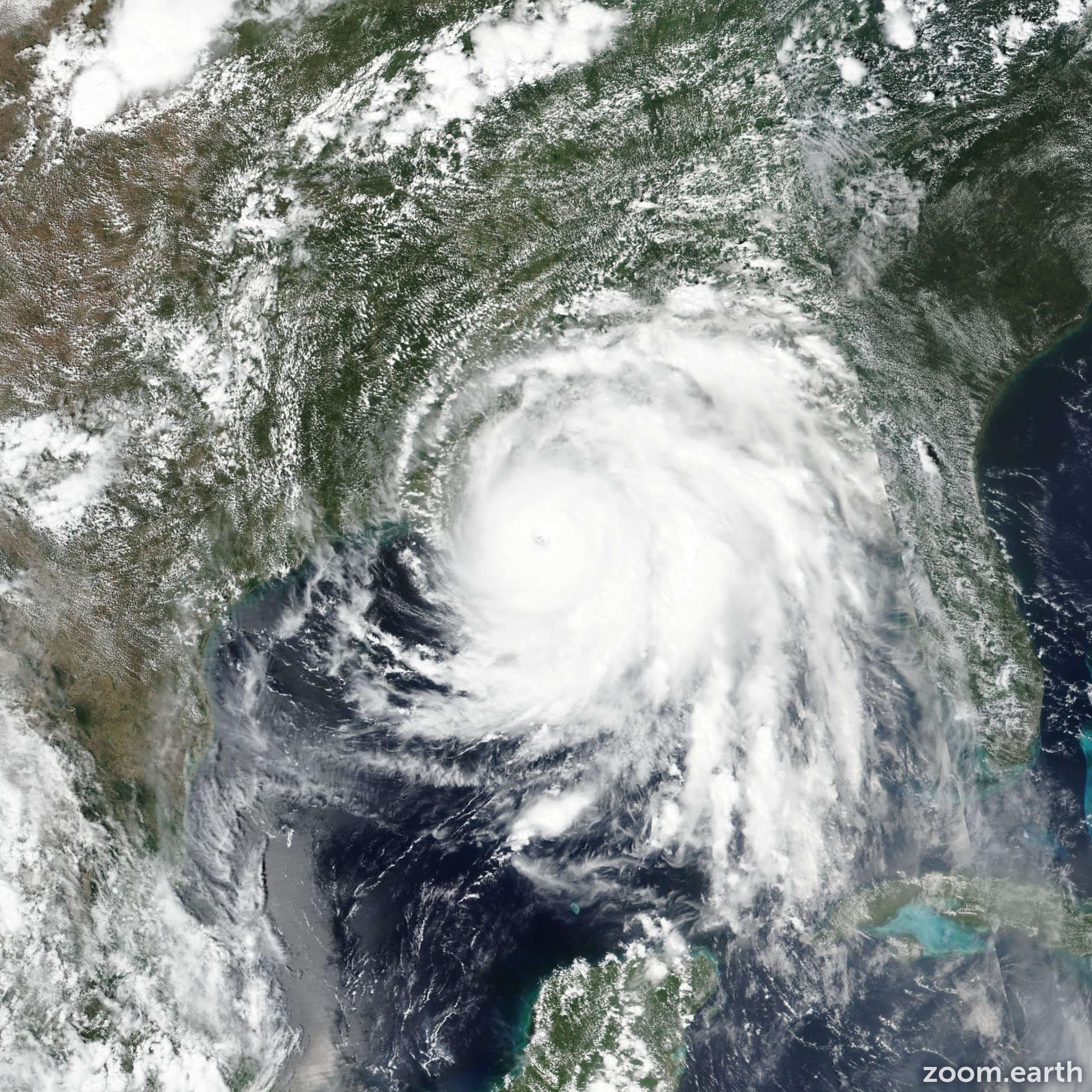
This prediction market topic concerns the probability of a Category 4 hurricane making landfall in the conterminous United States before the end of 2026. A Category 4 hurricane is defined by the Saffir-Simpson Hurricane Wind Scale as having maximum sustained winds between 130 and 156 mph, capable of causing catastrophic damage. Landfall is the specific meteorological event when the storm's center crosses a coastline. The market resolves based on official reports from the National Hurricane Center (NHC), a division of the National Oceanic and Atmospheric Administration (NOAA). This topic sits at the intersection of climatology, meteorology, and risk assessment, attracting interest from insurers, emergency managers, climate scientists, and the general public concerned with coastal resilience. Recent active Atlantic hurricane seasons and evolving climate patterns, including elevated sea surface temperatures, have heightened focus on the frequency and intensity of major landfalling hurricanes. The question is not merely academic, it has direct implications for multi-billion dollar industries and public safety planning across vulnerable regions from Texas to Maine.
The historical record of Category 4 U.S. landfalls provides crucial context for assessing future probability. Since 1851, approximately 35 hurricanes of Category 4 or 5 strength have made landfall in the U.S. Notable Category 4 landfalls include the 1900 Galveston Hurricane, the 1935 Labor Day Hurricane in the Florida Keys, Hurricane Hugo in South Carolina (1989), Hurricane Harvey in Texas (2017), Hurricane Ian in Florida (2022), and Hurricane Ida in Louisiana (2021). The frequency of these intense landfalls appears to have increased in recent decades, a subject of ongoing scientific research. The period from 2017 to 2022 was particularly active, with four Category 4 or 5 landfalls (Harvey, Michael, Ida, Ian). Prior to that, the U.S. experienced an unprecedented 12-year major hurricane landfall drought from 2006 (Wilma) to 2017 (Harvey), demonstrating the high interannual variability inherent in hurricane climatology. This historical volatility makes long-term prediction challenging but underscores the persistent threat to coastlines.
The potential landfall of a Category 4 hurricane carries profound economic, social, and human consequences. Economically, a single event can cause well over $100 billion in total damage and insured losses in the tens of billions, destabilizing regional economies, spiking insurance rates, and straining federal disaster relief funds. The social impact includes potential for massive displacement of populations, long-term trauma for affected communities, and inequitable recovery outcomes that often disproportionately affect vulnerable populations. Politically, the response to such a disaster can define presidencies and gubernatorial terms, while also forcing difficult policy debates about climate adaptation, building codes, and the sustainability of coastal development. For industries from energy and shipping to agriculture and tourism, a landfall represents a massive operational and financial disruption with ripple effects across national and global supply chains.
As of late 2024, the Atlantic basin remains in an active era for hurricane activity, influenced by multi-decadal climate patterns. The 2024 hurricane season was forecast by NOAA to be exceptionally active, primarily due to record-warm Atlantic sea surface temperatures and the expected transition from El Niño to La Niña conditions. La Niña tends to reduce wind shear in the Atlantic, creating a more favorable environment for hurricane formation and intensification. Several early-season forecasts from academic groups like Colorado State University also predicted a high number of major hurricanes. The memory of recent devastating Category 4 landfalls like Ian (2022) and Ida (2021) remains fresh in emergency management planning. Research continues to investigate links between anthropogenic climate change and observed trends in hurricane intensification rates and peak wind speeds.
The Saffir-Simpson scale distinguishes them by wind speed. A Category 4 hurricane has sustained winds of 130-156 mph, while a Category 5 has winds of 157 mph or higher. Both cause catastrophic damage, but a Cat 5 represents the highest potential for structural failure and devastation.
Florida is the most hurricane-prone state and leads in major hurricane (Category 3+) landfalls. Since 1851, Florida has experienced over 40 such landfalls, nearly twice as many as the next highest state, Texas, due to its extensive coastline and position in the Atlantic basin.
While the total number of hurricanes may not increase, a strong scientific consensus, reflected in IPCC reports, indicates that warming oceans and atmosphere are likely increasing the proportion of storms that reach major hurricane intensity (Category 3, 4, or 5) and are contributing to higher rainfall rates.
The 1935 Labor Day Hurricane that struck the Florida Keys is considered the strongest at landfall, with estimated sustained winds of 185 mph, making it a Category 5. More recently, Hurricane Michael (2018) made landfall in Florida with 160 mph winds, also as a Category 5.
Intensity forecasting remains a significant challenge. The NHC's average intensity forecast error for 48-hour predictions is about 15-20 mph. Rapid intensification, where winds increase by 35+ mph in 24 hours, is particularly difficult to predict and is a critical factor in whether a storm reaches Category 4 strength before landfall.
Yes, this is common. Factors like cooler coastal waters, dry air intrusion, or interaction with land can cause a hurricane to weaken rapidly in the final hours before landfall. The prediction market specifically requires the storm to be a Category 4 at the moment its center crosses the coastline.
Educational content is AI-generated and sourced from Wikipedia. It should not be considered financial advice.
Share your predictions and analysis with other traders. Coming soon!

No related news found
Add this market to your website
<iframe src="https://predictpedia.com/embed/B31ZZy" width="400" height="160" frameborder="0" style="border-radius: 8px; max-width: 100%;" title="Will any Category 4 hurricane make landfall in the US in before 2027?"></iframe>