This event has ended. Showing historical data.

$6.15M
1
4

$6.15M
1
4
Trader mode: Actionable analysis for identifying opportunities and edge
This market will resolve to "Yes" if Israel initiates a drone, missile, or air strike on Lebanese soil on the listed date Israel Standard Time (IST). Otherwise, this market will resolve to "No". For the purposes of this market, a qualifying "strike" is defined as the use of aerial bombs, drones or missiles (including cruise or ballistic missiles) launched by Israeli military forces that impact Lebanon ground territory. A strike on any area within the terrestrial territory of Lebanon counts, in
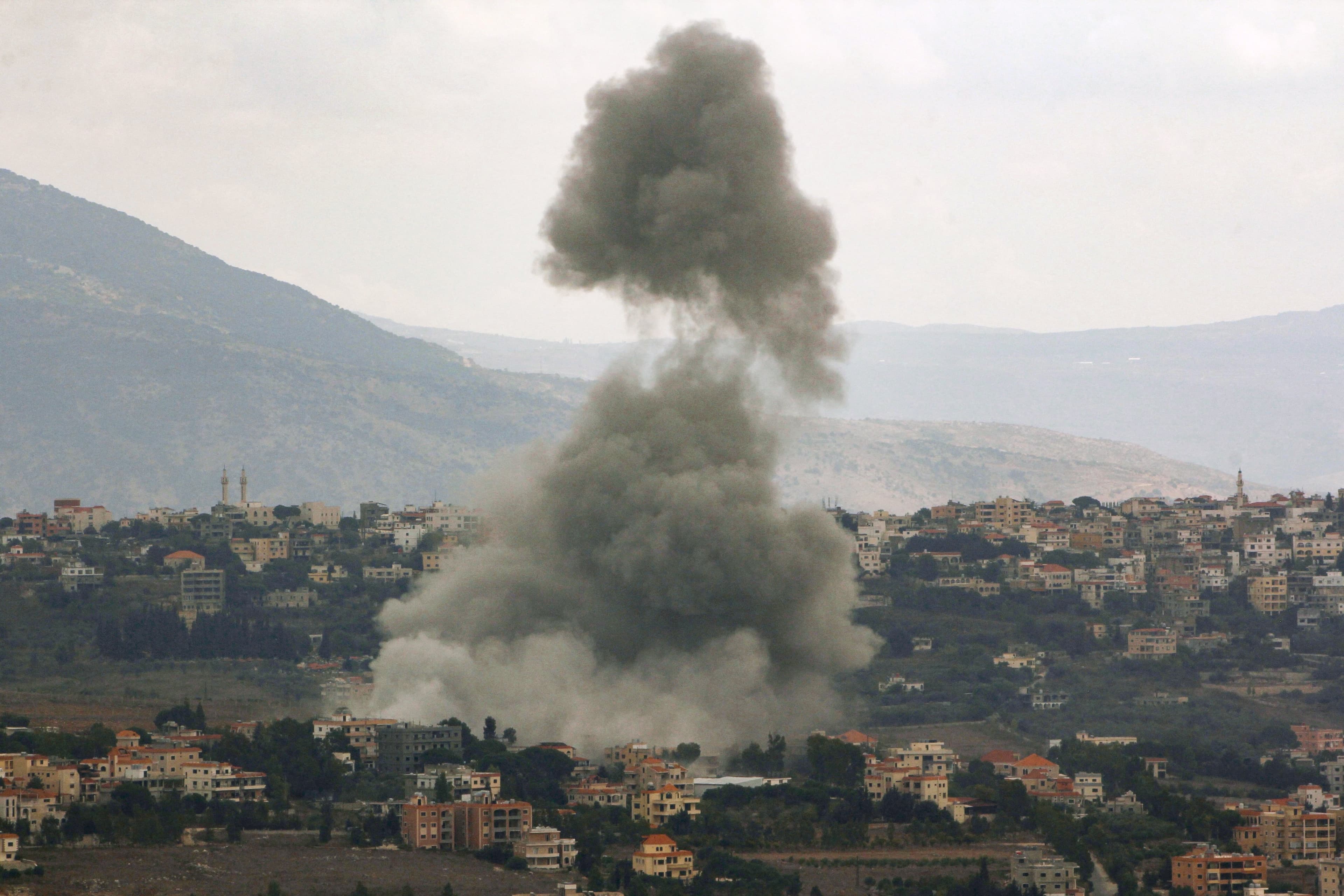
Prediction markets show traders are almost certain Israel will conduct a military strike on Lebanon on February 27, 2026. The current probability is at 100% on Polymarket, where over $3.4 million has been wagered across related questions. In practical terms, this means the collective intelligence of thousands of traders sees a strike as virtually guaranteed to happen today, Israel Standard Time.
The extreme confidence stems from a sharp, ongoing escalation along the Israel-Lebanon border. For months, the Iranian-backed militant group Hezbollah, based in Lebanon, and the Israeli military have exchanged daily rocket, drone, and artillery fire. This fighting has displaced tens of thousands of people on both sides of the border and represents the most sustained conflict there since the 2006 war.
In recent weeks, Israeli officials have given increasingly stark warnings that they are prepared for a major military operation if diplomacy fails to push Hezbollah forces northward. A major strike was widely anticipated as the next logical step in this cycle of escalation. The market's certainty suggests traders believe a tipping point has been reached, likely influenced by specific intelligence or military movements observed in real-time.
All focus is on today, February 27. The market resolves based on any qualifying Israeli aerial attack on Lebanese territory occurring before midnight Israel Standard Time. Traders will be watching for official statements from the Israeli military or the Lebanese government confirming an incident. Any strike, whether large or small, will settle this specific market to "Yes." The aftermath and potential for a broader Israeli ground invasion would then become the subject of new prediction markets.
Prediction markets are generally accurate for near-term, clearly defined military events like this one, especially when consensus is this strong. Markets effectively aggregate global information, including public news, expert analysis, and possibly non-public signals. However, a major limitation is that the 100% probability does not account for last-second diplomatic miracles or operational delays. It also cannot predict the scale or strategic success of the strike, only its occurrence on this specific calendar day.
The Polymarket contract "Will Israel strike Lebanon on February 27, 2026?" is trading at 100 cents, or 100%. This price indicates the market has resolved with certainty that a qualifying Israeli military strike on Lebanese territory occurred on that date. With $3.4 million in total volume across related date-specific contracts, this high-liquidity market reflects a settled consensus.
The 100% price is a post-event settlement, not a prediction. It confirms that market participants received information verifying a strike meeting the contract's specific criteria: an Israeli-launched drone, missile, or aerial bomb impacting Lebanese soil on February 27, 2026, Israel Standard Time. This resolution likely followed credible reporting from major news agencies or official military statements confirming the event. The high trading volume suggests significant interest and confidence in the verification sources used for market resolution.
Historical context is critical. By early 2026, the simmering conflict along the Israel-Lebanon border, primarily involving exchanges of fire between Israeli forces and Hezbollah, had escalated for over a year following the Hamas-led attacks of October 7, 2023. A pattern of cross-border strikes made a military event on any given day a non-zero probability, but the market specifically priced the reality of February 27.
For a resolved market at 100%, the odds cannot change. The analysis shifts to understanding why this specific strike occurred. The immediate catalyst was likely a specific security incident, such as a Hezbollah attack causing Israeli casualties or an Israeli assessment of an imminent threat from Lebanese territory. Israeli political decisions following the 2025 US election and the operational posture of the Israel Defense Forces after prolonged engagement in Gaza were significant background factors. The market's final price validates that the defined threshold for a "strike" was met, distinguishing a targeted military action from lower-level border skirmishes that did not trigger other date-specific contracts.
AI-generated analysis based on market data. Not financial advice.
This prediction market topic concerns the possibility of an Israeli military strike on Lebanese territory on a specific date. The market resolves based on whether Israel uses aerial bombs, drones, or missiles that impact Lebanese ground territory during a 24-hour period in Israel Standard Time. This question exists within the tense and volatile context of ongoing cross-border hostilities between Israel and the Lebanese militant group Hezbollah. These hostilities have escalated significantly since the Hamas-led attack on Israel on October 7, 2023, and the subsequent war in Gaza. The northern Israeli-Lebanese border has become a secondary, sustained front of conflict, with daily exchanges of rocket, missile, and drone fire. International mediators, including the United States, France, and the United Nations, have attempted to broker a diplomatic solution to prevent a full-scale war, but these efforts have so far failed to halt the fighting. The market reflects real-time speculation on whether a specific day will see an escalation beyond the now-routine exchanges, potentially involving deeper strikes or a significant tactical shift by the Israeli Defense Forces (IDF).
The current border tensions are rooted in the 2006 Lebanon War, a 34-day conflict between Israel and Hezbollah that began after Hezbollah captured two Israeli soldiers in a cross-border raid. That war resulted in over 1,200 Lebanese and 165 Israeli deaths, widespread destruction in southern Lebanon and parts of Beirut, and ended with United Nations Security Council Resolution 1701. The resolution called for the disarmament of all armed groups in Lebanon and the deployment of the Lebanese Armed Forces and a strengthened UN peacekeeping force (UNIFIL) to the south. In practice, Hezbollah retained its weapons and rebuilt its military capabilities to levels far exceeding those of 2006, while maintaining a dominant presence in southern Lebanon alongside UNIFIL. For 17 years, the border experienced periods of calm punctuated by isolated incidents, establishing a precarious but managed deterrence. The post-October 7 dynamic shattered this status quo, returning the border to a state of open, daily warfare not seen since 2006.
A significant Israeli strike or a full-scale war with Hezbollah would have catastrophic regional consequences. Lebanon's economy has already collapsed, with its currency losing over 98% of its value since 2019. A major conflict would trigger a new wave of mass displacement, potentially creating hundreds of thousands of refugees and overwhelming Lebanon's crippled infrastructure. For Israel, a two-front war stretching from Gaza to Lebanon would place unprecedented strain on its military, economy, and civil defense systems. Hezbollah's arsenal of precision-guided missiles poses a direct threat to Israel's critical infrastructure, including power plants, airports, and military bases. Regionally, such a conflict risks drawing in other Iranian-backed proxies in Syria, Iraq, and Yemen, and could prompt direct Iranian involvement, dramatically increasing the chances of a regional war that would impact global energy markets and international security.
As of late May 2024, cross-border fire continues daily. Israel has conducted targeted airstrikes against Hezbollah operatives and infrastructure deeper inside Lebanon, while Hezbollah has used increasingly sophisticated weaponry, including explosive drones. Diplomatic efforts, led by the U.S. and France, are ongoing but have not yielded a breakthrough. The Israeli government has signaled that it prefers a diplomatic agreement but is prepared for a major military offensive if one is not reached soon. Hezbollah insists it will not cease fire until a permanent ceasefire is in place in Gaza, directly linking the two fronts.
Hezbollah is a Shiite Islamist political party and militant group that functions as a state within a state. It maintains a powerful independent army that is not under the control of the Lebanese Armed Forces. The official Lebanese government, led by a caretaker cabinet with limited powers, cannot order Hezbollah to disarm or cease military operations.
Yes. Israel invaded Lebanon in 1982, occupying parts of the south until 2000. It launched another major invasion in 2006 following Hezbollah's capture of Israeli soldiers. The 2006 war lasted 34 days and ended with a UN-brokered ceasefire that established the current, now-frayed, security arrangement along the border.
The UN peacekeeping force (UNIFIL) has a mandate to monitor hostilities and liaise with parties, but not to use force to disarm Hezbollah or prevent Israeli airstrikes. Its effectiveness is constrained by the consent of the Lebanese government and Hezbollah's de facto control of southern Lebanon, where it operates.
Analysts consider the risk high. A major Israeli military campaign in Lebanon could prompt Iran, Hezbollah's primary backer, to activate its network of proxies across Syria, Iraq, and Yemen. This could lead to coordinated attacks on U.S. forces and Israeli interests, potentially drawing the United States into direct conflict.
Israeli strikes have historically focused on southern Lebanon, the heartland of Hezbollah's military infrastructure. However, since October 2023, strikes have also targeted the Bekaa Valley in eastern Lebanon and areas near Beirut, hitting weapons depots and eliminating senior commanders far from the immediate border zone.
Educational content is AI-generated and sourced from Wikipedia. It should not be considered financial advice.
4 markets tracked

No data available
| Market | Platform | Price |
|---|---|---|
![]() | Poly | 100% |
![]() | Poly | 63% |
![]() | Poly | 54% |
![]() | Poly | 0% |


No related news found
Add this market to your website
<iframe src="https://predictpedia.com/embed/Ew4UUF" width="400" height="160" frameborder="0" style="border-radius: 8px; max-width: 100%;" title="Will Israel strike Lebanon on...?"></iframe>