$3.59M
1
12

$3.59M
1
12
Trader mode: Actionable analysis for identifying opportunities and edge
This market will resolve to "Yes" if Israel initiates a drone, missile, or air strike on Lebanese soil on the listed date Israel Standard Time (IST). Otherwise, this market will resolve to "No". For the purposes of this market, a qualifying "military action" is defined as the use of aerial bombs, drones, or missiles (including cruise or ballistic missiles) launched by Israeli military forces that impact Lebanese ground territory. A strike on any area within the terrestrial territory of Lebanon
AI-generated analysis based on market data. Not financial advice.
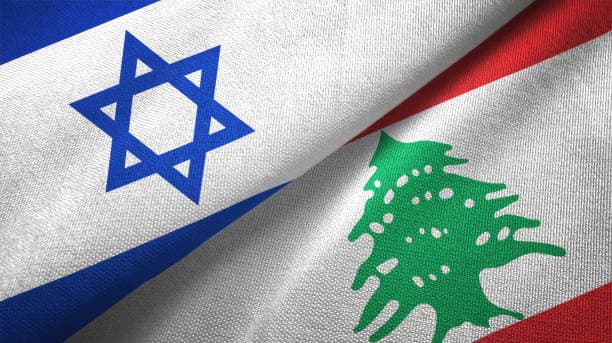
This prediction market topic concerns the possibility of Israeli military action against Lebanon on a specific date. The market resolves to 'Yes' if Israel conducts a drone, missile, or air strike that impacts Lebanese territory during that 24-hour period in Israel Standard Time. The definition is precise, covering aerial bombs, drones, and missiles launched by Israeli forces that hit Lebanese ground. The topic exists within the volatile context of ongoing cross-border hostilities between Israel and the Lebanese militant group Hezbollah. These exchanges have intensified since the Hamas-led attack on Israel on October 7, 2023, and the subsequent war in Gaza. While full-scale war has not erupted, daily rocket, missile, and drone fire across the UN-drawn Blue Line has created a persistent risk of escalation. People monitor this specific question because a single significant strike or miscalculation could trigger a major regional conflict, drawing in Iran and affecting global energy markets and security. The daily resolution makes it a granular indicator of immediate war risk, distinct from broader questions about a full-scale invasion.
The current border tensions are rooted in the last major war between Israel and Hezbollah in 2006. That 34-day conflict began after Hezbollah captured two Israeli soldiers in a cross-border raid. It resulted in approximately 1,200 Lebanese and 165 Israeli deaths, and ended with UN Security Council Resolution 1701. This resolution called for Hezbollah's disarmament and the deployment of the Lebanese army and UNIFIL to southern Lebanon, terms that were never fully implemented. Since 2006, the border area has experienced periodic flare-ups, but a sustained, low-level conflict of this intensity is unprecedented. The pattern since October 2023 represents the most serious and prolonged violation of the 2006 ceasefire. Historically, Hezbollah has maintained a capacity to strike anywhere in Israel with precision-guided missiles, a capability it did not possess in 2006. Israel's military doctrine has also evolved, emphasizing preemptive strikes and deeper operations to destroy enemy infrastructure, setting the stage for a potentially more destructive conflict than the one 18 years ago.
A major Israeli military action against Lebanon would have catastrophic humanitarian consequences. Lebanon's economy is already in a state of collapse, with over 80% of the population living in poverty. A full-scale war would create a massive refugee crisis, likely displacing millions of Lebanese and Israelis from border areas. It would also severely strain the country's crippled healthcare and electrical infrastructure. The political and security ramifications are global. Hezbollah is Iran's most powerful regional proxy. A war would represent a direct confrontation between Israel and Iran, risking a wider regional conflict that could draw in the United States. Global energy markets would be impacted, as the Eastern Mediterranean is a growing gas production area, and conflict could threaten key shipping lanes. For Israel, opening a sustained northern front would stretch military resources thin during the Gaza war, potentially requiring a mass mobilization of reserves and increasing domestic pressure on the government.
As of late June 2024, cross-border fire remains a daily occurrence. Israeli airstrikes have targeted Hezbollah operatives and infrastructure increasingly deeper inside Lebanon, including in the Bekaa Valley. Hezbollah has responded with rocket, anti-tank missile, and drone attacks on northern Israel. Diplomatic efforts, led by the US and France, are intensifying to negotiate a de-escalation, but these have yet to yield a breakthrough. The Israeli government has stated that it prefers a diplomatic solution but will use military force if necessary to return displaced citizens to their homes. Hezbollah insists its attacks will stop only with a Gaza ceasefire.
The Blue Line is a boundary demarcated by the United Nations in 2000 to verify Israel's withdrawal from southern Lebanon. It is not an official international border but serves as the de facto line of separation. UNIFIL monitors violations along this line.
Yes. Israel invaded Lebanon in 1982, occupying a security zone in the south until its full withdrawal in 2000. Israel launched another major military operation in 2006 after Hezbollah captured Israeli soldiers, leading to a 34-day war.
The United Nations Interim Force in Lebanon (UNIFIL) was established in 1978. Its current mandate, under UN Resolution 1701, is to monitor the cessation of hostilities, support the Lebanese army in deploying to the south, and assist humanitarian access. It has over 10,000 peacekeepers.
Hezbollah is considered significantly more powerful than Hamas. It possesses a larger, more diverse, and more precise rocket arsenal, a more experienced guerrilla force, and substantial political power within the Lebanese state. Analysts view it as Iran's most capable non-state ally.
Recent Israeli strikes, reported in 2024, have hit targets across southern Lebanon and, with increasing frequency, in areas north of the Litani River and in the Bekaa Valley near the Syrian border. This represents a geographical expansion of the conflict zone.
Educational content is AI-generated and sourced from Wikipedia. It should not be considered financial advice.
12 markets tracked

No data available
| Market | Platform | Price |
|---|---|---|
![]() | Poly | 97% |
![]() | Poly | 95% |
![]() | Poly | 94% |
![]() | Poly | 91% |
![]() | Poly | 90% |
![]() | Poly | 89% |
![]() | Poly | 88% |
![]() | Poly | 87% |
![]() | Poly | 83% |


No related news found
Add this market to your website
<iframe src="https://predictpedia.com/embed/IMojgL" width="400" height="160" frameborder="0" style="border-radius: 8px; max-width: 100%;" title="Israel military action against Lebanon on...?"></iframe>