How many SpaceX Starship launches reach space in 2026?
PM $525.8K
1
8
How many SpaceX Starship launches reach space in 2026?
PM $525.8K
1
8
Current odds
Snapshot from
As of Oct 26, 2026, 3:00 PM UTC, the highest-priced outcome on Polymarket is <5 at 54%.
Polymarket
- <554%
- 5-638%
- 7-81.2%
- 9-100.6%
- >160.4%
Yes prices. They are not order quotes; check each platform's rules, fees and live prices before trading.
AI Analysis
Trader mode: Market mechanics, assumptions and risks
PM $525.8K
Reported volume · provider units
8
Saved contracts
0
Same-question pairs
Source snapshot: Oct 26, 2026, 3:00 PM UTC
About This Event
This market will resolve according to the number of SpaceX Starship launches successfully reaching an altitude of 62 miles above sea level between January 1, 2026, and December 31, 2026, 11:59 PM ET. Otherwise, this market will resolve to "No". A successful launch is defined as the Starship taking off from its launchpad and reaching a minimum altitude of 62 miles above sea level. Any subsequent anomaly (e.g., an explosion) after the vehicle reaches 62 miles will have no bearing on the outcome. The primary resolution source for this market will be SpaceX’s official video feed of the launches (e.g., via SpaceX YouTube Channel), as well as secondary video feeds or written reports if necessary. However, a consensus of credible reporting may also be used.
AI-generated analysis based on market data. Not financial advice.
This saved content is awaiting a background update. It may contain outdated claims; use the dated market data and provider rules for the latest available information.
Overview
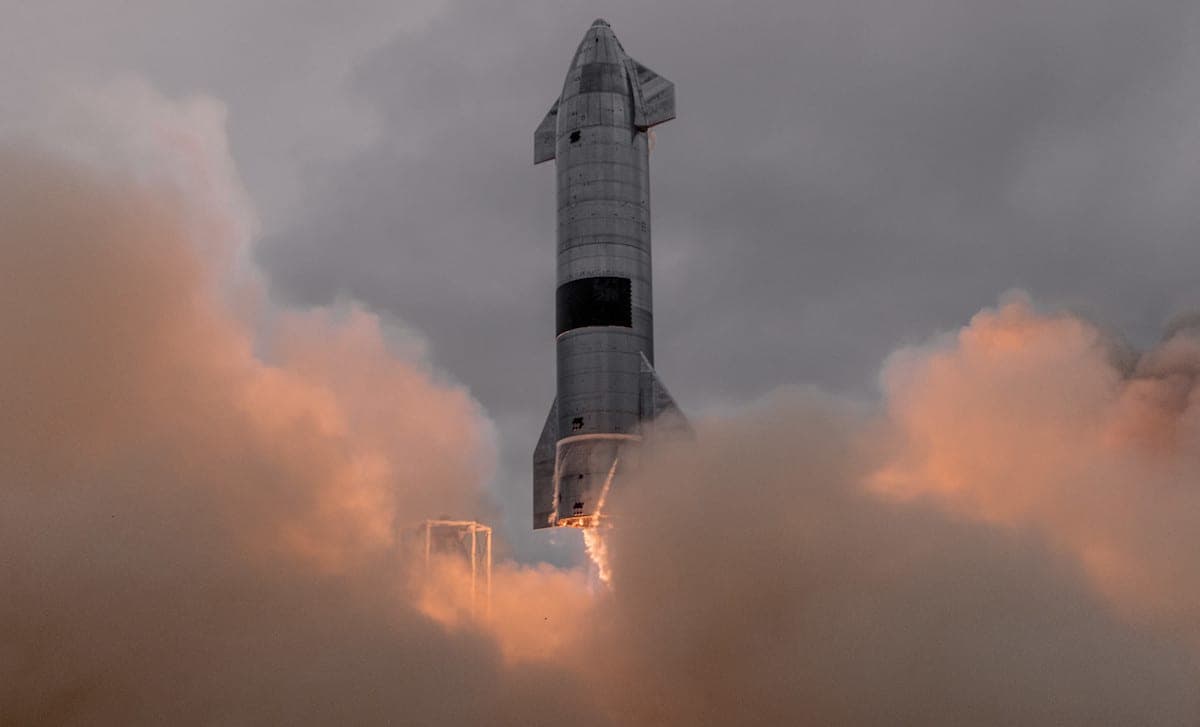
SpaceX's Starship is the largest and most powerful rocket ever built, designed for missions to the Moon, Mars, and beyond. The prediction market question asks how many Starship launches will successfully reach space, defined as an altitude of 62 miles (100 kilometers) above sea level, during the 2026 calendar year. This threshold aligns with the internationally recognized Kármán line, the conventional boundary of space. The market resolves to the exact number, or to 'No' if the count does not match the specified outcome, which in this case is a single number determined by the market's resolution criteria. As of 2025, SpaceX has conducted multiple Starship test flights from its Starbase facility in Boca Chica, Texas. The first integrated flight test occurred on April 20, 2023, reaching an altitude of about 39 kilometers before an anomaly led to a controlled destruction. Subsequent flights have progressively improved: Flight 2 in November 2023 reached 148 kilometers, Flight 3 in March 2024 achieved orbital velocity and reached 234 kilometers, and Flight 4 in June 2024 successfully completed a soft splashdown of the Super Heavy booster and the Ship. By late 2024, Flight 5 and Flight 6 demonstrated further milestones, including the first successful catch of the booster by the launch tower's 'chopstick' arms. These tests show a rapid iteration cycle, with each flight providing data to refine the design. The 2026 timeframe is significant because SpaceX plans to use Starship for NASA's Artemis III mission, which aims to return humans to the lunar surface, currently scheduled for mid-2027. That mission requires a successful uncrewed lunar landing demonstration, which itself depends on multiple Starship launches to deliver propellant and the lunar lander. Additionally, SpaceX has contracts with NASA for cargo missions to the Moon and with private customers for crewed missions around the Moon, such as the dearMoon project. The number of launches in 2026 will depend on the pace of regulatory approvals, manufacturing capacity, and the success of ongoing test flights. Observers expect the launch cadence to increase significantly as SpaceX moves from testing to operational missions, but the exact count remains uncertain, making it a compelling prediction market. Interest in this market stems from the broader implications for spaceflight. Starship's success could reduce launch costs dramatically, enable larger payloads, and make Mars colonization feasible. For space enthusiasts, investors, and policymakers, the number of launches in 2026 is a proxy for SpaceX's operational maturity and the viability of its ambitious timeline. The market also reflects the growing trend of using prediction markets to gauge progress in aerospace, where traditional forecasting has often been overly optimistic or conservative. As of early 2025, SpaceX has not publicly committed to a specific launch count for 2026, but internal targets and regulatory filings hint at a goal of several dozen launches, though actual numbers will likely be lower due to technical and regulatory hurdles.
Historical Context
SpaceX's Starship development began in 2012 with concept studies for a Mars colonial transporter, later renamed the Interplanetary Transport System and then the Big Falcon Rocket. The current design features a reusable first stage called Super Heavy and a second stage called Starship (or 'Ship'), both constructed primarily from stainless steel. Early prototypes were tested at SpaceX's facilities in Texas and Florida, with the first high-altitude flight tests in 2020 and 2021 using the Starhopper and SN15 prototype, which achieved a successful landing after several explosive failures. The first integrated flight test (IFT-1) on April 20, 2023, lifted off from Starbase and reached an altitude of 39 kilometers before the vehicle spun out of control and was terminated by the flight termination system. This flight caused significant damage to the launch pad, leading to a months-long investigation and remediation. IFT-2 in November 2023 reached 148 kilometers, achieving space, but both stages were lost during ascent. IFT-3 in March 2024 reached 234 kilometers and demonstrated propellant transfer in space, but the Ship was lost during reentry. IFT-4 in June 2024 achieved a controlled splashdown in the Indian Ocean, marking the first successful full-duration flight. IFT-5 in October 2024 saw the first successful catch of the Super Heavy booster back at the launch tower, a major step toward rapid reusability. IFT-6 in November 2024 repeated the booster catch but experienced a Ship anomaly during ascent. These flights have been conducted under an experimental launch license from the FAA, which requires mishap investigations after each anomaly. The cadence has been slower than SpaceX's original hopes, with only two to three launches per year in 2023 and 2024. However, the company aims to increase frequency dramatically, with plans for multiple launches per month in 2025 and beyond. The historical pattern shows that each flight brings incremental improvements, but also that failures are common in the test phase. For 2026, the question is whether SpaceX can transition from testing to operational launches, which would require a significant ramp-up in production and regulatory approval for a higher launch rate.
Why It Matters
The number of Starship launches in 2026 is not just a technical metric; it has profound implications for the commercial space industry and national space policy. If SpaceX achieves a high launch cadence, it could drive down the cost of access to space, potentially to as low as $10 million per launch, compared to the current $67 million for a Falcon 9. This would open up new markets for space-based manufacturing, tourism, and asteroid mining. It would also enable the deployment of larger constellations of satellites, including the next generation of Starlink, which could provide global high-speed internet and generate billions in revenue. Politically, Starship is central to the Artemis program, which aims to return humans to the Moon and establish a sustainable presence there. NASA's reliance on Starship for the lunar lander makes the 2026 launch count a matter of national prestige and international competition, particularly with China's plans for a crewed lunar landing by 2030. A successful Starship launch cadence would demonstrate U.S. leadership in space and support the Artemis timeline. Conversely, delays or failures could push back the Moon landing and give China an opportunity to catch up. Socially, the success of Starship could inspire a new generation of space enthusiasts and accelerate the dream of making humanity multiplanetary, which is a core motivation for many SpaceX employees and supporters. The market's outcome, therefore, serves as a barometer for the feasibility of these ambitious goals.
AI-written background. References identify the evidence used; Wikipedia links under Learn More are additional reading. Prices and provider rules are dated snapshots. This is not financial advice.
Related prediction markets
Prices are catalog snapshots and may have changed. Check each market's rules and observation time.

How many SpaceX launches in 2026?
PM $343.0K
Starship launches humans to Mars before 2030?
K 55.0K contracts
Best LLM at the end of the decade?
PM $6.78M · K 16.69M contractsWill Anthropic have the best AI model on LiveBench (Coding) at the end of October 2026?
Kalshi: Which AI company will have the best coding model on Dec 31, 2026? (Anthropic)
Related contracts
Will Anthropic be the second-best AI lab at the end of October 2026?
Kalshi: Best AI on Dec 31, 2026? (Claude)
Related contracts
Will Google have the best AI model at the end of October 2026?
Kalshi: Best LLM at the end of the decade? (Google)
Related contracts
Related or unreviewed contracts may settle differently. Their gap is not an equivalent-contract comparison.
Saved prices; check contract rules.

NFL Players Traded
K 148.1K contracts
Top Artist on Spotify U.S. 2026
K 1.21M contracts
#2 Artist on Spotify U.S. in 2026?
K 34.0K contractsMarket Insights
Price gaps of 2 pp+
0
Same-question pairs
0
No outcomes on this page have been reviewed as the same question on both platforms yet.
Price differences do not establish arbitrage. Check each pair's review, current order prices, fees and settlement rules.