$2.41K
1
2

$2.41K
1
2
Trader mode: Actionable analysis for identifying opportunities and edge
This market will resolve to "Yes" if any Gulf State initiates a drone, missile, or air strike on Iranian soil by 11:59 PM the listed date in Arabia Time (GMT+3). Otherwise, this market will resolve to "No". Qualifying "Gulf States" are as follows: Bahrain, Kuwait, Oman, Qatar, Saudi Arabia, and the United Arab Emirates. For the purposes of this market, a qualifying "military action" is defined as the use of aerial bombs, drones, or missiles (including cruise or ballistic missiles) launched by
Prediction markets currently give about a 1 in 4 chance that a Gulf State will launch a drone, missile, or air strike on Iran before April 30, 2026. This means traders collectively see direct military action as unlikely, but not impossible. The low trading volume suggests this is a speculative question with limited data, so the probability should be viewed as a rough estimate of risk rather than a firm forecast.
The low probability reflects the high stakes and complex diplomacy in the region. First, Gulf States like Saudi Arabia and the UAE have recently pursued diplomatic outreach to Iran, aiming to ease tensions after years of proxy conflicts in Yemen and Syria. Openly attacking Iranian soil would shatter these efforts.
Second, these nations typically rely on the United States for security guarantees. A unilateral strike could strain those alliances and risk a severe Iranian retaliation that their own militaries might struggle to manage alone. Historically, confrontations have played out through proxies or cyber attacks, not direct cross-border strikes.
Finally, the economic cost would be immense. An attack could immediately disrupt shipping in the Strait of Hormuz, a vital corridor for global oil exports that these economies depend on. The potential for a wider regional war makes this a last-resort option.
There is no single deadline driving this market. Instead, watch for events that could escalate tensions. A major attack on Gulf State interests by Iran or its allied groups, like the Houthis in Yemen, could increase pressure to respond directly. Statements from Gulf leaders abandoning their diplomatic dialogue with Iran would also be a significant signal. The market will likely react to any incident that appears to cross a previously respected red line.
Prediction markets are generally useful for aggregating informed views on geopolitical risks, but this specific question has limitations. The long time horizon and low trading volume mean the current odds are less robust. Markets have been decent at forecasting short-term conflict probabilities, but rare, high-impact events like this are harder to price. The forecast mainly illustrates that experts see strong diplomatic and economic restraints in place, making a direct strike a low-probability, high-consequence scenario.
Prediction markets assign a low 25% probability to any Gulf State conducting a drone, missile, or air strike on Iranian soil by April 30, 2026. This price indicates the market views direct military action as unlikely within the next month. The thin trading volume, however, means this price is not strongly held and could shift significantly with new information or increased trader interest.
The low probability reflects a regional strategy focused on de-escalation and economic competition, not direct conflict. Saudi Arabia and the UAE, the two most militarily capable states, have pursued diplomatic normalization with Iran since 2021. Their security priorities currently center on domestic economic projects and managing threats from Iranian-backed proxies, like the Houthis in Yemen, rather than striking Iran itself. A direct attack would risk severe retaliation against critical oil infrastructure and urban centers, a cost these states have shown little appetite to bear.
Historical precedent also supports the low odds. Despite decades of regional proxy conflict and occasional strikes on Iranian-linked assets abroad, no Gulf State has executed a military strike on sovereign Iranian territory in the modern era. The market pricing acknowledges this long-standing red line.
A sudden, catastrophic attack by an Iranian proxy that Gulf intelligence directly and publicly attributes to Tehran could force a recalculation. For example, a successful missile strike causing mass casualties in Riyadh or Abu Dhabi might pressure leaders to consider a direct retaliatory strike. The market’s 33-day window is short, making such a dramatic escalation the primary risk to the current "No" consensus.
The thin liquidity is itself a risk factor. The current 25% price is based on minimal trading. A single geopolitical news headline or a coordinated move by a few traders could cause the quoted probability to swing wildly without a material change in the underlying fundamentals. Investors should treat the current price as a weak signal.
AI-generated analysis based on market data. Not financial advice.
This prediction market addresses whether any of the six Gulf Cooperation Council (GCC) states—Bahrain, Kuwait, Oman, Qatar, Saudi Arabia, or the United Arab Emirates—will conduct a direct military strike on Iranian territory using drones, missiles, or aerial bombs before a specified deadline. The market specifically excludes naval or ground force actions, focusing on aerial bombardment. The question emerges from a complex regional security environment where Gulf Arab states and Iran have engaged in a long-standing rivalry, often through proxy conflicts in Yemen, Syria, and Iraq, but have largely avoided direct state-on-state military confrontations. Recent years have seen a shift, with incidents like the 2019 attacks on Saudi Aramco facilities, which Riyadh and Washington blamed on Iran, and repeated Houthi attacks on UAE and Saudi targets using Iranian-supplied drones. These events have increased regional tensions and raised questions about the potential for escalation. Interest in this market stems from observers tracking whether simmering hostilities could boil over into a direct military exchange, which would have profound consequences for global energy markets and regional stability. The market's resolution depends on a clear, attributable action by a Gulf state's military against sovereign Iranian soil.
The modern rivalry between Gulf Arab states and Iran intensified after the 1979 Iranian Revolution, which overthrew the US-backed Shah and established an Islamic Republic. Iran's new leadership sought to export its revolution, alarming Sunni-majority Gulf monarchies. This ideological and geopolitical competition fueled the 1980-1988 Iran-Iraq War, during which most Gulf states provided financial support to Saddam Hussein's Iraq. A significant direct military incident occurred in 1987-1988 during the 'Tanker War,' when Saudi and Iranian forces clashed in the Persian Gulf, including a battle over the oil platform at Al-Safaniyah. For decades afterward, conflict was primarily indirect, played out in Lebanon, Palestine, and elsewhere. The 2011 Arab Spring uprisings opened a new chapter of proxy conflict, most notably in Syria and Yemen. In Yemen, a Saudi-led coalition including the UAE intervened in 2015 against the Houthi movement, which receives arms and training from Iran. The conflict has seen repeated cross-border attacks, with Houthi drones and missiles striking deep inside Saudi Arabia and the UAE. A major escalation occurred on September 14, 2019, when drone and missile attacks temporarily halved Saudi Arabia's oil production. The US and Saudi Arabia blamed Iran, which denied responsibility. This event demonstrated the vulnerability of Gulf energy infrastructure and raised the specter of direct retaliation.
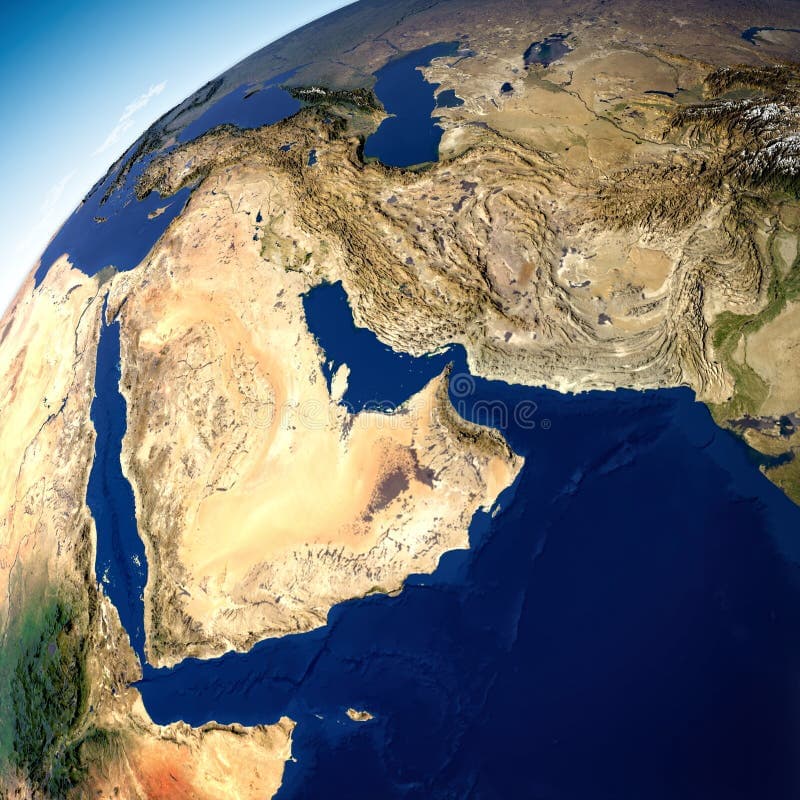
A direct military strike by a Gulf state on Iran would represent a fundamental breakdown of the long-standing, if tense, regional order. It would almost certainly trigger immediate Iranian retaliation, potentially escalating into a wider regional war. The most immediate global impact would be on oil and natural gas markets. The Strait of Hormuz, a chokepoint through which about 20% of global oil consumption passes, could become a battlefield, threatening supply chains and causing severe price volatility. Domestically, Gulf states with significant foreign expatriate populations and economies built on trade and tourism, like the UAE and Qatar, could face rapid capital flight and economic disruption. Politically, such an action would fracture the Gulf Cooperation Council, as members like Oman and Qatar strongly oppose military confrontation with Iran. It would also force the United States and other external powers to choose sides in a conflict with unpredictable outcomes, potentially drawing them into direct involvement.
As of late 2024, the region is in a state of heightened alert but active diplomacy. The Saudi-Iran reconciliation brokered by China in March 2023 has reduced overt hostility, with ambassadors returned and high-level meetings held. However, underlying tensions persist. Iran continues to advance its nuclear program, with the IAEA reporting in November 2024 that its stockpile of enriched uranium is many times above the limits of the 2015 deal. Concurrently, Houthi attacks on commercial shipping in the Red Sea, a response to the war in Gaza, have drawn US and UK military strikes against Houthi targets in Yemen. Gulf states, while concerned about the Houthi threat, have been cautious in publicly endorsing these Western-led strikes, reflecting a delicate balancing act. The death of President Raisi in a helicopter crash in May 2024 added a layer of political uncertainty in Tehran during an ongoing leadership transition.
There is no publicly confirmed instance of a Gulf Arab state conducting a direct aerial or missile strike on sovereign Iranian territory in the modern era. Historical clashes, like those during the 1980s Tanker War, occurred in international waters or involved Iranian assets outside Iran.
Based on recent history and military posture, Saudi Arabia and the United Arab Emirates are considered the most likely, given their direct involvement in the Yemen war against Iranian-backed Houthis and their experiences with attacks on their own soil. However, both are currently engaged in diplomatic outreach to Tehran.
A likely trigger would be a successful, catastrophic attack on critical national infrastructure within a Gulf state that is conclusively attributed to Iran, such as a missile strike causing mass casualties in a major city or permanently disabling a key oil facility. Even then, retaliation would be weighed against risks of escalation.
The US maintains major bases in Qatar, Bahrain, Kuwait, and the UAE. This presence provides a security guarantee but also creates complexity. Gulf states might hesitate to act unilaterally if it could jeopardize US support or draw American forces into an unwanted conflict.
Oman has consistently acted as a neutral mediator. It hosted secret US-Iran talks leading to the 2015 nuclear deal and facilitated Saudi-Iran dialogue. Its policy of non-interference and its geographic position make it a critical diplomatic channel and a strong voice against military confrontation.
Educational content is AI-generated and sourced from Wikipedia. It should not be considered financial advice.
2 markets tracked

No data available
| Market | Platform | Price |
|---|---|---|
![]() | Poly | 27% |
![]() | Poly | 22% |


No related news found
Add this market to your website
<iframe src="https://predictpedia.com/embed/VShjwH" width="400" height="160" frameborder="0" style="border-radius: 8px; max-width: 100%;" title="Gulf State military action against Iran by...?"></iframe>