$119.50K
1
4

$119.50K
1
4
Trader mode: Actionable analysis for identifying opportunities and edge
This market will resolve according to the total number of different sovereign UN member states' soil that the US initiates a drone, missile, or air strike on between February 1, 2026, 12:00 AM ET and February 28, 2026, 11:59 PM ET. If the date/time of a qualifying strike cannot be confirmed by a consensus of credible reporting within 48 hours of this market's end date, it will not qualify, regardless of whether a strike is later confirmed to have occurred. Markets may resolve to "No" as soon as
Prediction markets currently suggest it is unlikely Israel will conduct strikes in four different countries during 2026. The leading contract on this question is trading at a 32% probability, meaning traders collectively see roughly a 1 in 3 chance of this happening. The most probable outcome, based on the full set of related markets, is that Israel will strike either two or three different nations next year. This reflects a forecast for continued, but geographically contained, military action.
The current odds are shaped by recent history and regional tensions. Israel has consistently conducted strikes in Syria for years, targeting Iranian military assets and Hezbollah, making this one almost certain country for 2026. Ongoing conflict with Hezbollah also means frequent strikes in Lebanon, making a second country highly probable.
The uncertainty revolves around whether conflict spreads further. A third country could be Yemen, where Israel has intercepted missiles but not consistently launched strikes, or possibly Iraq if hostilities with Iranian-backed groups escalate. The low probability for a fourth country suggests traders believe Israel will try to avoid opening too many simultaneous fronts, which would stretch military and diplomatic resources. The war in Gaza and northern border clashes are seen as the primary focus.
There is no single calendar date that will decide this. The outcome depends heavily on geopolitical developments. Key factors to watch include the intensity of fighting along the Israel-Lebanon border through 2025, as a full-scale war there could draw in other actors. Another is the status of nuclear negotiations with Iran; a breakdown could increase the risk of wider strikes against Iranian proxies. Finally, the posture of the new U.S. administration taking office in January 2027 could influence Israeli decision-making in the latter half of 2026.
Prediction markets have a mixed record on specific military forecasts. They are often good at aggregating expert sentiment about geopolitical trends, but unpredictable escalations can quickly change the picture. Markets correctly foresaw the high risk of Russia invading Ukraine in 2022, for example, but cannot predict sudden, dramatic events. For this question, the market is likely a decent gauge of the baseline expectation among informed observers. The real value is in tracking how the probability changes in response to real-world news, which can show how the perceived risk of a wider war is shifting.
Prediction markets assign the highest probability to Israel conducting strikes in 1-3 countries during 2026. The specific contract for "4 countries" trades at 32%, indicating traders see this as a possible but less likely escalation. The most active trading centers on outcomes between one and three nations, with the "2 countries" contract often showing significant volume. This pricing suggests the consensus expects continued, targeted cross-border military action similar to recent years, but not a dramatic geographic expansion of conflicts.
Current pricing is anchored by Israel's established pattern of preemptive and retaliatory strikes. For years, Israel has regularly conducted air operations in Syria against Iranian-linked targets and in Lebanon against Hezbollah. These two countries form a baseline expectation. The third most likely candidate is often considered to be Iraq, where Israel has allegedly struck Iranian weapons transfers in the past, though less frequently. The low probability for strikes in four or more countries reflects an assessment that expanding operations to new territories, such as Yemen or farther-flung locations, would require a significant escalation in regional hostilities or a direct confrontation with a state like Iran.
The primary variable is a major regional war. If the current conflict with Hamas in Gaza spirals into a full-scale war with Hezbollah, Israel could be forced to strike deeper into Lebanon and potentially engage Iranian forces directly in Syria or Iraq with greater intensity, consolidating strikes in those existing countries. A dramatic shift would occur if Israel decides to attack Houthi targets in Yemen directly, which would immediately add a new country to the tally. Another catalyst would be a successful Iranian nuclear test or a severe terrorist attack traced to a new operational base, which could trigger Israeli strikes in a country like Sudan or Cyprus. Monitoring the status of Iran's nuclear program and ceasefire negotiations with Hezbollah in late 2024 and 2025 will provide critical signals for 2026's operational tempo.
AI-generated analysis based on market data. Not financial advice.
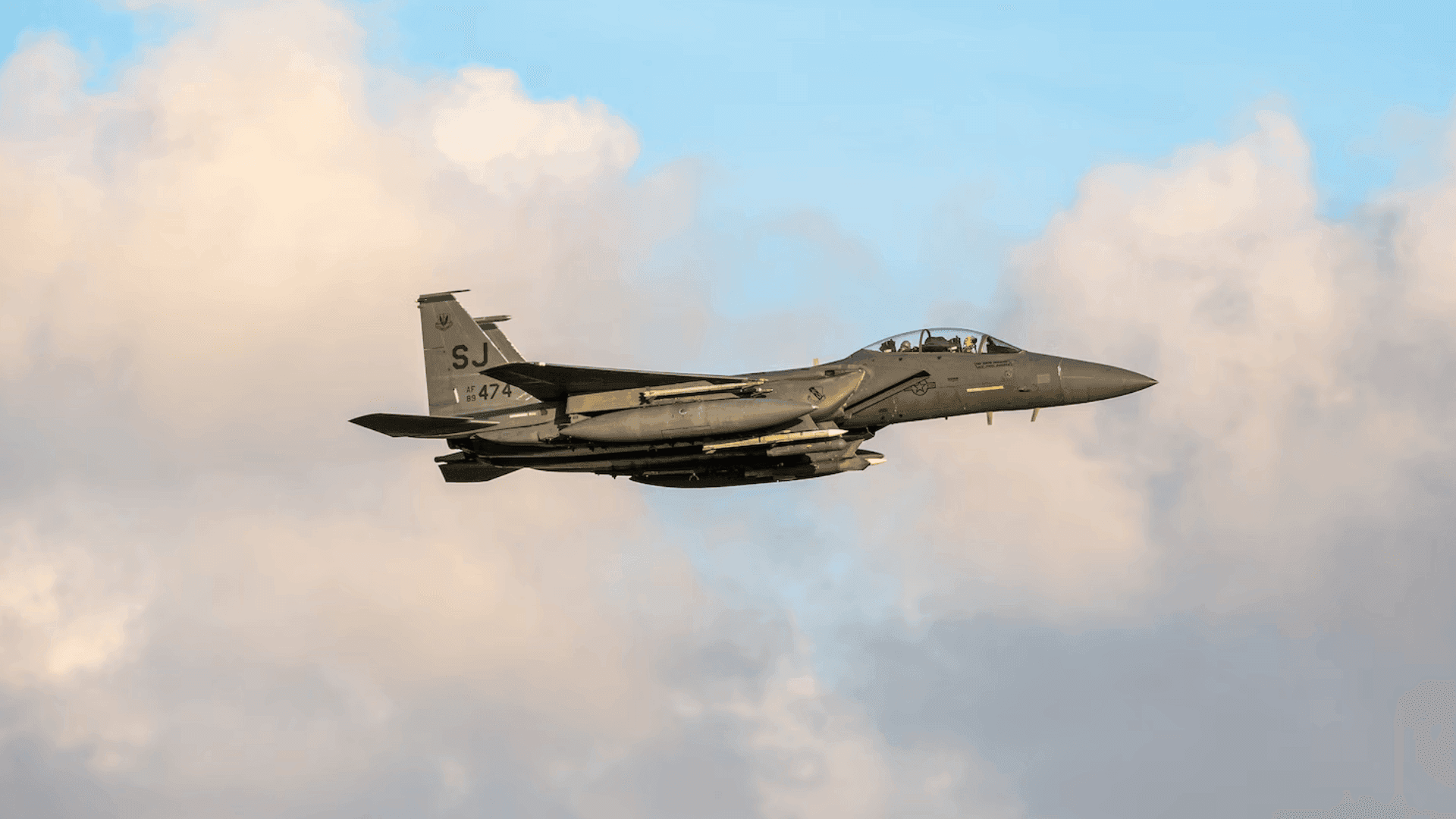
This prediction market asks participants to forecast how many distinct countries will experience a United States military strike during the 2026 calendar year. The resolution criteria specify that a strike is defined as a drone, missile, or air attack initiated by the U.S. on another country's soil. Strikes on diplomatic missions count against the host nation, and attacks within U.S. territory as defined at the end of 2025 are excluded. This market functions as a quantitative gauge of anticipated U.S. military engagement abroad, reflecting assessments of global conflict zones, counterterrorism operations, and geopolitical tensions. Interest in this topic stems from the U.S. military's persistent global footprint, which includes ongoing counterterrorism missions, support for allied forces, and responses to regional aggressors. The number of countries struck annually serves as a concrete metric for the scope of American military action, distinct from the intensity or frequency of strikes within a single theater. Recent years have seen operations across the Middle East, Africa, and Asia, making the annual tally a subject of analysis for foreign policy observers, defense analysts, and markets attempting to price geopolitical risk. The outcome for 2026 will depend on the evolution of existing conflicts, the emergence of new threats, and the strategic decisions of the presidential administration in power.
The United States has conducted military strikes in multiple foreign countries nearly every year since the September 11, 2001 attacks. The 2001 Authorization for Use of Military Force (AUMF) provided the initial legal basis for a global war on terror, leading to invasions and sustained air campaigns in Afghanistan and Iraq. During the Obama administration, the use of drone warfare expanded significantly, with strikes recorded in Pakistan, Yemen, Somalia, and Libya. The Bureau of Investigative Journalism documented at least 563 U.S. drone strikes in Pakistan, Yemen, and Somalia between 2009 and 2016. Under the Trump administration, the number of countries struck saw fluctuations, with a notable increase in 2017 that included a missile strike on a Syrian airfield and escalated counterterrorism operations in Somalia. The Biden administration entered office with a pledge to end "forever wars" but has maintained strikes against terrorist threats. In 2022, the U.S. conducted strikes in at least seven countries: Syria, Iraq, Somalia, Yemen, Afghanistan, Libya, and Niger. This pattern demonstrates that even without large-scale ground wars, the U.S. maintains a distributed, low-profile military footprint across several continents, often through airpower and special operations.
The number of countries struck annually is a measurable indicator of the United States' global military commitments and its willingness to use force. A higher count suggests broader engagement, which carries risks of escalation, civilian casualties, and diplomatic blowback. Each strike has the potential to inflame regional tensions, provoke retaliatory attacks on U.S. forces or allies, and complicate international relations. For the countries targeted, these strikes can destabilize local security, cause civilian deaths, and influence domestic political dynamics. A lower count could signal a more restrained foreign policy or a concentration of effort in fewer theaters, potentially freeing up military and intelligence resources. The outcome influences defense budgeting, alliance politics, and global perceptions of American power. It also has human consequences, affecting communities in conflict zones and the U.S. service members and intelligence officers involved in these operations.
As of late 2024, the United States continues regular military strikes in several countries. In the Middle East, U.S. forces in Iraq and Syria face periodic attacks from Iranian-backed militias, prompting retaliatory airstrikes. In Somalia, the U.S. supports the federal government with airstrikes against Al-Shabaab. The conflict in Yemen involves intermittent U.S. action against Houthi targets, particularly following attacks on shipping in the Red Sea. The presidential election in November 2024 will determine the commander-in-chief for most of 2026, making the candidates' stated foreign policy positions a primary factor in forecasting future strike activity. Congressional debates over repealing the 2001 AUMF could also influence the legal framework for operations.
For this market, a strike is defined as a drone, missile, or air attack initiated by the United States on another country's soil. This includes bombs dropped from aircraft, drone-launched missiles, and cruise missiles fired from ships or planes. It does not include cyber attacks, artillery fire from ground troops, or deployments of special forces that do not involve an air-delivered weapon.
Yes. Strikes against any target on Syrian soil, including ISIS militants, count toward the total. The market resolution is based on the geographic location of the strike, not the affiliation of the target. Syria has been one of the most frequent locations for U.S. strikes in recent years.
The market resolves based on the number of different countries struck. Multiple strikes within a single country only count as one toward the final number. For example, if the U.S. conducts 100 strikes in Syria and 10 in Somalia in 2026, the resolved number would be 2.
Resolution typically relies on credible reporting from major news organizations with Pentagon or intelligence source access (e.g., Reuters, Associated Press, The New York Times) and official statements from U.S. military commands (e.g., U.S. Central Command press releases). Confirmation usually requires attribution to U.S. forces.
No. Since the onset of the war on terror after 9/11, the U.S. has conducted military strikes in at least one foreign country every year. The lowest recent count was likely 1 or 2 countries in the early 2000s before the drone war expanded, but even then, major combat operations in Afghanistan and Iraq were ongoing.
Educational content is AI-generated and sourced from Wikipedia. It should not be considered financial advice.
4 markets tracked

No data available
| Market | Platform | Price |
|---|---|---|
![]() | Poly | 93% |
![]() | Poly | 47% |
![]() | Poly | 2% |
![]() | Poly | 2% |


No related news found
Add this market to your website
<iframe src="https://predictpedia.com/embed/_pxcDe" width="400" height="160" frameborder="0" style="border-radius: 8px; max-width: 100%;" title="How many different countries will the US strike in February?"></iframe>