$1.30K
1
1

1 market tracked

No data available
| Market | Platform | Price |
|---|---|---|
![]() | Poly | 9% |
Trader mode: Actionable analysis for identifying opportunities and edge
This market will resolve to "Yes" if a natural meteoroid (bolide) explodes in Earth's atmosphere with a total impact energy greater than or equal to 100 kilotons of TNT equivalent between January 1 and December 31, 2026, 11:59 PM ET. Otherwise, this market will resolve to “No”. The object must be classified as a natural meteoroid; events involving artificial objects or reentry vehicles do not qualify. The primary resolution source will be the NASA JPL Fireball and Bolide Data repository: https
Prediction markets are pricing in a very low probability of a 100-kiloton meteor strike occurring in 2026. On Polymarket, the "Yes" share trades at approximately 9%, translating to a 9% implied chance. This indicates the market views such a high-energy impact event as highly unlikely within the specified timeframe, though not entirely impossible given historical precedent.
The primary factor suppressing the probability is statistical frequency. According to NASA's Center for Near Earth Object Studies, a 100-kiloton impact event, comparable to the 2013 Chelyabinsk meteor, is estimated to occur roughly once every 30-40 years. Placing a single specific year like 2026 within that long-term average results in a low annualized probability, which the current 9% price may even slightly overstate relative to some scientific models.
Secondly, the market reflects confidence in detection capabilities. NASA's Planetary Defense Coordination Office actively tracks larger, civilization-threatening objects. While a Chelyabinsk-sized object is typically too small to detect long in advance, the ongoing monitoring of the sky provides a data-driven baseline that makes a complete statistical surprise less likely. The resolution relying on NASA's official JPL Fireball database also adds trust in the outcome.
The odds could see volatility from an actual unforeseen event. A notable near-miss or a newly discovered asteroid with a non-zero impact probability for 2026 would immediately drive trading activity and likely increase the "Yes" price. Conversely, the passage of time without incident through 2026 will steadily erode the probability.
Public attention is a key catalyst. A major media story about an asteroid flyby, or a high-energy atmospheric blast detected elsewhere in the world (like the 18-kiloton event over the Bering Sea in 2018 that went initially unnoticed), could spur retail speculation and temporarily inflate the price despite the unchanged fundamental annual risk. Given the thin liquidity in this market, even a modest amount of new capital could shift the quoted odds significantly.
AI-generated analysis based on market data. Not financial advice.
$1.30K
1
1
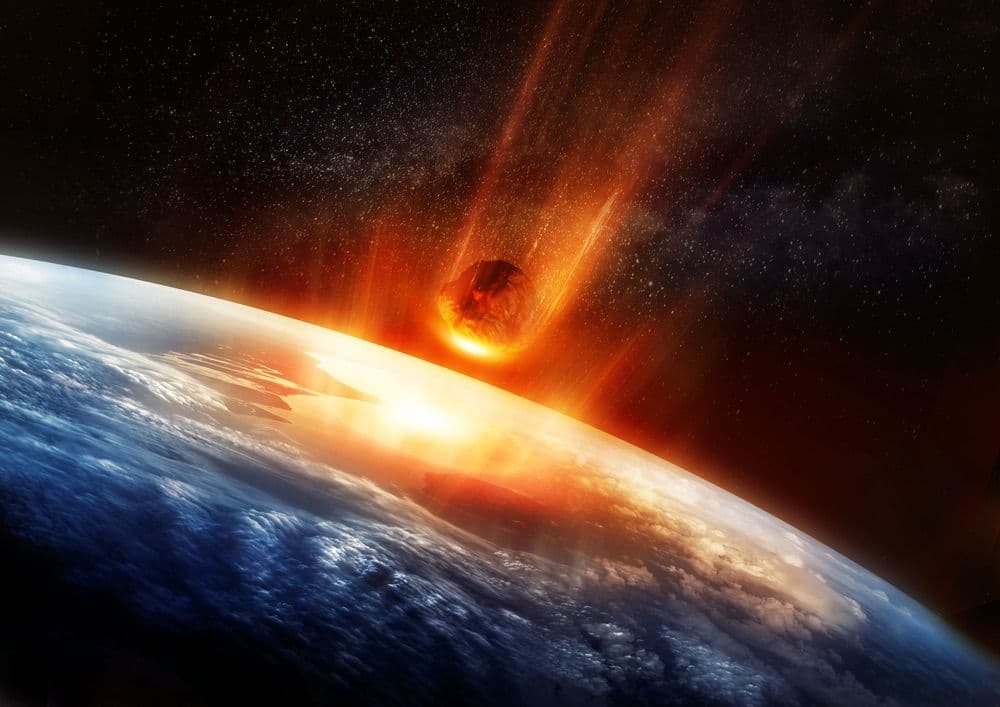
This prediction market topic addresses the possibility of a significant meteoroid impact event occurring in Earth's atmosphere during the 2026 calendar year. Specifically, it concerns whether a natural space rock, known as a meteoroid, will explode as a fireball or bolide with an energy release equivalent to 100 kilotons of TNT or greater. Such an event would be approximately six times more energetic than the atomic bomb dropped on Hiroshima and would be detectable globally by specialized infrasound and satellite monitoring networks. The resolution criteria are precisely defined, requiring the event to be natural in origin, excluding artificial space debris or reentering spacecraft, and will be verified using data from NASA's Jet Propulsion Laboratory Fireball and Bolide Data repository. The scientific interest in such events stems from their frequency and potential for damage. While objects large enough to cause ground impacts are rare, atmospheric explosions in the tens to hundreds of kiloton range occur multiple times per decade. Monitoring these events is crucial for refining risk assessments of near-Earth objects (NEOs) and understanding the population of smaller, yet still hazardous, asteroids. The year 2026 is not predicted to have any known asteroid on a certain collision course, making this a probabilistic question about an unknown object from the vast population of undiscovered meteoroids. Recent developments have heightened awareness of planetary defense. NASA's DART mission successfully demonstrated asteroid deflection technology in 2022, and the upcoming NEO Surveyor space telescope, scheduled for launch later this decade, aims to discover many more potentially hazardous objects. The public's interest is often sparked by dramatic events like the 2013 Chelyabinsk meteor, which released energy estimated at 440-500 kilotons, injuring over 1,600 people and causing widespread property damage in Russia. This market quantifies the collective assessment of the annual risk of a similarly energetic, albeit slightly smaller, event. People are interested in this topic because it sits at the intersection of astronomy, risk management, and existential curiosity. It transforms a complex statistical probability into a tradable instrument, allowing experts and the public to express their confidence in scientific forecasts. The outcome has implications for planetary defense funding, public safety protocols, and our understanding of Earth's cosmic environment. The market's resolution relies on authoritative scientific data, making it a unique fusion of space science and prediction technology.
Earth's atmosphere is regularly bombarded by material from space. Historical records and modern sensor data show that explosive meteoroid events, while startling, are a recurring natural phenomenon. The most directly comparable modern event to the 100kt threshold is the 2013 Chelyabinsk meteor over Russia. On February 15, 2013, a roughly 20-meter asteroid entered the atmosphere and exploded at an altitude of about 30 km, releasing energy estimated between 440 and 500 kilotons of TNT. The shockwave shattered windows across a wide area, injuring over 1,600 people and causing significant property damage. This event served as a wake-up call, demonstrating that even objects too small to cause global extinction can have severe regional consequences. Other significant 20th and 21st-century events provide further context. The 1908 Tunguska event in Siberia is estimated to have been a 3-10 megaton (3,000-10,000 kiloton) airburst from a larger object, flattening over 2,000 square kilometers of forest. More recently, a 173-kiloton event was detected over the Bering Sea on December 18, 2018, which went unnoticed by the public until later scientific analysis. These events establish a pattern: multi-hundred-kiloton atmospheric explosions occur every few decades, while events in the 1-100 kiloton range are more frequent, happening several times per year on average. The historical frequency suggests the probability of a 100kt event in any given year is low but non-negligible, underpinning the speculative nature of this prediction market.
The occurrence of a 100-kiloton meteoroid airburst has significant implications for public safety, economic stability, and scientific policy. If such an event were to occur over a populated area, it could cause substantial damage from its shockwave, potentially leading to injuries, destruction of property, and localized disruption of infrastructure. The economic cost could range from millions to billions of dollars depending on the location, necessitating disaster response and recovery efforts. Even an event over an ocean or remote area matters, as it provides critical data for refining risk models and underscores the persistent threat from undetected near-Earth objects. Beyond immediate effects, a confirmed event would have political and scientific ramifications. It would likely intensify global discussions and funding for planetary defense initiatives, such as NASA's NEO Surveyor mission and the European Space Agency's Hera mission. It validates the work of astronomers and organizations dedicated to asteroid detection and highlights gaps in our current surveillance capabilities. For the insurance and risk modeling industries, a real-world event provides a data point for calibrating models of low-probability, high-consequence natural hazards, affecting how such risks are priced and managed worldwide.
As of late 2024, there are no known asteroids or meteoroids with a predicted impact trajectory for 2026 that would meet the 100kt energy threshold. The risk is therefore entirely from undiscovered objects. Monitoring continues via NASA's planetary defense network and international partners, using ground-based telescopes like the Catalina Sky Survey and ATLAS. The most recent significant event publicly reported by NASA's CNEOS was a 2.6-kiloton fireball over the Mediterranean Sea in November 2023. The development and planned 2028 launch of the NEO Surveyor infrared space telescope represents the next major advancement in detection capability, but it will not be operational during the 2026 timeframe of this market.
A meteoroid is a small rocky or metallic body in space, typically smaller than an asteroid. When it enters Earth's atmosphere and vaporizes, creating a streak of light, it is called a meteor or shooting star. If any part of it survives the atmospheric entry and lands on Earth's surface, that remnant is called a meteorite.
NASA primarily uses data from classified U.S. Department of Defense satellites designed to detect infrared signatures of missile launches and nuclear detonations. These sensors detect the intense heat of a meteoroid entering the atmosphere. Scientists at the Jet Propulsion Laboratory analyze this data to calculate the object's speed, trajectory, and total radiated energy, which is then converted into an equivalent kiloton of TNT value.
Educational content is AI-generated and sourced from Wikipedia. It should not be considered financial advice.
Share your predictions and analysis with other traders. Coming soon!

No related news found
Add this market to your website
<iframe src="https://predictpedia.com/embed/d0XsLM" width="400" height="160" frameborder="0" style="border-radius: 8px; max-width: 100%;" title="100kt meteor strike in 2026?"></iframe>