
This event has ended. Showing historical data.

Events
GroupPOLYMARKET

Joseph Aoun out as President of Lebanon by December 31?

Joseph Aoun out as President of Lebanon by December 31?
Vol

$7.01K

|
Events

1

|
Markets

1

AI Analysis

Trader mode: Actionable analysis for identifying opportunities and edge

11%
Top Probability
$7.01K
Volume
1
Markets
1
Platforms

About This Event

This market will resolve to “Yes” if Joseph Aoun ceases to be President of Lebanon for any period of time between market creation and the specified date (ET). Otherwise, this market will resolve to “No”. An announcement of Joseph Aoun's resignation/removal before this market's end date will immediately resolve this market to "Yes", regardless of when the announced resignation/removal goes into effect. If the specified individual is detained, effectively removed from the specified position, or

Current Market Outlook

Polymarket traders give Joseph Aoun just an 11% chance of leaving Lebanon's presidency by December 31, 2026. That's a low probability, but not a negligible one. The market is saying Aoun finishing his term is the base case, yet enough uncertainty exists that roughly one in nine odds aren't crazy.

The $7,000 in volume tells you this is a thin market. Institutional money isn't here. The price likely reflects a handful of informed Middle East watchers rather than deep liquidity. With 148 days remaining, that 11% could move sharply on any single news event.

Key Factors Driving the Odds

Aoun took office in January 2025 after a two-year presidential vacuum, backed by a broad coalition including Hezbollah and Saudi-aligned factions. That rare consensus gave him room to operate. His early tenure has been defined by managing a fragile ceasefire with Israel and attempting to assert state authority over Hezbollah's weapons arsenal.

The 11% figure makes sense when you consider Lebanon's political history. Presidents rarely get removed mid-term through formal mechanisms. The constitution makes removal nearly impossible without two-thirds parliamentary support, which Aoun's coalition controls. Resignation is the more realistic path, but Aoun has shown no signs of wanting out.

The bigger risk isn't politics, it's collapse. Lebanon's economy remains in crisis, the state is bankrupt, and if the ceasefire with Israel breaks down into sustained conflict, Aoun could face an impossible situation. A president presiding over a state that loses its monopoly on force might step aside rather than preside over dissolution.

What Could Change These Odds

The Israel-Hezbollah ceasefire is the key variable. Israeli strikes have already targeted Lebanese state infrastructure, and if major hostilities resume, Aoun's position becomes untenable. He either resigns in protest or gets swept aside by events.

The parliamentary elections scheduled for May 2026 could reshape the coalition backing Aoun. If Hezbollah loses ground or if Saudi-backed factions decide Aoun has outlived his usefulness, pressure for early departure grows. Watch for any announcement of a successor candidate, that would signal movement.

There's also the health factor. Aoun is 62, no known issues, but Middle Eastern presidents have a habit of unexpected health crises. The market doesn't price in personal events well, which could create an opportunity if you have information others lack.

The honest read: 11% is roughly fair for a president with coalition support and no obvious exit path. But Lebanese politics has a way of surprising everyone. The thin liquidity means even a $2,000 bet could move the price, so if you have a strong view, the market is inefficient enough to exploit.

AI-generated analysis based on market data. Not financial advice.

Overview

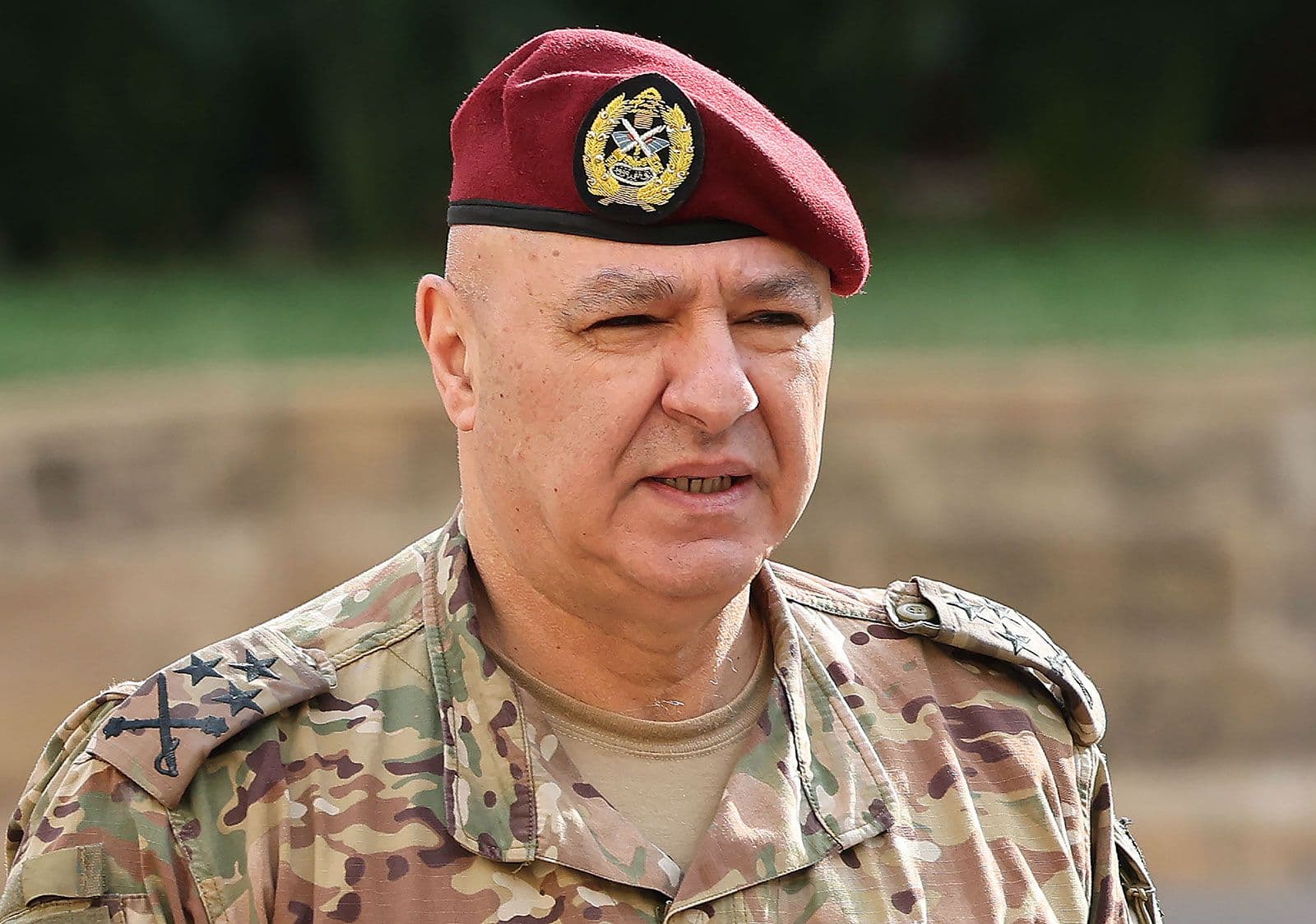
Joseph Aoun is the 14th President of Lebanon, elected on January 9, 2025, after a two-year vacancy. His presidency comes at a critical time for Lebanon, which faces a severe economic collapse, the aftermath of the 2020 Beirut port explosion, and ongoing political instability. The prediction market question asks whether Aoun will leave office before December 31, 2025, either through resignation, removal, or other means. This market reflects the uncertainty surrounding Lebanon's fragile political system and the many pressures on Aoun's presidency, including Hezbollah's influence, sectarian tensions, and the need for major reforms to secure international aid. Aoun, a former army commander, was elected with the support of the United States and Saudi Arabia, signaling a shift in Lebanon's regional alignments. His presidency is seen as a test of whether Lebanon can move toward stability and reform. However, his tenure has been marked by challenges: he has struggled to form a government, faced opposition from Hezbollah and its allies, and dealt with ongoing Israeli military operations in southern Lebanon. Aoun's ability to navigate these issues will determine his political survival. The market's resolution criteria are clear: if Aoun ceases to be president for any period before the end of 2025, the market resolves to 'Yes.' This includes resignation, removal, or even temporary absence. The market also resolves to 'Yes' if an announcement of his resignation or removal is made before the end date, regardless of when it takes effect. This makes the market sensitive to political developments, such as protests, parliamentary motions, or external pressure. Interest in this market stems from the high stakes of Lebanese politics. Aoun's departure could trigger a new presidential vacuum, further destabilizing the country, or it could open the door for a more effective leader. The market also reflects broader questions about Lebanon's future, including its relationship with Hezbollah, its ability to implement reforms, and its path to economic recovery. For investors and observers, this market offers a way to bet on the likelihood of political change in a volatile region.

Historical Context

Lebanon's presidency has historically been a point of contention among its sectarian factions. The post is reserved for a Maronite Christian, and elections often require complex negotiations to secure a two-thirds majority in parliament. The last president, Michel Aoun, served from 2016 to 2022, and his term ended without a successor, leading to a 26-month vacancy. During this period, Lebanon faced a severe economic crisis, with the currency losing over 90% of its value and the banking system collapsing. The vacuum also allowed Hezbollah to strengthen its influence, as the group backed a candidate who was ultimately unsuccessful. Joseph Aoun's election in January 2025 came after intense international pressure, particularly from the US, France, and Saudi Arabia, to break the deadlock. His military background was seen as an asset, as he was perceived as a neutral figure able to command respect across sectarian lines. However, his election was not without controversy. Hezbollah's preferred candidate, Suleiman Frangieh, withdrew, and Aoun's victory was seen as a setback for the group. Since then, Aoun has faced the challenge of forming a government, which requires balancing sectarian quotas and satisfying various political blocs. The historical context also includes Lebanon's experience with presidential removals. In 1989, President Amin Gemayel was forced to leave office amid civil war, and in 2007, President Émile Lahoud's term ended with no successor, leading to a six-month vacancy. However, no Lebanese president has been removed via impeachment or resignation in recent history. The political system is designed to ensure stability, but it often results in paralysis. Aoun's presidency is thus a test of whether the system can function under extreme pressure.

Why It Matters

The outcome of this prediction market has significant implications for Lebanon's stability and its relations with regional and international powers. If Aoun remains in office, it could signal a period of gradual reform and recovery, potentially unlocking international aid and investment. The International Monetary Fund has been negotiating a bailout package, but progress depends on the government's ability to implement anti-corruption measures and restructure the banking sector. Aoun's continued presence might also reassure investors and regional allies, such as Saudi Arabia and the UAE, who have been wary of Hezbollah's influence. Conversely, if Aoun is removed, Lebanon could plunge back into a political vacuum, exacerbating its economic crisis. A presidential vacancy would delay reforms, hamper efforts to address the electricity shortage and other basic services, and could lead to increased social unrest. It might also strengthen Hezbollah's position, as the group could push for a more favorable president. The market's resolution would thus be a leading indicator of Lebanon's trajectory, affecting not only its citizens but also the wider Middle East, given Lebanon's role as a proxy battleground for Iran and Saudi Arabia.

Current Status

As of mid-March 2025, Joseph Aoun remains president, but his position is precarious. He has yet to appoint a prime minister and form a government, which is a key requirement for implementing reforms. The caretaker government led by Najib Mikati continues to function in a limited capacity. Aoun has made some progress, such as meeting with international officials and discussing security arrangements with the military, but domestic political deadlock persists. Recent developments include a visit by French President Emmanuel Macron to Beirut, during which he urged Lebanese leaders to expedite government formation. Additionally, Israeli airstrikes in southern Lebanon have continued, and the UN has extended UNIFIL's mandate for another year. These factors contribute to an uncertain environment, with some analysts speculating that Aoun could face a vote of no confidence or be pressured to resign if he fails to form a government by the summer.

Frequently Asked Questions

What are the reasons Joseph Aoun could leave office before December 31, 2025?

Aoun could leave office through resignation, removal via impeachment or a vote of no confidence, or external pressure, such as foreign intervention or a coup. The market also resolves to 'Yes' if an announcement of his departure is made before the end date, even if he remains in office temporarily.

How is a Lebanese president normally removed from office?

The Lebanese constitution does not have a clear impeachment process for the president. The president can resign voluntarily, or the parliament could theoretically vote to remove him, but this would require a two-thirds majority, which is unlikely given the political divisions. In practice, presidents have left office at the end of their term or due to external pressure.

Was this helpful?
Updated Aug 5, 2026

Educational content is AI-generated and sourced from Wikipedia. It should not be considered financial advice.
Market Insights

Average Yes Price
11¢
Polymarket
Arbitrage Opps
0
Cross-Platform
0

Trade This Market