This event is no longer in the live catalog. Showing its last saved snapshot.

Will China unban Bitcoin?
K 1.2K contracts
1
4
AI Analysis
Trader mode: Market mechanics, assumptions and risks
K 1.2K contracts
Reported volume · provider units
4
Saved contracts
0
Same-question pairs
Source snapshot: Oct 19, 2026, 12:00 AM UTC
Snapshot observed Nov 17, 2026, 3:00 PM UTC. This analysis describes that snapshot and is not a live news update.
What the contract measures
The supplied evidence covers two providers asking whether mainland China will allow the public to legally buy and sell Bitcoin. Kalshi's rules resolve Yes if the People's Republic of China "agrees to or announces a nationwide policy permitting members of the general public in mainland China to legally buy and sell Bitcoin through a government-authorized exchange, bank, broker, or other regulated trading platform" [1]. Its rules list qualifying forms of announcement and exclude items such as "Preliminary discussions," "Leaked documents," and "Opposition party statements" [1].
Polymarket's wording differs. It resolves Yes if the government "explicitly announces that Chinese citizens will be allowed to legally buy Bitcoin with yuan (renminbi) from inside China by December 31, 2026, 11:59 PM ET" [2]. It also states that "it is only necessary that the PRC announces this change will take place" and that whether it happens "will have no bearing on the resolution" [2].
Reading the snapshot
The prices were observed at Nov 17, 2026, 3:00 PM UTC and retrieved at Nov 17, 2026, 4:53 PM UTC [1][2]. They describe that earlier observation, not current trading.
Kalshi's saved event contains four contracts with different deadlines. The contract for before Jan 1, 2027 shows Yes at 0.015, the 2028 contract at 0.06, the 2029 contract at 0.075, and the 2030 contract at 0.095 [1]. Polymarket's single contract, asking about 2027, shows Yes at 0.012 [2]. These are snapshot prices, not executable quotes or verified probabilities.
The Polymarket contract and the Kalshi 2027 contract do not ask identical questions. Their wording and listed close times differ, with Polymarket listing Jan 1, 2027, 4:59 AM UTC and Kalshi listing Jan 8, 2027, 3:00 PM UTC [1][2]. The prices should not be averaged, and the gap between 0.012 and 0.015 is not an arbitrage opportunity. Reported volume is also in different units: 1,480 contracts on Kalshi and $1,135,037 on Polymarket [1][2]. These figures cannot be added or compared, and volume does not indicate liquidity or the number of traders.
What remains uncertain
Both saved events are marked as complete samples of the saved markets, but the evidence does not establish that the providers list every possible real-world outcome [1][2]. The supplied material does not explain why prices sit where they do, and it contains no recent reporting on Chinese policy. Kalshi's excerpt lists its end time as not supplied, although its market records include end dates, and the contract closes early if the described event occurs [1]. Polymarket resolves on official PRC information, with a consensus of credible reporting also used [2]. Whether any announcement will occur is not established by this evidence.
References
- Kalshi: Will China unban Bitcoin?. Provider data observed Nov 17, 2026, 3:00 PM UTC.
- Polymarket: Will China unban Bitcoin by 2027?. Provider data observed Nov 17, 2026, 3:00 PM UTC.
Snapshot observed Nov 17, 2026, 3:00 PM UTC. This analysis describes that snapshot and is not a live news update.
What the contract measures
Two providers list contracts on whether China will allow mainland residents to legally buy and sell Bitcoin, but the wording differs. The Kalshi event asks whether the People's Republic of China "agrees to or announces a nationwide policy permitting members of the general public in mainland China to legally buy and sell Bitcoin through a government-authorized exchange, bank, broker, or other regulated trading platform" [1]. Its rules list qualifying forms such as "Official press releases," and say that "Preliminary discussions" and "Leaked documents" do not qualify [1].
The Polymarket event resolves "Yes" only if the PRC "explicitly announces that Chinese citizens will be allowed to legally buy Bitcoin with yuan (renminbi) from inside China by December 31, 2026, 11:59 PM ET" [2]. It states that an announcement is sufficient and that "Whether it actually does will have no bearing on the resolution of this market" [2].
Reading the snapshot
These prices were observed at Nov 17, 2026, 3:00 PM UTC and retrieved later that day, so they describe that observation time only. They are not live quotes, executable prices, or verified probabilities.
Kalshi shows four Yes prices, each for a different deadline: 0.015 for 2027, 0.06 for 2028, 0.075 for 2029, and 0.095 for 2030 [1]. Polymarket shows a Yes price of 0.012 for its 2027 deadline [2]. Because the Kalshi contracts ask about different years, their prices should not be read as one curve of a single question.
Both events include all saved markets (4 of 4 on Kalshi and 1 of 1 on Polymarket), and neither sample is marked partial. This does not show that the providers list every possible outcome. Reported volumes are 1,480 contracts on Kalshi and $1,135,037 on Polymarket. These are provider-specific units, so they cannot be compared or added, and they do not indicate liquidity or the number of traders.
The two 2027 contracts, at 0.015 on Kalshi and 0.012 on Polymarket, have different wording, so their gap is not an arbitrage opportunity.
What remains uncertain
The Kalshi 2027 contract says "before Jan 1, 2027," but its listed end date is Jan 8, 2027, 3:00 PM UTC [1]. The Kalshi event's listed end time was not supplied [1]. Polymarket's listed end time is Jan 1, 2027, 4:59 AM UTC, which matches the December 31, 2026, 11:59 PM ET wording [2].
Polymarket names official information from the PRC as its primary resolution source, with "a consensus of credible reporting" also used [2]. Kalshi states that its market "will close and expire early if the event described in the Payout Criterion occurs" [1]. The supplied evidence does not show any announcement, current policy status, or resolution outcome beyond these snapshot prices.
References
- Kalshi: Will China unban Bitcoin?. Provider data observed Nov 17, 2026, 3:00 PM UTC.
- Polymarket: Will China unban Bitcoin by 2027?. Provider data observed Nov 17, 2026, 3:00 PM UTC.
AI-generated analysis based on market data. Not financial advice.
Saved Nov 17, 2026 UTCOverview
The contract family asks whether the government of the People's Republic of China will allow mainland Chinese members of the public to legally buy and sell Bitcoin. Kalshi's event rules say a qualifying step is a nationwide policy that permits the general public in mainland China to trade Bitcoin through a government-authorized exchange, bank, broker, or other regulated trading platform [1]. The question is therefore about a policy decision with a specific scope, not about whether Bitcoin is popular or whether trading occurs informally. The Kalshi rules count several forms of official action. An agreement or announcement can qualify if it takes the form of a formal treaty signing, parliamentary approval with binding effect, official ratification, a formal commitment by the head of state or government with constitutional authority, official statements by authorized ministers, official press releases, formal declarations during government proceedings, or official statements to international bodies. Phased implementation announcements and multi-party agreements where China is a signatory also qualify [1]. The rules exclude a number of weaker signals. Preliminary discussions, conditional agreements, opposition party statements, leaked documents, think-tank recommendations, general aspirations without a specific commitment, and draft legislation without approval do not qualify. Regional actions also do not count unless the rules specify otherwise, and a retraction of a previously announced commitment is excluded [1]. Polymarket uses a related but separate test. Its market for a deadline of December 31, 2026 at 11:59 PM ET resolves Yes if the government of the PRC explicitly announces that Chinese citizens will be allowed to legally buy Bitcoin with yuan from inside China. Under that wording, only the announcement is needed, and whether the change actually takes place does not affect resolution. The primary source is official information from the PRC, with a consensus of credible reporting also used [2]. Because the Kalshi and Polymarket markets use different deadlines, wording, and resolution sources, they should be read as distinct contracts. The Kalshi series also contains separate contracts for several calendar years, each with its own end date, so a price on one date-specific contract does not describe another.
Why It Matters
These contracts measure whether an official, qualifying announcement of legal retail Bitcoin trading in mainland China is made by a specified date. The Kalshi version focuses on a nationwide policy that permits public buying and selling through authorized or regulated channels, and it lists the kinds of official action that count [1]. The Polymarket version focuses on an explicit announcement that citizens may buy Bitcoin with yuan from inside China, and it treats the announcement itself as sufficient even if implementation later differs [2]. The rule differences matter for interpretation. A preliminary government discussion, a think-tank paper, or a regional pilot may be newsworthy but may not meet the stated criteria. Readers should check each contract's own text before treating a headline as a resolving event.
Snapshot context
The latest published provider snapshot for this topic was observed on 2026-11-20 at 15:00 UTC. It contains listings from Kalshi and Polymarket. Market descriptions and listed closing times define the contracts; they do not establish that the real-world outcome has occurred. This article does not include a separately verified news update. [1]
Frequently Asked Questions
Does a government need to actually launch Bitcoin trading for the Kalshi contract to resolve Yes?
The Kalshi rules say a policy that the People's Republic of China agrees to or announces can satisfy the contract, provided it permits the general public in mainland China to legally buy and sell Bitcoin through a government-authorized or regulated channel [1]. The excerpt describes qualifying agreements and announcements, so the contract is framed around the policy step rather than a completed market launch.
Would a preliminary discussion or a think-tank recommendation count?
No under the Kalshi rules. Preliminary discussions, leaked documents, think-tank recommendations, opposition party statements, and general aspirations without a specific commitment are listed as non-qualifying [1].
Is the Polymarket contract the same as the Kalshi contract?
Not on the supplied wording. The Polymarket market asks whether the PRC explicitly announces that citizens may buy Bitcoin with yuan from inside China by December 31, 2026, 11:59 PM ET, and it says the announcement alone is enough [2]. The Kalshi rules use a nationwide policy standard, a different list of qualifying forms, and deadlines written as before January 1 of a given year [1].
Does the Kalshi event close early?
The Kalshi rules state that the market will close and expire early if the event described in the Payout Criterion occurs [1].
AI-written background. References identify the evidence used; Wikipedia links under Learn More are additional reading. Prices and provider rules are dated snapshots. This is not financial advice.
Related prediction markets
Prices are catalog snapshots and may have changed. Check each market's rules and observation time.
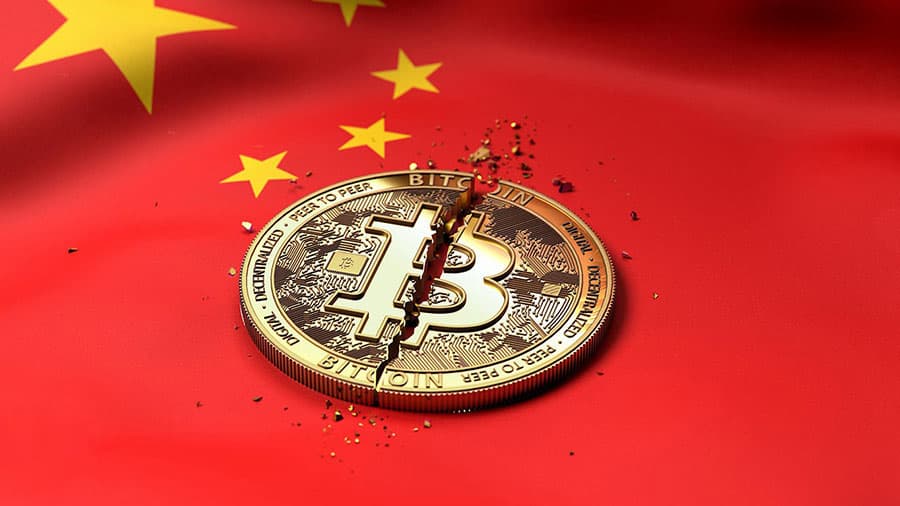
Will China unban Bitcoin?
PM $1.14M · K 1.6K contractsWill China unban Bitcoin by 2027?
Kalshi: Will People's Republic of China agree to or announce a nationwide policy permitting members of the general public in mainland China to legally buy and sell Bitcoin through a government-authorized exchange, bank, broker, or other regulated trading platform before Jan 1, 2027?
Related contracts
Related or unreviewed contracts may settle differently. Their gap is not an equivalent-contract comparison.
Saved prices; check contract rules.

What will the White House Press Secretary say in the next press briefing?
K 30.0K contracts
U.S. tariff rate on China on December 31, 2026?
PM $17.0K
What will the tariff rate on Chinese imports be on Jan 1, 2027?
K 10.1K contracts
US imports of goods from China in 2026
K 5.7K contracts
Will Trump visit China again?
K 0 contractsMarket Insights
Price gaps of 2 pp+
0
Same-question pairs
0
No outcomes on this page have been reviewed as the same question on both platforms yet.
Price differences do not establish arbitrage. Check each pair's review, current order prices, fees and settlement rules.
