This event is no longer in the live catalog. Showing its last saved snapshot.
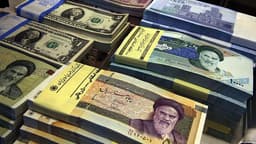
Will USD hit ___ Iranian rials by May 31?
PM $623.86
1
6
AI Analysis
Trader mode: Market mechanics, assumptions and risks
PM $623.86
Reported volume · provider units
6
Saved contracts
0
Same-question pairs
Source snapshot: May 1, 2026, 9:02 PM UTC
Current Market Outlook
Polymarket traders are pricing a 92% chance that the USD will hit 1.8 million Iranian rials by May 31, 2026. That translates to 180,000 toman on Bonbast's free-market rate. The market is treating this as nearly inevitable, though the thin volume of just $1,000 across six related markets means this price carries limited conviction. One whale moving $500 could shift these odds dramatically.
Key Factors Driving the Odds
Iran's currency crisis has been accelerating for years, not months. The rial traded around 420,000 per USD at the 2015 nuclear deal. By early 2024, it crossed 1 million rials. The current trajectory suggests the 1.8 million threshold is roughly a 50% depreciation from where the currency stood in late 2024, a move that took the previous two years to complete.
The central bank's managed float has effectively become a slow-motion devaluation. Bonbast captures the free-market rate, which consistently trades 10-15% above the official rate. That gap reflects capital controls and the regime's inability to defend the currency through reserves, which the IMF estimated at barely $20 billion in 2024, far below what Iran needs for import coverage.
Sanctions enforcement has tightened under both the Trump and Biden administrations, cutting oil exports that fund currency intervention. Iran's inflation rate, officially around 35% but likely higher, erodes real incomes and pushes Iranians into dollars, gold, or cryptocurrency as stores of value.
What Could Change These Odds
A nuclear deal with the West is the only realistic path to a stronger rial. Negotiations have stalled repeatedly, but a breakthrough that lifts sanctions and releases frozen assets could trigger a sharp rebound. The market is effectively betting that no such diplomatic shift occurs before May 2026.
The Iranian calendar's Nowruz holiday in March can distort liquidity and exchange rates temporarily, but these effects fade within weeks. The more meaningful catalyst is any escalation in the Israel-Iran conflict, which would accelerate capital flight and push the rial past this threshold even faster.
The 92% figure also reflects the market's view of Iranian macroeconomic fundamentals. With the budget deficit running near 6% of GDP and printing money financing government spending, the rial needs an external shock to reverse course. Absent that, hitting 1.8 million rials by May 2026 looks less like a question of if and more like a question of when.
AI-generated analysis based on market data. Not financial advice.
Saved Aug 28, 2026 UTCOverview
The Iranian rial has experienced one of the most dramatic currency depreciations in the world over the past decade, and prediction markets now allow participants to bet on its future value against the US dollar. This market specifically asks whether the USD exchange rate will reach or exceed a specified level in Iranian rials by May 31, 2026, based on the daily finalized free-market rate published by Bonbast, a widely used website that tracks unofficial exchange rates in Iran. Bonbast reports prices in toman (where 1 toman equals 10 rials), so a threshold of, say, 100,000 toman would correspond to 1,000,000 rials. The market resolves to 'Yes' if the rate hits or surpasses the target on any single day during the trading period, making it a binary bet on the trajectory of Iran's currency crisis. Iran's currency problems stem from a combination of international sanctions, domestic economic mismanagement, high inflation, and political uncertainty. The rial has lost over 90% of its value against the dollar since the 2015 nuclear deal (JCPOA) began to unravel. The free-market rate, which is what Bonbast tracks, often diverges significantly from the official rate set by the Central Bank of Iran, reflecting real supply and demand dynamics. Bonbast has become a key reference for economists, traders, and ordinary Iranians because it aggregates rates from currency exchange shops and online platforms, providing a transparent picture of the true value of the rial. Recent developments have accelerated the depreciation. The reimposition of US sanctions in 2018, the collapse of the 2015 nuclear deal, and the failure of subsequent negotiations have all contributed. In 2023, the rial hit record lows, and by early 2025, the exchange rate on the free market exceeded 1,000,000 rials per dollar for the first time. Political events, such as the death of President Ebrahim Raisi in a helicopter crash in May 2024 and the subsequent election of reformist Masoud Pezeshkian, have added volatility. The ongoing conflict between Israel and Iran, including direct missile exchanges in 2024, has further pressured the currency. People are interested in this market because it offers a way to hedge against or speculate on currency movements, and it provides a real-time assessment of market expectations about Iran's economic future. For those following Iran, the exchange rate is a barometer of broader geopolitical and economic stability. The market also attracts traders who see opportunities in the high volatility of the rial. Understanding the factors that drive the exchange rate, and the mechanisms of Bonbast, is essential for anyone considering participating in this market.
Historical Context
The Iranian rial's troubles began long before the current crisis. After the 1979 Islamic Revolution, the currency was relatively stable for years, but the Iran-Iraq War (1980-1988) and subsequent sanctions gradually eroded its value. The 1990s and 2000s saw periodic devaluations, but the most dramatic collapse came after the 2015 nuclear deal. The JCPOA brought temporary relief, with the rial trading around 32,000 IRR/USD in 2017. However, Trump's withdrawal in May 2018 and the reimposition of sanctions triggered a freefall. By 2020, the rate had surpassed 200,000 IRR/USD, and by 2023 it exceeded 500,000. The year 2024 was particularly turbulent. In April, Iran launched an unprecedented drone and missile attack on Israel, leading to fears of a full-scale war. The exchange rate spiked to over 700,000 IRR/USD. The death of President Raisi in a helicopter crash in May created political uncertainty, but the election of Pezeshkian in July brought a brief rally as markets hoped for a nuclear deal. However, these hopes faded quickly as negotiations stalled. By late 2024, the rial was trading around 750,000 IRR/USD. In 2025, with Trump back in office and 'maximum pressure' reinstated, the currency broke through 1,000,000 IRR/USD in February, a psychological barrier that had seemed unthinkable a few years earlier. The free-market rate has always been distinct from the official rate, which the central bank maintains at an artificially low level. Iran has multiple exchange rates for different purposes, but the free-market rate is the most realistic indicator of the currency's true value. Bonbast has tracked this rate since 2014, providing a continuous record that is invaluable for analysis. The gap between the official and free-market rates has widened over time, reflecting the severity of the crisis.
Why It Matters
The rial's exchange rate is not just a number; it is a gauge of Iran's economic health and a driver of its people's daily lives. A weaker rial means higher import costs, which fuels inflation that has already exceeded 40% annually. Basic goods like food and medicine become more expensive, disproportionately hurting the poor. The currency's collapse also erodes savings and trust in the government, leading to social unrest and protests, as seen in 2019 and 2022. For the international community, a continued depreciation signals deeper instability in a country that is a major oil producer and a key player in Middle Eastern geopolitics. For investors and policymakers, the exchange rate affects decisions on sanctions, trade, and diplomacy. A further collapse could trigger a humanitarian crisis, increase refugee flows, and destabilize the region. Conversely, a stabilization could open the door for investment and a potential de-escalation of tensions. Prediction markets like this one provide a real-time, crowd-sourced forecast that can influence hedging strategies and inform policy discussions. The outcome of this market also has implications for other markets, such as those on the nuclear deal or regional conflict, as currency movements often correlate with geopolitical events.
Frequently Asked Questions
What is Bonbast and why is it used for this market?
Bonbast is a popular website that aggregates free-market exchange rates for the Iranian rial. It publishes daily rates based on data from currency exchange shops and online platforms, and its 'finalized' rate is considered a reliable reference for the unofficial market. The prediction market uses Bonbast because it is transparent, widely cited, and provides a consistent time series.
AI-written background. References identify the evidence used; Wikipedia links under Learn More are additional reading. Prices and provider rules are dated snapshots. This is not financial advice.
Related prediction markets
Prices are catalog snapshots and may have changed. Check each market's rules and observation time.
USD x Iranian rials End of December?
PM $214.3KUSD x Iranian rials End of November?
PM $27.2K
JPMorgan (JPM) closes at $1T+ market cap by…?
PM $15.4K
What will gas hit by end of November?
PM $124.5KWhat will gas hit the week of November 23?
PM $501.91
Argentina Official USD Exchange Rate end of 2026?
PM $16.0KMarket Insights
Price gaps of 2 pp+
0
Same-question pairs
0
No outcomes on this page have been reviewed as the same question on both platforms yet.
Price differences do not establish arbitrage. Check each pair's review, current order prices, fees and settlement rules.