
How many more Millennium Prize Problems will AI solve in 2026?
PM $3.22M · K 673.0K contracts
10
28
- Reported volume
- PM $3.22M · K 673.0K contracts
- Events
- 10
- Markets
- 28
Polymarket vs Kalshi
Snapshot from
As of Nov 24, 2026, 6:00 AM UTC, December 31, 2027 is priced at 62% on Polymarket and 63% on Kalshi.
| Outcome (Yes price) | Polymarket | Kalshi | Gap |
|---|---|---|---|
| December 31, 2027 | 62% | 63% | 1.0 pts |
| Same question, fine print differs | |||
| December 31, 2026 | 19% | 21% | 2.0 pts |
| Same question, fine print differs | |||
Yes prices for outcomes an automated review found to ask the same question on both platforms. They are not order quotes; check each platform's rules, fees and live prices before trading.
AI Analysis
Trader mode: Market mechanics, assumptions and risks
PM $3.22M · K 673.0K contracts
Reported volume · provider units
28
Saved contracts
2
Same-question pairs
Source snapshot: Nov 24, 2026, 6:00 AM UTC
This analysis was written from an earlier market snapshot, so its prices may be older than the odds above.
Snapshot observed Nov 23, 2026, 12:00 PM UTC. This analysis describes that snapshot and is not a live news update.
What the contract measures
These markets ask whether an AI developer will announce, or be credited with, a solution to a Millennium Prize Problem. The wording differs across contracts, and the differences matter.
A Kalshi market on Google asks whether Google will announce a complete solution to one of five named problems. Navier-Stokes and the Poincare conjecture are excluded, and the announcement must expressly state that Google developed or co-developed the solution [1]. Polymarket's OpenAI market resolves on an OpenAI announcement that it has solved a qualifying problem. An announcement that only credits outside researchers does not qualify [2]. Kalshi's broader AI lab market is stricter. It requires a complete proof published in a peer-reviewed journal, official recognition by a governing body, or reporting by at least two Source Agencies. A preprint or announcement alone does not count [3]. Polymarket's AI lab market uses an announcement standard, but it covers a named list of companies and any company with a model on a specified leaderboard at the time of announcement [4].
Because these standards differ, the prices should not be averaged or combined into one probability.
Reading the snapshot
The provider observation time is Nov 23, 2026, 12:00 PM UTC. The source retrieval time is Nov 23, 2026, 2:52 PM UTC. These are snapshots, not executable quotes or verified probabilities.
Within the Kalshi AI lab event, Yes prices rise with later close dates. The contract closing 2026-12-01 is priced at 0.79, and the contract closing before 2028 is priced at 0.965 [3]. Polymarket's AI lab contract closing 2026-12-31 is priced at 0.725 and the one closing 2027-12-31 at 0.92 [4]. Polymarket's OpenAI-only contracts are lower, at 0.1325 for 2026 and 0.585 for 2027 [2]. Kalshi's Google contract is priced at 0.075 for a close before 2027 and 0.385 for a close before 2028 [1]. Comparing an OpenAI-only contract with an all-AI-lab contract mainly reflects different scope.
Reported volume is in different units. Polymarket reports dollars and Kalshi reports contracts. Volume is not liquidity and does not indicate how many traders are involved.
What remains uncertain
The snapshot includes Kalshi's OpenAI event and Polymarket's event on how many more problems AI will solve in 2026. No supplied excerpt covers those events, so their terms could not be checked. All saved markets for each event are included, but that does not establish that every possible outcome is listed. The supplied evidence does not explain why any price moved.
References
- Kalshi: Will Google announce a Millennium Prize solution?. Provider data observed Nov 23, 2026, 12:00 PM UTC.
- Polymarket: OpenAI announces another Millennium Prize solution by...?. Provider data observed Nov 23, 2026, 12:00 PM UTC.
- Kalshi: When will an AI lab solve another Millennium Prize Problem?. Provider data observed Nov 23, 2026, 12:00 PM UTC.
- Polymarket: AI lab announces another Millennium Prize solution by...?. Provider data observed Nov 23, 2026, 12:00 PM UTC.
Snapshot observed Nov 22, 2026, 6:00 AM UTC. This analysis describes that snapshot and is not a live news update.
What the contract measures
The supplied markets ask whether an AI lab, or in some contracts OpenAI specifically, will solve another Millennium Prize Problem within a set window. The wording differs by platform. Kalshi's general contract requires a complete solution published in a reputable peer-reviewed journal, officially recognized by the Clay Mathematics Institute or another recognized body, or reported by at least two Source Agencies citing a specific written work. A preprint, announcement, or blog post alone does not count [1]. Polymarket's general contract resolves on an eligible lab's announcement that it solved a qualifying problem, and it states that "No further confirmation from Clay Math Institute or any other organization is required" [2][3]. Kalshi's OpenAI contract requires the qualifying announcement to "expressly state that OpenAI developed or co-developed the solution" [4]. No rule excerpt was supplied for Polymarket's OpenAI event, so its criteria cannot be compared here.
Close times also differ. Kalshi's "before Dec 1, 2026" contract lists a close of Dec 1, 2026, 4:59 AM UTC [1], while Polymarket's 2026 contracts list Jan 1, 2027, 4:59 AM UTC [3].
Reading the snapshot
Prices were observed at Nov 22, 2026, 6:00 AM UTC and retrieved at Nov 22, 2026, 7:38 AM UTC. They are snapshots, not executable quotes or verified probabilities.
For the general AI lab question, Kalshi's "before 2028" Yes price is 0.965 [1], and Polymarket's "by December 31, 2027" Yes price is 0.9635 [2]. Their wording and close times differ, so these figures should not be averaged or treated as one estimate.
Within Kalshi's general event, the Yes price is lower for shorter windows: 0.875 before 2027 and 0.845 before December 1, 2026 [1]. Polymarket's count market lists Yes prices of 0.66 for one more problem in 2026, 0.195 for none, 0.0795 for two, 0.0345 for three, 0.0095 for four, and 0.0035 for five [3]. All six saved outcomes for that event are included, but the Yes prices sum to 0.982, which this snapshot does not explain. The sample does not establish that the provider lists every possible outcome.
For OpenAI, Kalshi shows a Yes price of 0.58 before January 1, 2028, and 0.11 before January 1, 2027 [4]. The saved data also includes Polymarket prices for an OpenAI event, but no rule excerpt for it was supplied, so those figures are not interpreted here.
Reported volumes use different units. Kalshi reports contracts and Polymarket reports US dollars, so the figures should not be added or compared [1][3][4].
What remains uncertain
The evidence does not show why these prices are where they are, how many traders hold positions, or the likelihood of any real-world solution. No recent news or announcements were supplied. The listed end time is not supplied for the general Kalshi event or the Kalshi OpenAI event [1][4]. Kalshi's OpenAI contract may close early if the event occurs [4]. No qualifying solution is established by this evidence, and the snapshot may not reflect later prices.
References
- Kalshi: When will an AI lab solve another Millennium Prize Problem?. Provider data observed Nov 22, 2026, 6:00 AM UTC.
- Polymarket: AI lab announces another Millennium Prize solution by...?. Provider data observed Nov 22, 2026, 6:00 AM UTC.
- Polymarket: How many more Millennium Prize Problems will AI solve in 2026?. Provider data observed Nov 22, 2026, 6:00 AM UTC.
- Kalshi: Will OpenAI announce another Millennium Prize solution?. Provider data observed Nov 22, 2026, 6:00 AM UTC.
AI-generated analysis based on market data. Not financial advice.
Saved Nov 22, 2026 UTCThis article was written from an earlier market snapshot and may be out of date. Use the dated market data and provider rules above for current information.
Overview
The contracts in this group ask whether an artificial intelligence lab will be credited with solving one of the Clay Mathematics Institute's Millennium Prize Problems within a stated window. Kalshi runs an event asking when an AI lab will solve another such problem, with separate contracts that use different end dates, including one for before 2028 [1]. Polymarket runs a related market asking whether an eligible AI lab will announce a solution by a given date [2], and another asking how many distinct qualifying problems will be announced as solved in 2026 [3]. Kalshi also runs a contract specific to OpenAI [4]. The qualifying problems differ by contract. One Polymarket market lists the Riemann Hypothesis, P versus NP, the Yang-Mills existence and mass gap problem, the Hodge Conjecture, and the Birch and Swinnerton-Dyer Conjecture, and states that announcements about the Navier-Stokes existence and smoothness problem will not qualify [2]. The OpenAI contract also excludes the Poincare conjecture [4]. The rules for what counts as a solution are stricter on Kalshi than on the Polymarket announcement market. The Kalshi AI lab contract requires a complete proof, disproof, or counterexample that addresses the problem as originally formulated by the Clay Mathematics Institute. It can be satisfied by publication in a reputable peer-reviewed journal, by an official statement from the Clay Mathematics Institute or another recognized body that points to a specific written work, or by at least two Source Agencies reporting that the problem has been resolved by reference to a specific publicly available written work [1]. A preprint, announcement, blog post, or conference presentation does not by itself count, although it may be the written work relied on for recognition [1]. Partial results, special cases, results that depend on unproven assumptions, and purported solutions that are later retracted or found to contain an unresolved identified error do not count [1]. The Polymarket announcement market works differently. A qualifying announcement must come from an eligible lab or its official representative and must express that the problem has been solved. The market states that no further confirmation from the Clay Mathematics Institute or any other organization is required [2]. Its primary resolution source is official information from the eligible labs, although a consensus of credible reporting may also be used [2]. Attribution is a central condition in each contract. Kalshi credits a lab when Source Agencies report that the lab, its personnel, or an AI system it developed and operated produced the solution in whole or substantial part and the lab is credited as an author, contributor, or producer. Independent third-party use of a lab's publicly available model without that participation or credit does not count [1]. Polymarket similarly excludes announcements that only credit or congratulate outside researchers, including researchers who used the lab's models, compute, or research credits [2][3]. The rules also set different deadlines. The Polymarket count market refers to a deadline of December 31, 2026, 11:59 PM ET, and counts each qualifying problem once regardless of how many labs or announcements address it [3]. Other Polymarket and Kalshi contracts use dates in 2027 or 2028 as their windows [1][2]. A date written in contract rules is a resolution deadline, not an announced event.
Historical Context
A widely discussed piece of background concerns a release of research papers by OpenAI. According to an encyclopedia entry retrieved for this article, on 6 October 2026 OpenAI released 722 manuscripts via a GitHub repository. The manuscripts were described as claiming to have solved a large number of open and unsolved major mathematical problems, and included partial results on the Riemann hypothesis, the Birch and Swinnerton-Dyer conjecture, and the Hodge conjecture. Mathematicians raised concerns about the manuscripts' validity and exposition style, and about whether releasing them advanced human understanding. The event has been dubbed the mathocalypse [5]. This entry describes a past event as recorded in an encyclopedia article. It does not verify the validity of the manuscripts or establish whether any claim was accepted by the mathematical community. Under the contract rules, partial results do not count as solutions [1][2], so the release described above would not by itself satisfy the criteria for the OpenAI or AI lab contracts.
Why It Matters
These contracts measure whether a specific, rule-defined claim of solving a named Millennium Prize Problem is made and, in some versions, recognized. They do not measure whether AI systems are broadly capable at mathematics. The exact wording matters: a preprint, a partial result, a retracted claim, or an announcement that only thanks outside researchers can fail a contract even when it attracts attention [1][2][4]. Market prices shown for these events are snapshots of trading activity at the time of observation, not executable quotes or verified probabilities. Different contracts on the same subject can have different rules, end dates, and volumes [1][2][3][4], so price differences between them do not by themselves identify a trading opportunity.
Snapshot context
The latest published provider snapshot for this topic was observed on 2026-11-20 at 15:00 UTC. It contains listings from Kalshi and Polymarket. Market descriptions and listed closing times define the contracts; they do not establish that the real-world outcome has occurred. This article does not include a separately verified news update. [1]
Frequently Asked Questions
Does a preprint or a public release of papers count as a solution?
Under the Kalshi AI lab contract, a preprint, announcement, blog post, or conference presentation does not by itself constitute a solution, though it may be the written work relied on for official recognition or qualifying reporting [1]. The Polymarket announcement market requires an announcement from an eligible lab that expresses the problem has been solved, and partial results or progress do not qualify [2].
Does a solution to the Navier-Stokes problem count?
No. The Polymarket markets state that announcements concerning the Navier-Stokes existence and smoothness problem will not qualify [2][3]. The OpenAI Kalshi contract also excludes it [4].
Does using an AI model to help with a proof count for an AI lab?
It depends on the contract. Kalshi counts a lab when it, its personnel, or its system produced the solution in whole or substantial part and is credited as an author, contributor, or producer, while independent third-party use without credit does not count [1]. Polymarket excludes announcements that only credit outside researchers who used the lab's models, compute, or research credits [2]. The OpenAI contract states that providing model access or research credits alone is not direct collaboration on the solution [4].
Does Clay Mathematics Institute have to confirm a solution?
It depends on the contract. The Polymarket markets state that no further confirmation from the Clay Mathematics Institute or any other organization is required [2][3]. The Kalshi AI lab contract can be satisfied by peer-reviewed publication, by an official Clay Mathematics Institute or other recognized body statement, or by reporting from at least two Source Agencies [1].
AI-written background. References identify the evidence used; Wikipedia links under Learn More are additional reading. Prices and provider rules are dated snapshots. This is not financial advice.
Related prediction markets
Prices are catalog snapshots and may have changed. Check each market's rules and observation time.

Which Millennium Prize Problem will AI solve next?
PM $838.8K · K 12.1K contractsWill the Riemann Hypothesis be the next Millennium Prize Problem solved by AI?
Kalshi: Will Riemann be solved next before 2045?
Related contracts
Will P versus NP be the next Millennium Prize Problem solved by AI?
Kalshi: Will P vs NP be solved next before 2045?
Related contracts
Will the Yang-Mills existence and mass gap problem be the next Millennium Prize Problem solved by AI?
Kalshi: Will Yang–Mills be solved next before 2045?
Related contracts
Related or unreviewed contracts may settle differently. Their gap is not an equivalent-contract comparison.
Saved prices; check contract rules.

When will the Riemann hypothesis win the Millennium Prize?
K 234.7K contractsWhen will all Millennium Prize Problems be solved?
PM $554.7K · K 10.0K contractsWill CMI declare a Millennium Prize Problem solved by December 31, 2028?
Kalshi: Will all remaining Millennium Prize Problems be solved before 2029?
Related contracts
Will CMI declare a Millennium Prize Problem solved by December 31, 2027?
Kalshi: Will all remaining Millennium Prize Problems be solved before 2028?
Related contracts
Related or unreviewed contracts may settle differently. Their gap is not an equivalent-contract comparison.
Saved prices; check contract rules.

Who will be Israeli interior minister after the election?
PM $588.3K · K 12.06M contractsWill Yair Lapid be the next Israeli Minister of Foreign Affairs?
Kalshi: Will Yair Lapid be Minister of Foreign Affairs as a result of the government formation following the 2026 Israeli legislative election?
Related contracts
Will Yair Golan be the next Israeli Minister of National Security?
Kalshi: Will Yair Golan be Minister of National Security as a result of the government formation following the 2026 Israeli legislative election?
Related contracts
Will Naftali Bennett be the next Israeli Minister of Finance?
Kalshi: Will Naftali Bennett be Minister of Finance as a result of the government formation following the 2026 Israeli legislative election?
Related contracts
Related or unreviewed contracts may settle differently. Their gap is not an equivalent-contract comparison.
Saved prices; check contract rules.

2027 French Presidential Election: who will be on the ballot?
PM $184.88M · K 7.66M contractsWill Jean-Luc Mélenchon win the 2027 French presidential election?
Kalshi: Will Jean-Luc Mélenchon appear on the official candidate list for the first round of the 2027 French presidential election?
Related contracts
Will Marine Le Pen win the 2027 French presidential election?
Kalshi: Will Marine Le Pen appear on the official candidate list for the first round of the 2027 French presidential election?
Related contracts
Will Marine Le Pen be on the ballot for the 2027 French presidential election?
Kalshi: Will Marine Le Pen appear on the official candidate list for the first round of the 2027 French presidential election?
Related contracts
Related or unreviewed contracts may settle differently. Their gap is not an equivalent-contract comparison.
Saved prices; check contract rules.
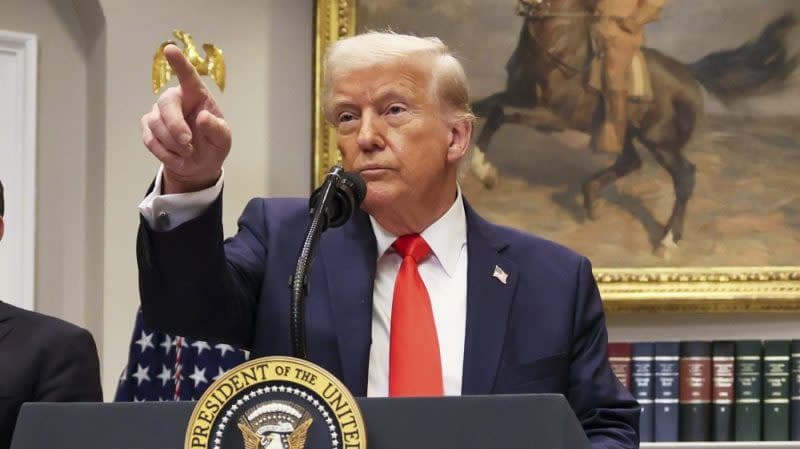
Who will leave their role in the Trump administration in 2026?
PM $2.91M · K 8.45M contractsWill Kash Patel leave the Trump administration before 2027?
Kalshi: Will Kash Patel leave the Trump administration before Jul 1, 2027?
Related contracts
Will Pete Hegseth leave the Trump administration before 2027?
Kalshi: Will Pete Hegseth leave the Trump administration before Jul 1, 2027?
Related contracts
Will Howard Lutnick leave the Trump administration before 2027?
Kalshi: Will Howard Lutnick leave the Trump administration before Jul 1, 2027?
Related contracts
Related or unreviewed contracts may settle differently. Their gap is not an equivalent-contract comparison.
Saved prices; check contract rules.
Market Insights
Price gaps of 2 pp+
1
Same-question pairs
2
Largest saved gap: 2.0 percentage points.
Price differences do not establish arbitrage. Check each pair's review, current order prices, fees and settlement rules.

