
Guam Governor winner?
K 26.1K contracts
1
2
Guam Governor winner?
K 26.1K contracts
1
2
AI Analysis
Trader mode: Market mechanics, assumptions and risks
K 26.1K contracts
Reported volume · provider units
2
Saved contracts
0
Reviewed equivalent pairs
Source snapshot: Oct 19, 2026, 6:00 PM UTC
About This Event
In 2026 If X wins the 2026 Guam gubernatorial election, then the market resolves to Yes. This market is eligible for accelerated determination after a consensus of media organizations project the winner. See full rules for details. This market will close and expire early if the event occurs.
This saved analysis is awaiting a background update. Its prices and claims may be outdated; compare them with the dated market data above.
Current Market Outlook
Kalshi traders give incumbent Lieutenant Governor Josh Tenorio a 36% chance of winning the 2026 Guam gubernatorial election. That is a low probability for an incumbent candidate, especially one running as the current governor's chosen successor. Governor Lou Leon Guerrero, Tenorio's running mate in 2018 and 2022, is term-limited and cannot run again. Tenorio is effectively the administration candidate.
A 36% price means the market sees Tenorio as an underdog. The field is wide open, with no other named candidates yet listed on Kalshi. The remaining 64% is spread across unnamed alternatives, which is unusual for a market this far out.
Key Factors Driving the Odds
Guam's Democratic Party is fractured. Leon Guerrero and Tenorio won in 2018 and 2022, but their coalition is showing cracks. The 2022 election was close: they beat Republican challenger Felix Camacho by just 6 points, 54% to 48%. That is not a mandate.
Tenorio has two problems. First, Guam's economy is struggling post-typhoon Mawar recovery. Federal disaster aid has been slow. Tourism, the island's main industry, has not fully rebounded from COVID. Voters often punish incumbents for slow recovery. Second, Tenorio lacks Leon Guerrero's personal popularity. He was a relatively unknown senator before becoming lieutenant governor. Without the governor at the top of the ticket, his name recognition is lower.
The Republican Party of Guam is also rebuilding. They held the governor's office from 2003 to 2011 under Felix Camacho and Eddie Calvo. A strong Republican challenger could consolidate the anti-incumbent vote. That 64% "field" price reflects uncertainty about who that challenger will be.
What Could Change These Odds
The biggest catalyst will be candidate announcements in late 2025. If a well-known Republican like former Senator James Moylan or Senator Chris Duenas enters, Tenorio's odds could drop further. If the Democratic Party unites behind him with no primary challenge, his odds could rise toward 50%.
Another key date is the release of Guam's 2025 economic data. If tourism numbers and federal spending pick up, Tenorio's chances improve. If the recovery stalls, voters will look for change.
The market is pricing in genuine uncertainty about a small island's political dynamics. Tenorio is not a strong incumbent, but he is not a lost cause either. A 36% price reflects that this race is genuinely competitive and could go either way depending on who else jumps in.
AI-generated analysis based on market data. Not financial advice.
Saved Jul 28, 2026 UTCThis saved content is awaiting a background update. It may contain outdated claims; use the dated market data and provider rules for the latest available information.
Overview
The 2026 Guam gubernatorial election will determine the next Governor of Guam, the westernmost territory of the United States in the Pacific Ocean. Guam is an organized, unincorporated territory with a civilian government headed by an elected governor and lieutenant governor, who run on a single ticket. The governor serves a four-year term and is responsible for executive functions including the budget, public safety, education, and economic development. The 2026 election is scheduled for November 2026, with primary elections likely in August or September of that year. Incumbent Governor Lou Leon Guerrero, a Democrat first elected in 2018 and re-elected in 2022, is term-limited and cannot seek a third consecutive term. This creates an open seat race, the first since 2018, and has already attracted potential candidates from both the Democratic and Republican parties. Guam's political landscape is dominated by local issues such as military buildup, economic diversification, tourism recovery, and federal relations. The outcome of this election will shape Guam's policies on federal funding, infrastructure projects, and its relationship with the U.S. Department of Defense, which operates major bases on the island. The market tracks which candidate will win the general election, with resolution based on consensus media projections. Interest in this race extends beyond Guam because the territory's governor influences U.S. Pacific strategy, military readiness, and regional geopolitics, especially given China's growing presence in the Indo-Pacific. The 2026 election is also a test of whether Guam's Democratic dominance, which has seen Democrats hold the governorship since 2002 except for one term, will continue or shift toward a Republican or independent candidate.
Historical Context
Guam has held gubernatorial elections since 1970, when the Organic Act of Guam was amended to provide for an elected governor and lieutenant governor. Prior to that, governors were appointed by the U.S. President. The first elected governor was Republican Carlos Camacho, who served from 1971 to 1975. Since then, the governorship has alternated between the two major parties, but Democrats have held the office for all but one term since 2002. The only Republican governor in that period was Eddie Calvo, who served from 2011 to 2019. The 2026 election is notable because it is the first open seat race since 2018, when Lou Leon Guerrero won the Democratic primary and general election after then-Governor Eddie Calvo was term-limited. Term limits were established by a 1996 referendum that limited governors to two consecutive terms. This has created regular turnover and prevented any single party from entrenching power indefinitely. Guam's political parties are not as ideologically rigid as mainland U.S. parties. Local issues like military buildup, tourism, and federal funding often override national party loyalties. The 2022 election saw Leon Guerrero win re-election with 55.6% of the vote against Republican Frank Blas Jr., who received 44.4%. Turnout was about 58% of registered voters. The 2026 race will be shaped by ongoing military construction projects, the recovery of tourism from Japan and Korea, and federal policy toward territories under the Biden or next administration.
Why It Matters
The Guam governor controls a budget of over $1 billion annually and oversees a government that employs about 13,000 people, roughly 20% of the island's workforce. The governor's decisions on tax policy, infrastructure spending, and education directly affect the daily lives of Guam's 170,000 residents. The governor also negotiates with the U.S. Department of Defense on the military buildup, which involves relocating thousands of Marines from Okinawa to Guam. This buildup brings billions in federal investment but also strains local resources like water, power, and roads. The governor's stance on federal relations, including the push for greater self-determination or statehood, shapes Guam's political future. The 2026 election occurs amid heightened U.S.-China competition in the Pacific. Guam hosts Andersen Air Force Base and Naval Base Guam, both critical for power projection. The governor's cooperation with the U.S. military on training, environmental issues, and land use is essential for national security. A governor who is skeptical of the military presence could slow or complicate these efforts. The election also matters for the Democratic Party's control of territorial leadership. With Democrats holding the governorship in most U.S. territories, a Republican win in Guam would be a symbolic shift. The outcome could influence how other territories approach their own elections and federal relations.
Frequently Asked Questions
Who is running for governor of Guam in 2026?
As of early 2025, no candidates have officially declared. Potential candidates include Lieutenant Governor Josh Tenorio (D), former delegate Michael San Nicolas (D), Senator Frank Blas Jr. (R), Senator Telo Taitague (R), and current delegate James Moylan (R). The field is expected to solidify by mid-2025.
Can Lou Leon Guerrero run for governor again in 2026?
No. Governor Lou Leon Guerrero is term-limited after serving two consecutive terms from 2019 to 2027. She cannot run for a third term under Guam's 1996 term limit law.
When is the 2026 Guam gubernatorial election?
The general election is scheduled for November 2026, likely on the first Tuesday after the first Monday, which is November 3, 2026. Primary elections are typically held in August or September, but the exact dates have not been set.
What are the main issues in the 2026 Guam governor race?
Key issues include the U.S. military buildup and its impact on local infrastructure, economic diversification beyond tourism, the cost of living and housing affordability, education funding, healthcare access, and federal relations including the push for greater self-determination or statehood.
AI-written background. References identify the evidence used; Wikipedia links under Learn More are additional reading. Prices and provider rules are dated snapshots. This is not financial advice.
Related prediction markets
Prices are catalog snapshots and may have changed. Check each market's rules and observation time.

Guam Governor Election Winner
PM $4.2K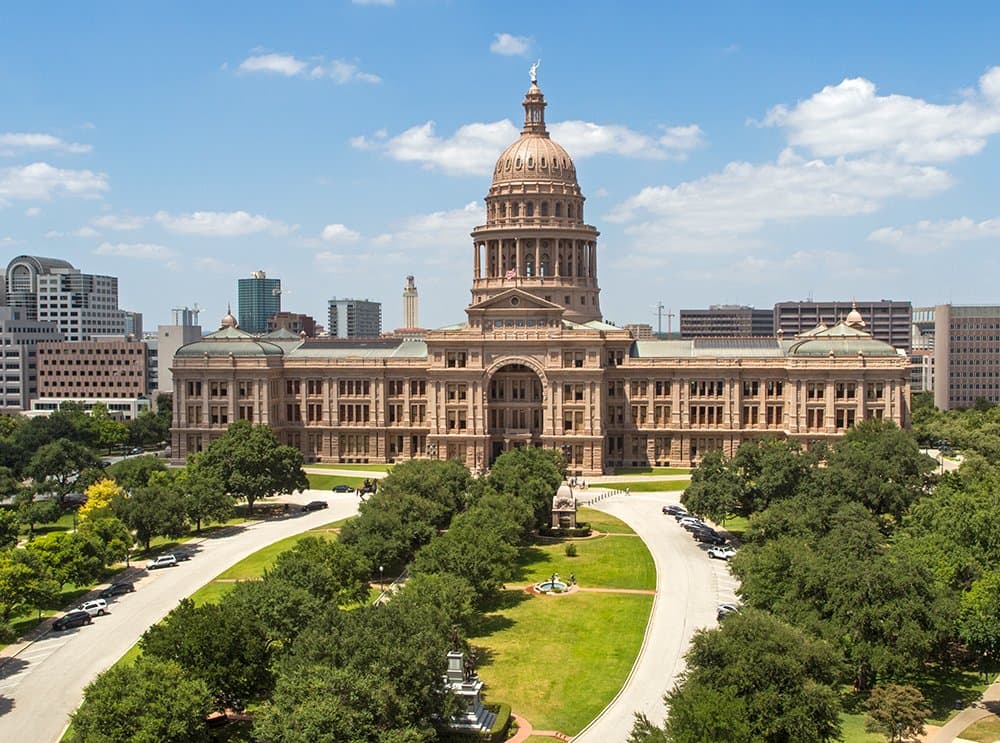
Closest Governor's Race?
PM $26.7K
Guerrero Governor Election Winner
PM $95.4K
Campeche Governor Election Winner
PM $28.8K
California Governor Election Winner
PM $42.04M · K 19.09M contractsWill Xavier Becerra win the California Governor Election in 2026?
Kalshi: Who will win the governorship in California? (Xavier Becerra)
Related contracts
Will Steve Hilton win the California Governor Election in 2026?
Kalshi: Who will win the governorship in California? (Steve Hilton)
Related contracts
Related or unreviewed contracts may settle differently. Their gap is not an equivalent-contract comparison.
Saved prices; check contract rules.
Alaska Governor Election Winner
PM $1.56M · K 821.0K contractsWill Jonathan Kreiss-Tomkins win the 2026 Alaska governor election?
Kalshi: Who will win the governorship in Alaska? (Jonathan Kreiss-Tomkins)
Related contracts
Will Bernadette Wilson win the 2026 Alaska governor election?
Kalshi: Who will win the governorship in Alaska? (Bernadette Wilson)
Related contracts
Will Tom Begich win the 2026 Alaska governor election?
Kalshi: Who will win the governorship in Alaska? (Tom Begich)
Related contracts
Related or unreviewed contracts may settle differently. Their gap is not an equivalent-contract comparison.
Saved prices; check contract rules.
Market Insights
Price gaps of 2 pp+
0
Reviewed equivalent pairs
0
No currently reviewed equivalent pairs with both binary Yes prices are available.
Price differences do not establish arbitrage. Check each pair's review, current order prices, fees and settlement rules.
