Will Ukraine recapture Crimean territory by...?
$3.44M
1
1
Will Ukraine recapture Crimean territory by...?

$3.44M
1
1
AI Analysis
Trader mode: Actionable analysis for identifying opportunities and edge
About This Event
This market will resolve to “Yes” if, according to the ISW map, Ukraine captures any territory in Crimea by June 30, 2026 at 11:59 PM ET. Territory will will be considered captured if any part of Crimea shaded blue on the ISW map (https://storymaps.arcgis.com/stories/36a7f6a6f5a9448496de641cf64bd375) by the resolution date. Otherwise, the market will resolve to “No”. The border around Crimea shaded in black on the ISW map will not qualify. Once Ukraine captures territory in Crimea, any subse
Current Market Outlook
Polymarket traders give Ukraine only an 11% chance of recapturing any territory in Crimea by the end of 2026. That is a low probability, but it is not zero. The market is saying this outcome is unlikely enough that you would need to be heavily convinced of a major battlefield shift to bet on "Yes." With $2.8 million in volume, this is a liquid market where serious money has shaped the price.
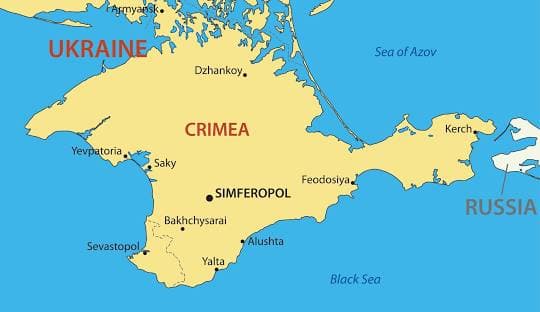
The resolution relies on the Institute for the Study of War (ISW) map showing any part of Crimea shaded blue, indicating Ukrainian control. The black border around Crimea does not count. That means even a small beachhead or a single village would trigger a "Yes" resolution.
Key Factors Driving the Odds
Russia has held Crimea since 2014 and fortified it heavily after the 2022 invasion. The peninsula is connected to the mainland by the Kerch Bridge and a narrow land corridor, both heavily defended. Ukraine has conducted long-range strikes on Russian military targets in Crimea, including naval bases and airfields, but it has not attempted a ground assault. The 11% price reflects the reality that Ukraine lacks the naval power to land forces and the ground forces to punch through Russian defensive lines.
The market also accounts for political factors. A Ukrainian offensive into Crimea would be an escalation that could trigger a broader Russian response, including potential use of tactical nuclear weapons. Western allies have been cautious about supporting operations that might cross that threshold.
What Could Change These Odds
The 2026 deadline is far enough out that several catalysts could shift the price. If Ukraine receives long-range missiles or fighter jets in quantities that allow it to degrade Russian air defenses along the Crimean coast, the odds could rise. A major Ukrainian breakthrough in southern Zaporizhzhia Oblast that threatens the land corridor to Crimea would also change the calculus.
Conversely, if Russia launches a successful offensive that pushes Ukrainian forces further from the peninsula, the price could fall below 5%. The end of U.S. military aid under a new administration is a real risk that would crater the probability. The next six months will clarify whether Ukraine can sustain its defensive operations or shift toward offensive action.
AI-generated analysis based on market data. Not financial advice.
Overview
This prediction market asks whether Ukraine will recapture any territory in Crimea by June 30, 2026, using the Institute for the Study of War (ISW) map as the authoritative source. The ISW map, updated regularly on ArcGIS, shows territorial control in Ukraine, including Crimea. The market will resolve to “Yes” if any part of Crimea shaded blue on that map by the resolution date, indicating Ukrainian military control. The black border around Crimea on the map does not qualify, meaning only actual captured land inside the peninsula counts. Crimea has been under Russian occupation since March 2014, following a controversial referendum and annexation that most countries consider illegal. Ukraine has stated reclaiming Crimea as a strategic goal, but the peninsula presents unique challenges due to its geography, Russian defenses, and the Kerch Strait Bridge connection. The market reflects uncertainty about Ukraine's military capacity to breach Russian lines in Crimea within the next two years, given ongoing Western aid, Russian fortifications, and the broader war dynamics. Interest in this topic is high because Crimea holds symbolic, economic, and military significance. Its loss in 2014 was a major blow to Ukraine, and its recapture would represent a significant shift in the war. The market also ties to debates about Ukraine's counteroffensive strategy, Western weapons supply, and Russia's ability to hold territory. Analysts and traders watch ISW maps closely as they provide near-real-time updates from open-source intelligence, making them a reliable reference for territorial changes.
Historical Context
Crimea has a long and contested history. It was part of the Russian Empire from 1783 until 1954, when Soviet leader Nikita Khrushchev transferred it to the Ukrainian Soviet Socialist Republic. After the Soviet Union collapsed in 1991, Crimea remained part of independent Ukraine, though ethnic Russians made up about 60% of the population. In 1994, Ukraine, Russia, the United States, and the United Kingdom signed the Budapest Memorandum, in which Ukraine gave up its Soviet-era nuclear weapons in exchange for guarantees of its territorial integrity. Russia violated these guarantees in 2014. In February 2014, following the Euromaidan protests that ousted pro-Russian President Viktor Yanukovych, Russian forces without insignia, known as “little green men,” seized strategic sites in Crimea. In March 2014, Russia organized a referendum that was widely condemned as illegitimate, with reported results showing 97% support for joining Russia. Russia formally annexed Crimea on March 18, 2014. The United Nations General Assembly passed Resolution 68/262, declaring the annexation invalid. Since then, Russia has militarized Crimea, building naval bases, airfields, and missile systems. In 2018, Russia opened the Kerch Strait Bridge, connecting Crimea to the Russian mainland, which became a key supply route and a symbol of Russian control. In 2022, Russia launched its full-scale invasion of Ukraine, partly to secure Crimea and the land bridge to it. Ukraine has since conducted strikes on Crimea, including attacks on the Kerch Bridge in October 2022 and July 2023, and on Russian naval targets in Sevastopol. These strikes have degraded Russian capabilities but have not resulted in Ukrainian ground forces entering the peninsula.
Why It Matters
Recapturing Crimea would have major economic implications. Crimea is home to the Black Sea Fleet in Sevastopol, which Russia uses to project power in the Mediterranean and Middle East. Ukraine's control of Crimea would threaten Russia's naval operations and potentially reopen Ukrainian ports for grain exports, which have been disrupted by the war. The peninsula also has tourism and natural gas potential, though much of its infrastructure has been damaged. Political ramifications are equally significant. For Ukraine, Crimea is a national symbol of resistance and sovereignty. Its recapture would strengthen Zelensky's government and could shift public opinion in Ukraine toward accepting further sacrifices. For Russia, losing Crimea would be a profound political blow to Putin, potentially destabilizing his regime. It would also undermine Russia's narrative of restoring historical borders. Social impact includes the fate of Crimea's population, which includes ethnic Russians, Ukrainians, and Crimean Tatars. Many Crimean Tatars, who opposed the annexation, have faced repression. A Ukrainian recapture could lead to population displacement or integration challenges. The broader significance extends to international law. A Ukrainian victory in Crimea would reinforce the principle that annexation by force is unacceptable, potentially deterring future aggression by other states. Conversely, if Ukraine fails, it could embolden Russia and other powers to pursue territorial expansion. The outcome also affects NATO and EU security policies, as a recaptured Crimea could host NATO bases, altering the regional balance of power.
Current Status
As of early 2025, Ukraine has not recaptured any territory in Crimea. The front line is stable along the Dnipro River in Kherson region, with Ukrainian forces holding a small bridgehead on the eastern bank near Krynky but not advancing toward Crimea. Ukraine has continued long-range strikes on Crimea, including attacks on radar systems, air defense, and naval targets in Sevastopol. In October 2024, Ukraine used ATACMS missiles to strike a Russian airbase in Dzhankoi, destroying several aircraft. However, Russia has heavily fortified the Perekop Isthmus, the main land connection to Crimea, with trenches, anti-tank ditches, and minefields. The Kerch Bridge remains operational despite repeated damage. Western aid has been a critical factor. The U.S. Congress approved a $61 billion aid package in April 2024, including ATACMS and artillery shells, but deliveries have been slow. European aid has also been inconsistent. Ukrainian officials have stated that they lack the resources for a major offensive in 2025. Military analysts suggest that a ground operation in Crimea would require a breakthrough in southern Ukraine, which has not occurred. The market's resolution date of June 30, 2026, gives time for potential changes, but current trends do not favor a Ukrainian capture.
Frequently Asked Questions
What does the ISW map show for Crimea?
The ISW map shows areas of Russian control in pink and Ukrainian control in blue. For Crimea, the map has consistently shown the entire peninsula in pink (Russian control) since 2014. Any blue shading would indicate Ukrainian capture.
Has Ukraine ever controlled any part of Crimea since 2014?
No. Ukraine's military has not entered Crimea since the 2014 annexation. Ukrainian forces have conducted raids and strikes but have not established a permanent ground presence.
Educational content is AI-generated and sourced from Wikipedia. It should not be considered financial advice.