This event is no longer in the live catalog. Showing its last saved snapshot.

When will traffic at the Strait of Hormuz return to normal?
K 9.48M contracts
1
17
- Reported volume
- K 9.48M contracts
- Events
- 1
- Markets
- 17
AI Analysis
Trader mode: Market mechanics, assumptions and risks
K 9.48M contracts
Reported volume · provider units
17
Saved contracts
0
Same-question pairs
Source snapshot: Oct 13, 2026, 12:27 PM UTC
Snapshot observed Nov 24, 2026, 12:00 AM UTC. This analysis describes that snapshot and is not a live news update.
What the contract measures
These contracts ask whether traffic through the Strait of Hormuz, measured by the 7-day moving average of transit calls reported by IMF PortWatch, reaches a set level by a set date. Kalshi's wording resolves Yes if the average is "above 60" before a date [1]. Polymarket's December 31 contract resolves Yes if PortWatch publishes the average "equal to or above 60" for any date in its window [2]. Because the threshold is exact, the two wordings are not identical questions, even when they share a theme. Polymarket counts container, dry bulk, roll-on/roll-off, general cargo, and tanker ships, and excludes ships PortWatch does not report [2].
Reading the snapshot
The data was observed at 00:00 UTC on 24 November 2026 and retrieved at 00:08 UTC that day, so it describes that moment only. Prices are snapshot values, not executable quotes or verified probabilities.
Within the Kalshi traffic event, Yes prices for "above 60" run from 0.32 for a contract dated December 1, 2027 to 0.635 for one dated January 1, 2029. The contract titled "December 1, 2027" carries a listed end date of December 7, 2027, so the title and listed date differ. Polymarket's December 31, 2026 contract shows Yes at 0.0265 [2], and its November 30, 2026 contract shows Yes at 0.0045 [4]. Polymarket's "by December 31, 2027" contract shows Yes at 0.345, which is a separate event from the Kalshi series.
Kalshi's average-traffic event prices Yes at between 0.01 and 0.045 for thresholds from 30 to 120, for the window after July 6, 2026 and before January 1, 2027 [3]. This sample includes all 10 markets in that event.
The Kalshi norm event is a partial sample: 12 of 16 markets are included, selected by highest Yes price. Omitted markets do not imply lower prices. Do not compare rankings across events or platforms, and do not treat a price gap between platforms as an arbitrage opportunity.
Reported volumes are in different units: Kalshi in contracts and Polymarket in dollars. They cannot be added or compared, and volume is not liquidity or a count of traders.
What remains uncertain
The evidence gives no reason for any price movement and no news context. It does not show how many traders hold each view or how these markets have performed historically.
Listed end times are contract data, not announced events. The Kalshi traffic event lists no end time [1], and the Kalshi average-traffic event lists none either [3]. Kalshi's norm contract may close early if its condition is met [1]. Polymarket resolves when PortWatch publishes a qualifying value, and revisions within the timeframe count [2]. Final outcomes depend on future PortWatch data, which this snapshot cannot show.
References
- Kalshi: When will traffic at the Strait of Hormuz return to normal?. Provider data observed Nov 24, 2026, 12:00 AM UTC.
- Polymarket: Strait of Hormuz traffic returns to normal by December 31?. Provider data observed Nov 24, 2026, 12:00 AM UTC.
- Kalshi: How high will average weekly Hormuz traffic get in 2026?. Provider data observed Nov 24, 2026, 12:00 AM UTC.
- Polymarket: Strait of Hormuz traffic returns to normal by November 30?. Provider data observed Nov 24, 2026, 12:00 AM UTC.
Snapshot observed Nov 23, 2026, 3:00 PM UTC. This analysis describes that snapshot and is not a live news update.
What the contract measures
The markets in this snapshot all track the 7-day moving average of transit calls through the Strait of Hormuz as published by IMF PortWatch, but the rules differ in threshold, window, and resolution. The Kalshi event asks whether the average will be "above 60 before" a set date, with an early close if the condition is met [1]. A Polymarket market resolves "Yes" if the average is "equal to or above 60 for any date between market creation and December 31, 2026" [2]. A second Polymarket market uses the same threshold but ends on November 30, 2026 [4]. The Kalshi average-traffic event uses several thresholds, from above 30 to above 120, over the period "after July 6, 2026 and before Jan 1, 2027" [3].
Listed close times also differ from the question wording. The Kalshi contract asking about "before December 1, 2027" has a listed end date of December 7, 2027 [1]. Several Kalshi event end times are "not supplied" [1][3]. Read the rules, not only the displayed date.
Reading the snapshot
The observation time was Nov 23, 2026, 3:00 PM UTC, and the sources were retrieved at the same time [1][2][3][4]. The prices below describe that snapshot only. They are not executable quotes or verified probabilities.
On the Kalshi "return to normal" event, the Yes price for "before January 1, 2029" was 0.635, and for "before April 1, 2027" it was 0.12 [1]. Within that one event, later deadlines carry higher Yes prices, which follows from the longer window. On Polymarket, the Yes price for "by December 31, 2026" was 0.0305, and for "by November 30, 2026" it was 0.003 [2][4]. Polymarket's "by December 31, 2027" Yes price was 0.385 [1].
On the Kalshi average-traffic event, Yes prices were 0.045 for above 40, 0.04 for above 60, and 0.01 for above 120 [3]. These are separate thresholds in one event, not a forecast distribution.
Do not compare these figures across platforms as if they were one outcome. The Kalshi and Polymarket questions differ in threshold, window, and resolution source details. Price differences between them do not establish an arbitrage opportunity. Reported volumes are each provider's own totals in their own units and should not be added or compared [1][2].
What remains uncertain
The sample is partial. The Kalshi "return to normal" event reports 16 markets, and 12 are included [1]. The omitted four are not known to be lower priced, and rankings should not be read across events or providers.
The evidence does not explain why any price moved, how many traders hold a position, or what news has affected traffic. It also does not show the historical forecasting record of these markets. Listed end times are not always the same as contract question dates, and some are not supplied. Whether any threshold is reached depends on future IMF PortWatch publications, which this snapshot does not cover.
References
- Kalshi: When will traffic at the Strait of Hormuz return to normal?. Provider data observed Nov 23, 2026, 3:00 PM UTC.
- Polymarket: Strait of Hormuz traffic returns to normal by December 31?. Provider data observed Nov 23, 2026, 3:00 PM UTC.
- Kalshi: How high will average weekly Hormuz traffic get in 2026?. Provider data observed Nov 23, 2026, 3:00 PM UTC.
- Polymarket: Strait of Hormuz traffic returns to normal by November 30?. Provider data observed Nov 23, 2026, 3:00 PM UTC.
AI-generated analysis based on market data. Not financial advice.
Saved Nov 23, 2026 UTCOverview
PredictPedia's Strait of Hormuz markets ask whether a shipping measure, the 7-day moving average of transit calls through the strait as reported by the IMF PortWatch, will reach a stated level within a set period. The strait is a waterway between the Persian Gulf and the Gulf of Oman, with Iran on the north coast and the Musandam Peninsula of Oman on the south coast, and a portion of the southwest of the peninsula under the United Arab Emirates [6]. It is about 104 miles long, with a width that varies from about 60 miles to 24 miles [6]. The contracts in this group are tied to a single data series. Kalshi's event asks whether the 7-day moving average of transit calls through the strait, as reported by the IMF PortWatch, will be above a specified threshold before a given date, and the market resolves to Yes if that happens [1]. Kalshi's wording also says the market will close and expire early if the condition is met [1]. A related Kalshi event asks how high the same average will get after July 6, 2026 and before January 1, 2027, using a series of thresholds [3]. Polymarket's versions use the same logic with "Arrivals of Ships" as the measure. A Polymarket market resolves to Yes if IMF Portwatch publishes a 7-day moving average of transit calls equal to or above 60 for any date between market creation and a stated end date, and to No otherwise [2][4]. Because each contract depends on a published data series, the timing of publication matters as much as the underlying shipping activity. The rules describe how resolution works in practice, which is covered below.
Historical Context
Shipping through the strait has been disrupted since early 2026. According to Wikipedia's article on the 2026 Strait of Hormuz crisis, shipping traffic through the strait "has been largely blocked by Iran since 28 February 2026, when the United States and Israel launched an air war against Iran" [5]. The Iranian Revolutionary Guard Corps issued warnings forbidding passage through the strait, boarded and attacked merchant ships, and laid sea mines in the strait [5]. The same article says the United States blockaded Iranian ports from 13 April to 29 May 2026 [5]. Before the war began, about 25% of the world's seaborne oil trade and 20% of the world's liquefied natural gas passed through the strait [5]. These are historical accounts drawn from an encyclopedia entry retrieved for this article. They describe events through the period the article covers and do not by themselves establish what traffic looks like on the date this article was generated.
Why It Matters
The contracts measure whether shipping through the strait recovers to a level that the IMF PortWatch series records as normal, using the threshold each contract names. In the Polymarket rules, the measure is the 7-day moving average of transit calls, and the rules state that daily transit calls include container, dry bulk, roll-on/roll-off, general cargo, and tanker ships [2]. Ships not reported by IMF Portwatch are not considered [2]. The threshold is the core of each rule. Several Kalshi and Polymarket contracts use a level of 60, while the Kalshi average-traffic event lists levels from 30 to 120 [1][2][3]. A market's threshold, end date, and resolution wording determine what must happen for it to resolve Yes. Two contracts with different end dates can therefore be asking different questions, even when they use the same data source.
Snapshot context
The latest published provider snapshot for this topic was observed on 2026-11-23 at 15:00 UTC. It contains listings from Kalshi and Polymarket. Market descriptions and listed closing times define the contracts; they do not establish that the real-world outcome has occurred. This article does not include a separately verified news update. [1]
Frequently Asked Questions
What does the 7-day moving average of transit calls mean?
The contracts refer to the 7-day moving average of transit calls through the Strait of Hormuz as reported by IMF PortWatch [1][3]. Polymarket describes the measure as the moving average of "Arrivals of Ships" for the strait [2].
Which ships count toward the transit calls?
Polymarket's rules say daily transit calls include container, dry bulk, roll-on/roll-off, general cargo, and tanker ships, and that ships not reported by IMF Portwatch will not be considered [2].
Where does the resolution data come from?
Polymarket names IMF PortWatch as the resolution source, specifically the transit calls data published for the Strait of Hormuz, both in the chart and through downloadable files [2][4].
Can a contract resolve before its end date?
Yes. Polymarket states that a market resolves as soon as IMF PortWatch publishes a 7-day moving average of transit calls equal to or above the specified level [2][4]. Kalshi's event says it will close and expire early if its condition is met [1].
What happens if data is revised or delayed?
Polymarket's rules say revisions to previously published data points made within the market's timeframe will be considered, but they will not disqualify a previously published data point from qualifying [2][4]. If no data has been published for the final date within 14 calendar days (ET) after the end of the period, the market resolves based on data published up to that point [2][4]. For obvious data integrity issues, the market may remain open until the end of the third calendar day (ET) after the data is first released to allow for corrections [2][4].
AI-written background. References identify the evidence used; Wikipedia links under Learn More are additional reading. Prices and provider rules are dated snapshots. This is not financial advice.
Related prediction markets
Prices are catalog snapshots and may have changed. Check each market's rules and observation time.
Which month will Strait of Hormuz traffic return to normal in 2027?
PM $18.2K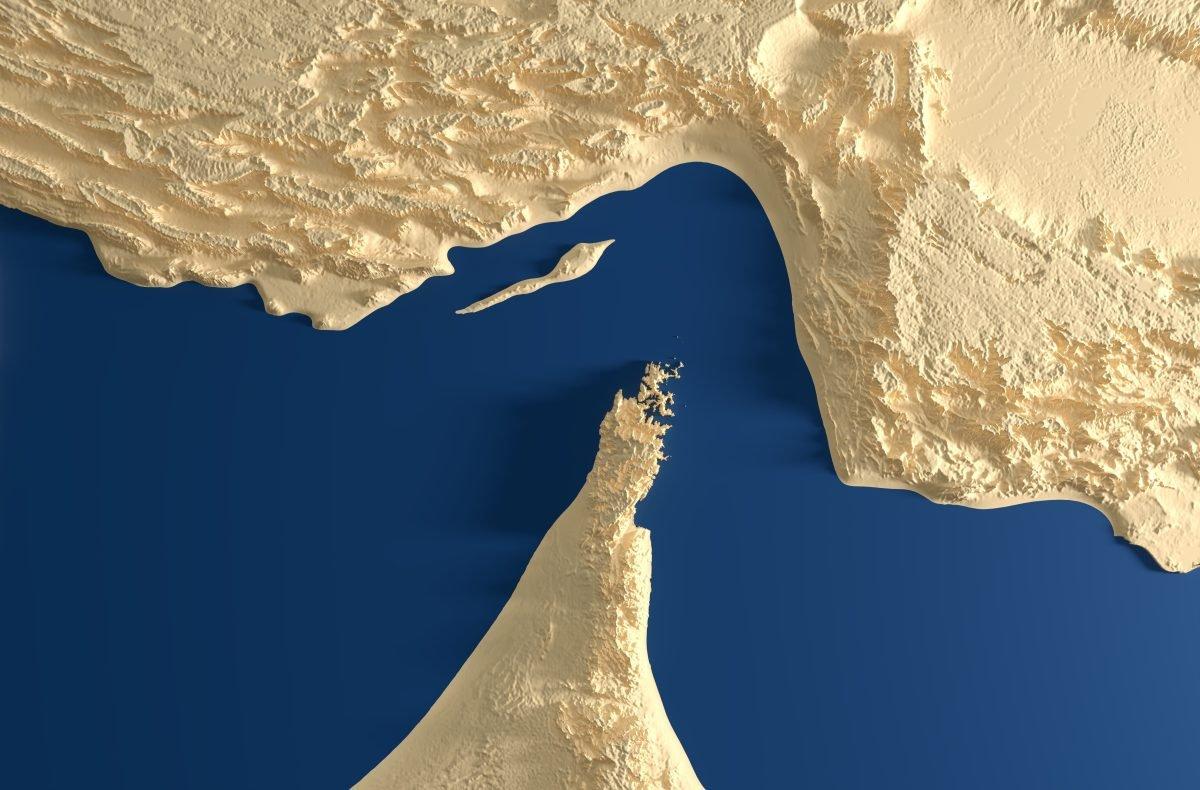
When will traffic at the Strait of Hormuz return to normal?
PM $21.48M · K 9.81M contractsStrait of Hormuz traffic returns to normal by December 31, 2027?
Kalshi: Will the 7-day moving average of transit calls through the Strait of Hormuz as reported by the IMF PortWatch be above 60 before January 1, 2028?
Related contracts
Strait of Hormuz traffic returns to normal by June 30, 2027?
Kalshi: Will the 7-day moving average of transit calls through the Strait of Hormuz as reported by the IMF PortWatch be above 60 before July 1, 2027?
Related contracts
Strait of Hormuz traffic returns to normal by March 31, 2027?
Kalshi: Will the 7-day moving average of transit calls through the Strait of Hormuz as reported by the IMF PortWatch be above 60 before April 1, 2027?
Related contracts
Related or unreviewed contracts may settle differently. Their gap is not an equivalent-contract comparison.
Saved prices; check contract rules.

Hormuz traffic × July 2027 gas price
K 1.9K contractsHighest 7-day average ship traffic through the Strait of Hormuz by December 31?
PM $10.0K7-day average ship traffic through the Strait of Hormuz on December 31?
PM $6.3K
Traffic through the Strait of Hormuz? (11/16 - 11/22)
K 412.2K contractsMarket Insights
Price gaps of 2 pp+
0
Same-question pairs
0
No outcomes on this page have been reviewed as the same question on both platforms yet.
Price differences do not establish arbitrage. Check each pair's review, current order prices, fees and settlement rules.
