
Highest 7-day average ship traffic through the Strait of Hormuz by December 31?
PM $9.1K
1
6
- Reported volume
- PM $9.1K
- Events
- 1
- Markets
- 6
Current odds
Snapshot from
As of Nov 22, 2026, 12:00 PM UTC, the highest-priced outcome on Polymarket is 10+ at 12.4%.
Polymarket
- 10+12.4%
- 20+11.5%
- 40+6.6%
- 30+3.3%
- 50+1.5%
Yes prices. They are not order quotes; check each platform's rules, fees and live prices before trading.
AI Analysis
Trader mode: Market mechanics, assumptions and risks
PM $9.1K
Reported volume · provider units
6
Saved contracts
0
Same-question pairs
Source snapshot: Nov 22, 2026, 12:00 PM UTC
Snapshot observed Nov 22, 2026, 12:00 AM UTC. This analysis describes that snapshot and is not a live news update.
What the contract measures
This is a Polymarket event asking whether the 7-day moving average of transit calls through the Strait of Hormuz will reach a stated level on any single date from market creation through December 31, 2026. The resolution source is IMF PortWatch's Transit Calls data for the strait. The rules say the chart figure governs settlement, and if the chart is unavailable, the downloadable figure rounded to the nearest whole number is used [1].
Each threshold in the event is a separate yes or no contract. The "40+" contract, for example, resolves "Yes" if the moving average reaches at least 40 on any qualifying date, and "No" otherwise [1].
Reading the snapshot
The market data was observed at 2026-11-22 00:00 UTC and retrieved at 01:53 UTC on the same day. It describes those moments only, not live trading. The saved prices are snapshots, not executable quotes or verified probabilities.
The six Polymarket contracts show these Yes prices: 40+ at 0.068, 10+ at 0.0625, 20+ at 0.045, 30+ at 0.033, 50+ at 0.012, and 60+ at 0.012 [1]. The 10+ contract priced above the 20+ contract in this snapshot. The evidence does not explain that, and the contracts should be read individually rather than as a ladder that must fall monotonically.
All six markets in the saved event are included, and the sample is not marked partial. The reported volume is $8,859 in US dollars. That figure is the event's total trading volume as reported by Polymarket. It is not a measure of liquidity or the number of participants, and it should not be compared with figures from any other platform [1].
No cross-platform comparison is available in this snapshot, so no averaging across providers is possible.
What remains uncertain
The listed end time is 2027-01-01 04:59 UTC, which is later than the December 31, 2026 date in the title. The rules also state that the market resolves only after IMF PortWatch publishes data for every date in the period, and that if data is still unpublished 14 calendar days after the period ends, resolution uses the most recent data available then [1]. The listed end time is therefore a provider field, not a confirmed resolution date.
The rules also allow the market to stay open up to seven calendar days if the source publishes clearly erroneous data, pending a correction [1].
The evidence does not establish that these six thresholds cover every possible outcome, and it does not explain why the prices sit where they do. Prices may change after the snapshot.
References
- Polymarket: Highest 7-day average ship traffic through the Strait of Hormuz by December 31?. Provider data observed Nov 22, 2026, 12:00 AM UTC.
Snapshot observed Nov 22, 2026, 12:00 AM UTC. This analysis describes that snapshot and is not a live news update.
What the contract measures
This event asks whether the 7-day moving average of transit calls through the Strait of Hormuz will reach a stated threshold on any single date between market creation and December 31, 2026. The source says the measure comes from IMF PortWatch, and that "The figure shown in the chart will be used for settlement" [1]. If the chart is unavailable, the downloadable figure, rounded to the nearest whole number, is used [1].
Each threshold is a separate yes or no contract. The rules also state that the market "will resolve once IMF PortWatch has published data for every date in the period" [1]. The listed end time is Jan 1, 2027, 4:59 AM UTC [1]. That is a listed close time in the contract data, not a resolution. The source does not say when resolution will occur.
Reading the snapshot
The snapshot was observed at Nov 22, 2026, 12:00 AM UTC and retrieved at Nov 22, 2026, 2:07 AM UTC [1]. These prices describe that moment only and may not reflect current conditions.
All six Polymarket markets in this event are included, and the sample is not partial [1]. The quoted Yes prices are 0.068 for 40+, 0.0625 for 10+, 0.045 for 20+, 0.033 for 30+, and 0.012 for both 50+ and 60+ [1]. The 40+ contract is quoted above the 10+ contract, which is not what a simple reading of threshold difficulty would suggest. The source does not explain this, so this analysis does not either. Treat it as a feature of the snapshot that warrants checking the live contract wording.
These are snapshot prices, not executable quotes or verified probabilities. The reported volume of $8,859 is Polymarket's own total for this event in US dollars [1]. It does not measure liquidity or the number of traders.
What remains uncertain
The evidence does not establish the actual transit data for any date, whether the chart or downloadable figure will be used in practice, or whether revisions or data-integrity provisions will apply. The provider notes that "This market will resolve on the most recent data published" in some circumstances and that a clearly erroneous value may keep a market open for up to seven calendar days [1]. The evidence contains no other sources, so no recent news, drivers of price movement, or trader sentiment can be described. Contracts on other platforms, if any, would need their own wording review before any comparison.
References
- Polymarket: Highest 7-day average ship traffic through the Strait of Hormuz by December 31?. Provider data observed Nov 22, 2026, 12:00 AM UTC.
AI-generated analysis based on market data. Not financial advice.
Saved Nov 22, 2026 UTCOverview
This market asks whether the seven-day moving average of transit calls through the Strait of Hormuz will reach a stated threshold on any single date from market creation through December 31, 2026. The contract names IMF PortWatch as its resolution source, specifically the Transit Calls data it publishes for the Strait of Hormuz [1]. The question is therefore about a published statistic, not a general judgment about shipping conditions. Each of the six thresholds in the saved event is a separate yes-or-no contract, all sharing the same title, event and end time [1]. The rule uses a 7-day moving average rather than a single day's count, so one busy or quiet day does not decide the outcome on its own. A contract resolves "Yes" if that averaged figure, for any one date in the window, is at least the number in the market's title [1]. The threshold markets in this event run from 10 or more to 60 or more transit calls [1]. The historical backdrop is the 2026 Iran war. According to a Wikipedia summary, the conflict included the closure of the Strait of Hormuz, which the International Energy Agency has described as the "largest supply disruption in the history of the global oil market" [2]. The same summary notes that earlier oil shocks, including the 1990 to 1991 Gulf War and the 2003 Iraq War, saw prices fall back within months after their initial spikes [2]. That history explains why traffic through the strait is closely watched, but the summary does not describe current shipping levels, so it cannot be used to judge the present state of traffic [2]. The market's snapshot prices, observed at 2026-11-22T00:00:06Z, show the "Yes" side for each threshold at between about 1 and 7 cents [1]. For example, the 40 or more contract showed a "Yes" price of 0.068 and the 60 or more contract showed 0.012 [1]. These are observed prices in the saved data, not executable quotes or measured probabilities. Polymarket reports a total volume of $8,859 for this event in US dollars [1]. That figure describes trading activity in the provider's own event and does not measure liquidity or the number of participants.
Historical Context
A Wikipedia summary of the economic impact of the 2026 Iran war states that the conflict, including the closure of the Strait of Hormuz, led to what the International Energy Agency characterized as the "largest supply disruption in the history of the global oil market" [2]. It also says that a 2026 market analysis compared the disruption with four earlier oil-market shocks and found that the initial price spike was larger than the eventual sustained increase in each case [2]. The summary reports that after the 1990 to 1991 Gulf War and the 2003 Iraq War, oil prices declined or returned to pre-crisis levels within months [2]. These sources describe past episodes. They do not establish the status of shipping through the strait on any date in 2026.
Why It Matters
The contract measures a specific published indicator, the seven-day moving average of transit calls through the Strait of Hormuz according to IMF PortWatch [1]. Because the rule requires the average to reach a threshold on any single date in the window, a single qualifying day is enough for a "Yes" result [1]. Traders and observers can use the contract to express a view on whether traffic through the strait will recover to particular levels by the end of 2026, but the contract's value depends entirely on what the named data source later publishes [1].
Snapshot context
The latest published provider snapshot for this topic was observed on 2026-11-22 at 00:00 UTC. It contains listings from Polymarket. Market descriptions and listed closing times define the contracts; they do not establish that the real-world outcome has occurred. This article does not include a separately verified news update. [1]
Frequently Asked Questions
What does this contract actually measure?
It measures the seven-day moving average of transit calls through the Strait of Hormuz, using IMF PortWatch's Transit Calls data for the strait [1]. The contract resolves "Yes" if that average, for any single date between market creation and December 31, 2026, is at least the number in the title [1].
Which figure is used for settlement?
The rule says PortWatch typically publishes a rounded seven-day average in its chart and an unrounded figure in downloadable files, and that the chart figure will be used for settlement [1]. If the chart is unavailable, the downloadable figure, rounded to the nearest whole number, will be used [1].
When does the market resolve?
The market resolves once PortWatch has published data for every date in the period [1]. If any data is still unpublished 14 calendar days after the period's final date, the market resolves on the most recent data published at that time [1]. The listed end time is 2027-01-01T04:59:00.000Z [1].
What happens if the data source publishes an error?
If the source publishes data that is clearly erroneous because of a technical or operational error, or because of unauthorized interference, the market may remain open for up to seven calendar days (ET) from the original release in anticipation of a correction [1]. If no corrected value appears in that window, Polymarket may issue a Clarification [1].
Does a price near a few cents mean the outcome is unlikely?
The saved prices are snapshots of the "Yes" side that range from about 0.012 to 0.068 across the listed thresholds [1]. They are not verified probabilities or executable quotes, so they should not be read as a forecast of the outcome.
AI-written background. References identify the evidence used; Wikipedia links under Learn More are additional reading. Prices and provider rules are dated snapshots. This is not financial advice.
Related prediction markets
Prices are catalog snapshots and may have changed. Check each market's rules and observation time.
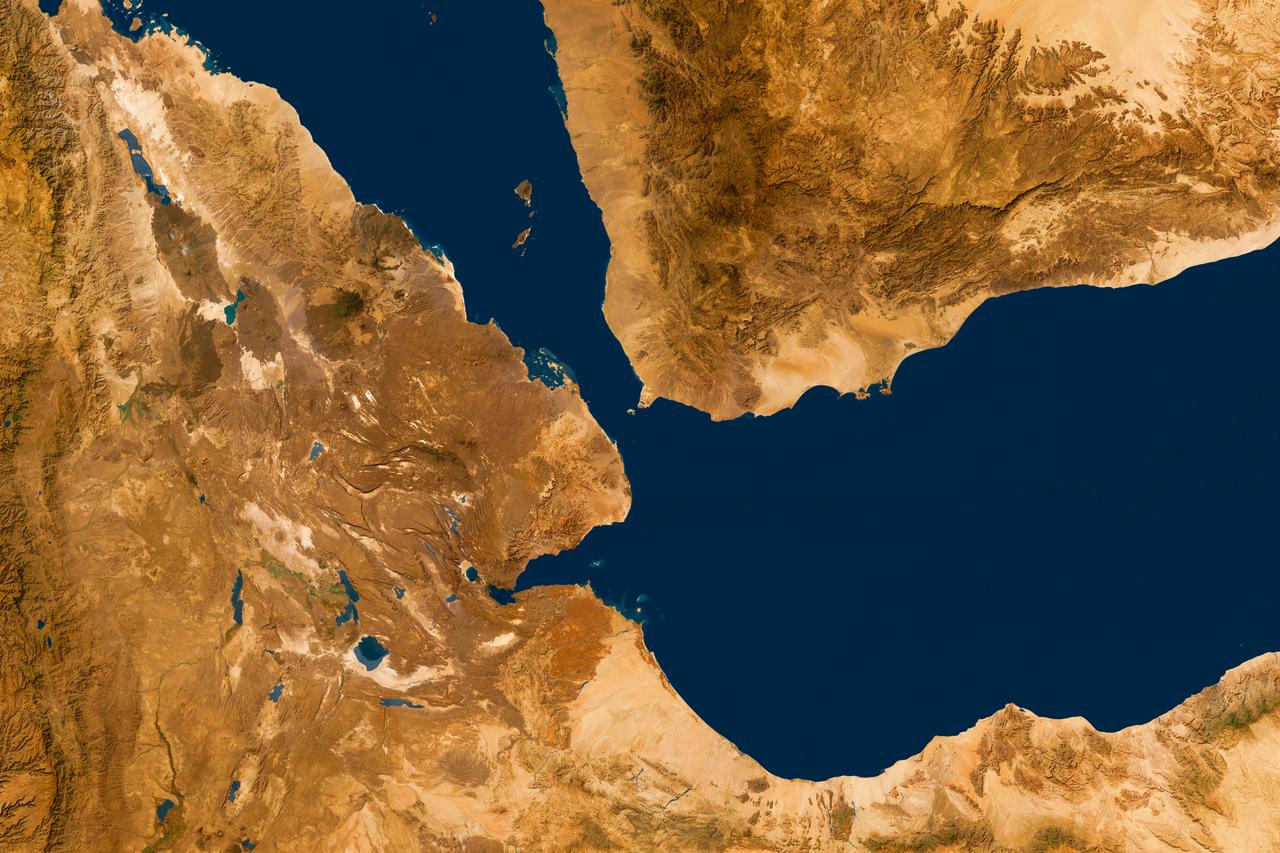
Highest 7-day average ship traffic through the Bab el-Mandeb Strait by December 31?
PM $13.7K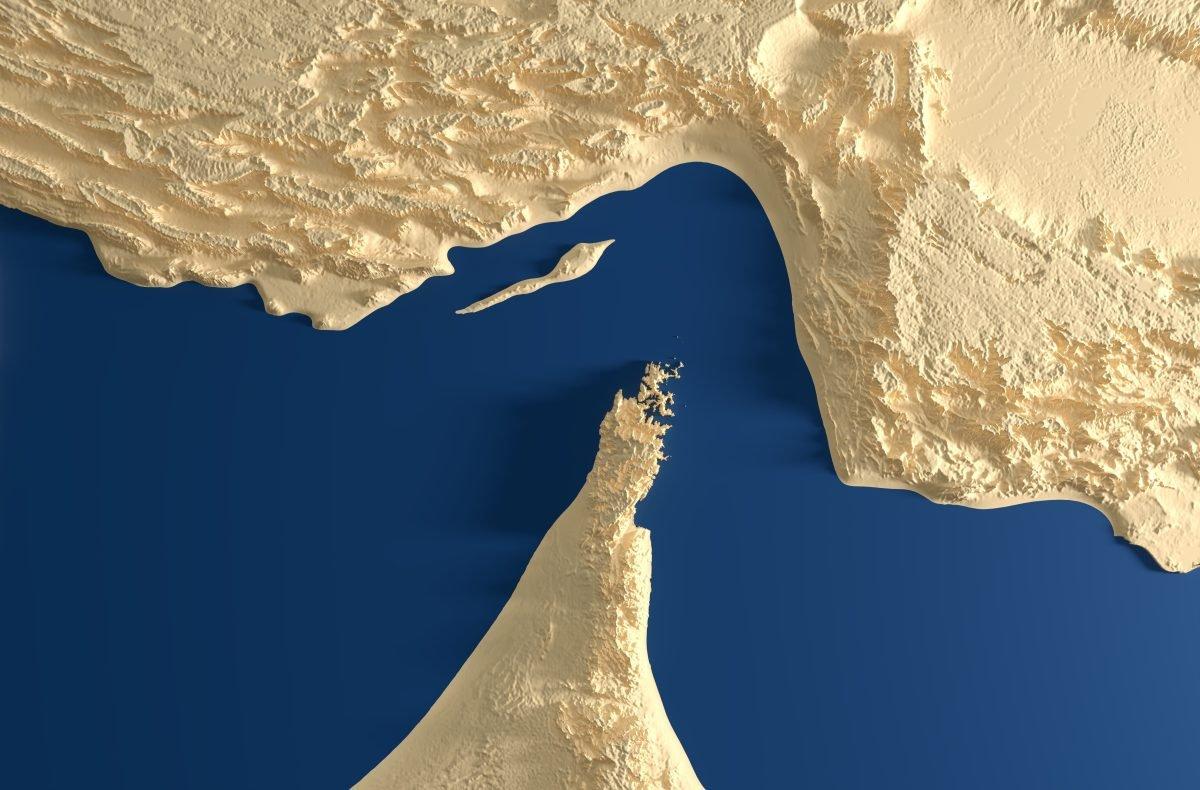
7-day average ship traffic through the Strait of Hormuz on December 31?
PM $5.5K7-day average ship traffic through the Bab el-Mandeb Strait on December 31?
PM $3.8KWhen will traffic at the Strait of Hormuz return to normal?
PM $21.29M · K 9.74M contractsStrait of Hormuz traffic returns to normal by December 31, 2027?
Kalshi: Will the 7-day moving average of transit calls through the Strait of Hormuz as reported by the IMF PortWatch be above 60 before January 1, 2028?
Related contracts
Strait of Hormuz traffic returns to normal by June 30, 2027?
Kalshi: Will the 7-day moving average of transit calls through the Strait of Hormuz as reported by the IMF PortWatch be above 60 before July 1, 2027?
Related contracts
Will at least 10 ships transit the Strait of Hormuz on any day by November 30, 2026?
Kalshi: Will the 7-day moving average of transit calls through the Strait of Hormuz as reported by the IMF PortWatch be above 60 before December 1, 2026?
Related contracts
Related or unreviewed contracts may settle differently. Their gap is not an equivalent-contract comparison.
Saved prices; check contract rules.

Peak traffic through the Strait of Hormuz? (11/16 - 11/22)
K 134.4K contractsPeak traffic through the Strait of Hormuz? (11/23 - 11/29)
K 1.7K contractsMarket Insights
Price gaps of 2 pp+
0
Same-question pairs
0
No outcomes on this page have been reviewed as the same question on both platforms yet.
Price differences do not establish arbitrage. Check each pair's review, current order prices, fees and settlement rules.