
How many Senators will vote for the Clarity Act?
PM $139.0K
1
8
How many Senators will vote for the Clarity Act?
PM $139.0K
1
8
Current odds
Snapshot from
As of Oct 27, 2026, 12:00 AM UTC, the highest-priced outcome on Polymarket is Above 55 at 10%.
Polymarket
- Above 5510%
- Above 608%
- Above 647.1%
- Above 586%
- Above 505.5%
Yes prices. They are not order quotes; check each platform's rules, fees and live prices before trading.
AI Analysis
Trader mode: Market mechanics, assumptions and risks
PM $139.0K
Reported volume · provider units
8
Saved contracts
0
Same-question pairs
Source snapshot: Oct 27, 2026, 12:00 AM UTC
About This Event
This market will resolve to "Yes" if the number of Senators voting "Yea" on the first Senate vote on final passage of crypto market structure legislation occurring before January 1, 2027 is above the number specified in this market's title. Otherwise, this market will resolve to "No". "Above" means strictly greater than the number specified in the title. For example, a market titled "Above 58" will resolve to "Yes" only if 59 or more Senators vote "Yea". For purposes of this market, "crypto market structure legislation" is defined identically to Polymarket's "Crypto Market Structure legislation becomes law in 2026?" market: https://polymarket.com/event/crypto-market-structure-legislation-becomes-law-in-2026-20260727223933088 The qualifying vote must be a vote on final passage of the bill conducted in the full Senate - not a committee vote, and not a vote on a motion to proceed, a motion to invoke cloture, or an amendment. Not every Senator needs to have participated in the vote. The first vote on final passage will be used for resolution regardless of whether the bill passes on that vote; subsequent votes on passage — including any re-vote following a motion to reconsider, or a vote on a conference report or House-amended version — will not be considered. If no qualifying vote occurs before January 1, 2027, this market will resolve to "No". If qualifying legislation passes the Senate before January 1, 2027 without a prior recorded vote on final passage (e.g., passage by voice vote or unanimous consent), this market will resolve to "Yes" regardless of the number specified in this market's title. Once the result of the vote has been announced, any subsequent request by a Senator to add, remove, or change a vote will not be considered for purposes of this market, regardless of any change to the official vote tally. This market will resolve according to official records of the U.S. Senate (http://senate.gov) and Library of Congress (http://congress.gov).
This analysis is awaiting a background update, so its prices may be older than the odds above.
What Prediction Markets Are Forecasting
Prediction market traders see a roughly 2 in 3 chance that more than 50 U.S. Senators will vote in favor of a crypto market structure bill before January 1, 2027. That's a solid but not overwhelming level of confidence. It suggests traders think this legislation has real momentum, but plenty could still go wrong.
The bill in question is what markets are calling the "Clarity Act" or some similar crypto market structure legislation. The specific definition comes from a market index called KXCRYPTOSTRUCTURE, which tracks bills that would create a federal framework for regulating digital assets. This isn't about a single bill number yet. It's about any crypto market structure bill that gets a full Senate vote.
Why the Market Sees It This Way
Two big things are driving these odds.
First, there's been a clear shift in Washington's attitude toward crypto. The industry spent heavily on lobbying and political donations during the 2024 election cycle. Several pro-crypto candidates won, and the current administration has signaled it wants clearer rules rather than the enforcement-heavy approach of recent years. Both parties have reasons to support a bill that creates regulatory clarity.
Second, there's already been some legislative movement. The House passed the Financial Innovation and Technology for the 21st Century Act (FIT21) last year with bipartisan support. That bill stalled in the Senate, but it showed the votes exist in principle. The question is whether Senate leadership will bring a similar bill to the floor before the 2026 midterms shift the political balance.
Key Dates and Events to Watch
The January 1, 2027 deadline gives roughly two years for this to happen. The 2026 midterm elections are the big wild card. If control of the Senate changes hands, the legislative calendar and priorities could shift dramatically.
Watch for committee hearings on crypto market structure bills, especially in the Senate Banking Committee. A markup or a favorable committee vote would signal the bill is getting serious attention. Also watch for public statements from Senate Majority Leader Chuck Schumer and Banking Committee Chair Sherrod Brown. Their support or opposition will heavily influence whether a vote actually happens.
How Reliable Are These Predictions?
Prediction markets have a mixed track record on legislative outcomes. They're pretty good at forecasting votes when a bill is already scheduled for a floor vote. They're less reliable for long-range predictions about whether a bill will even come up for a vote.
The 67% probability reflects genuine uncertainty. It's not a sure thing by any means. Many crypto bills have died in committee over the years. And even with broad support, the Senate's slow pace means a single senator can block legislation. So this market is worth watching, but don't bet the farm on it.
Current Market Outlook
Kalshi traders give a 67% probability that more than 50 senators will vote Yea on a crypto market structure bill before January 1, 2027. That is a reasonable but not overwhelming level of confidence. It suggests the market sees a clear path to passage, but enough uncertainty remains to keep the price below 80%.
The market is not predicting the bill will become law. It only requires 51 votes in the Senate. With Democrats holding 47 seats and Republicans 53, the threshold is low enough that bipartisan support is not strictly required. But crypto legislation has historically struggled to get even simple majorities.
Key Factors Driving the Odds
The Clarity Act (or whatever crypto market structure bill emerges) has two natural advantages. First, the 2024 election shifted the Senate rightward, and Republican leadership has signaled interest in crypto-friendly legislation. Second, the bill is narrowly focused on market structure rather than broader financial reform, which limits the number of senators who feel compelled to oppose it.
The 67% price also reflects the calendar. January 2027 is far enough out that a single legislative session could fail and another could succeed. But the longer the window, the more unpredictable the political environment becomes.
What Could Change These Odds
The biggest risk is that the bill never reaches a floor vote. Committee chairs can kill legislation quietly. If the 2025 session ends without a markup, the probability drops sharply.
A second risk is that a crypto scandal erupts between now and 2027. A major exchange collapse or fraud case could poison the well for any crypto bill, even one with bipartisan sponsors.
Conversely, if the House passes a companion bill with strong numbers in 2025, expect the Senate probability to jump above 80%. The market is pricing in a 1-in-3 chance that this simply does not happen. That feels about right given the track record of financial technology legislation in Congress.
AI-generated analysis based on market data. Not financial advice.
Saved Jul 22, 2026 UTCThis saved content is awaiting a background update. It may contain outdated claims; use the dated market data and provider rules for the latest available information.
Overview
The Clarity Act is a proposed piece of U.S. federal legislation aimed at establishing a comprehensive regulatory framework for cryptocurrency markets. Officially titled the "Clarity for Payment Stablecoins Act" in some iterations, the bill seeks to define digital assets, set rules for stablecoin issuers, and assign oversight responsibilities between the Commodity Futures Trading Commission (CFTC) and the Securities and Exchange Commission (SEC). The specific market question asks how many U.S. Senators will vote in favor of this bill before January 1, 2027. The vote must occur on the Senate floor, not in committee, though not all 100 senators need to participate. If no vote occurs by the deadline, markets without a "zero" option resolve to No. This prediction market captures uncertainty around the bill's legislative trajectory, including its chances of passing, the level of bipartisan support, and the timing of floor action. The bill has been introduced in multiple Congress sessions, most notably in 2023 and 2024, but has not yet reached a full Senate vote. Interest stems from the growing need for federal crypto regulation, as the industry faces fragmented state laws and enforcement actions. The outcome could signal the direction of U.S. digital asset policy, affecting exchanges, issuers, and investors. Recent developments include hearings in the Senate Banking Committee and negotiations over stablecoin reserve requirements. However, partisan disagreements over SEC vs. CFTC jurisdiction and consumer protections have slowed progress. The market also reflects broader political dynamics, including the 2024 election and potential shifts in committee leadership. For traders, the key variables are the bill's text, sponsor support, and the legislative calendar. The market resolves based on the official Senate roll call vote count, as recorded in the Congressional Record or Senate journal.
Historical Context
The Clarity Act builds on years of legislative attempts to regulate digital assets. In 2022, the Lummis-Gillibrand Responsible Financial Innovation Act was the first major bipartisan crypto bill, but it stalled in committee. That same year, the Stablecoin TRUST Act was introduced in the House, focusing on payment stablecoins. In 2023, the House Financial Services Committee passed the Clarity for Payment Stablecoins Act (H.R. 4766) with bipartisan support, but it never received a full House vote. The Senate version, introduced by Senators Lummis and Gillibrand, has faced similar delays. Historically, Congress has struggled to pass crypto legislation due to jurisdictional disputes between the SEC and CFTC, as well as partisan divides over state vs. federal preemption. The 2023 FTX collapse heightened urgency but also increased skepticism. Past votes on related bills, such as the 2022 Digital Commodities Consumer Protection Act, failed to reach the floor. The current 118th Congress has seen more hearings but no final votes. The Senate's slow pace contrasts with the House, which passed a broader crypto market structure bill (FIT21) in May 2024 with 71 Democratic votes. This suggests a possible path for the Clarity Act, but the Senate's 60-vote threshold for most legislation remains a high bar. The market's January 1, 2027 deadline extends beyond the 2024 election, meaning the bill could be re-introduced in a new Congress.
Why It Matters
The Clarity Act's vote count matters because it will indicate the depth of bipartisan support for federal crypto regulation. A high vote total (e.g., 60+) would signal strong consensus, potentially leading to a stable regulatory environment that encourages investment and innovation. A low count or failure to vote would leave the current patchwork of state laws and enforcement actions in place, creating uncertainty for businesses. The economic implications are substantial: the cryptocurrency market is valued at over $2 trillion globally, and U.S. companies like Coinbase and Circle have called for clear rules. Without federal legislation, firms may move operations overseas, costing jobs and tax revenue. Politically, the vote could shape the 2026 midterm elections, as crypto has become a wedge issue. Consumer protection groups worry about risks to retail investors, while industry advocates say regulation prevents fraud. The downstream consequences include potential impacts on stablecoin adoption, DeFi innovation, and the U.S. dollar's digital future. If the bill passes with strong support, it could serve as a model for other countries.
Frequently Asked Questions
What is the Clarity Act in simple terms?
The Clarity Act is a bill that would create federal rules for stablecoins, defining them as a new asset class and assigning regulatory oversight to the CFTC. It requires stablecoin issuers to hold one-to-one reserves and disclose their holdings.
Has the Clarity Act passed the Senate yet?
No, the Clarity Act has not passed the Senate. It has been introduced but has not received a floor vote. The House passed a similar bill in 2023, but the Senate has not acted on it.
How many Senate votes does the Clarity Act need to pass?
Most legislation requires a simple majority (51 votes), but the 60-vote threshold to overcome a filibuster is the practical requirement. The market asks for the number of Yea votes, not whether it passes.
What happens if the Clarity Act doesn't pass by 2027?
If no vote occurs by January 1, 2027, markets without a zero option resolve to No. The bill could be re-introduced in a future Congress, but the prediction market would close.
Who opposes the Clarity Act and why?
Senator Elizabeth Warren and other Democrats oppose the bill, arguing it weakens SEC oversight and doesn't do enough to protect consumers from fraud. Some Republicans also oppose it for giving too much power to federal regulators.
AI-written background. References identify the evidence used; Wikipedia links under Learn More are additional reading. Prices and provider rules are dated snapshots. This is not financial advice.
Related prediction markets
Prices are catalog snapshots and may have changed. Check each market's rules and observation time.

Which Senators will vote for the Clarity Act?
PM $424.9K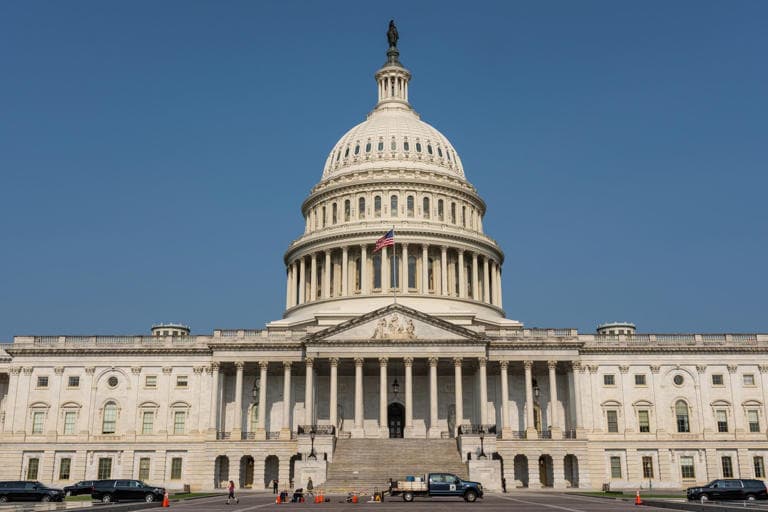
Will the Clarity Act become law?
PM $24.64M · K 4.22M contractsClarity Act (H.R.3633) signed into law in 2026?
Kalshi: Will a crypto market structure bill becomes law before Jan 1, 2027?
Related contracts
Will the Senate pass the Clarity Act by October 31?
Kalshi: Will a crypto market structure bill becomes law before Nov 1, 2026?
Related contracts
Related or unreviewed contracts may settle differently. Their gap is not an equivalent-contract comparison.
Saved prices; check contract rules.

What will eToro say during their next earnings call?
K 65 contracts
Will Arkansas's crypto mining ownership ban survive appeal?
K 26.5K contracts
What price will Bitcoin hit in 2026?
PM $105.83M · K 26.33M contractsWill Bitcoin reach $100,000 by December 31, 2026?
Kalshi: Will Bitcoin be above $99,999.99 by Dec 31, 2026 at 11:59 PM ET?
Related contracts
Will Bitcoin dip to $55,000 by December 31, 2026?
Kalshi: Will Bitcoin be below $55000.00 by Jan 1, 2027 at 12:00am ET?
Related contracts
Will Bitcoin dip to $50,000 by December 31, 2026?
Kalshi: Will Bitcoin be below $50000.00 by Jan 1, 2027 at 12:00am ET?
Related contracts
Related or unreviewed contracts may settle differently. Their gap is not an equivalent-contract comparison.
Saved prices; check contract rules.

Who will officially lead Venezuela at the end of 2026?
PM $98.99M · K 5.84M contractsWill Nicolás Maduro be the leader of Venezuela end of 2026?
Kalshi: Will Nicolás Maduro be the head of state of Venezuela on Dec 31, 2026?
Related contracts
Will Delcy Rodríguez be the leader of Venezuela end of 2026?
Kalshi: Will Delcy Rodríguez be the head of state of Venezuela on Dec 31, 2026?
Related contracts
Will María Corina Machado be the leader of Venezuela end of 2026?
Kalshi: Will María Corina Machado be the head of state of Venezuela on Dec 31, 2026?
Related contracts
Related or unreviewed contracts may settle differently. Their gap is not an equivalent-contract comparison.
Saved prices; check contract rules.
Market Insights
Price gaps of 2 pp+
0
Same-question pairs
0
No outcomes on this page have been reviewed as the same question on both platforms yet.
Price differences do not establish arbitrage. Check each pair's review, current order prices, fees and settlement rules.