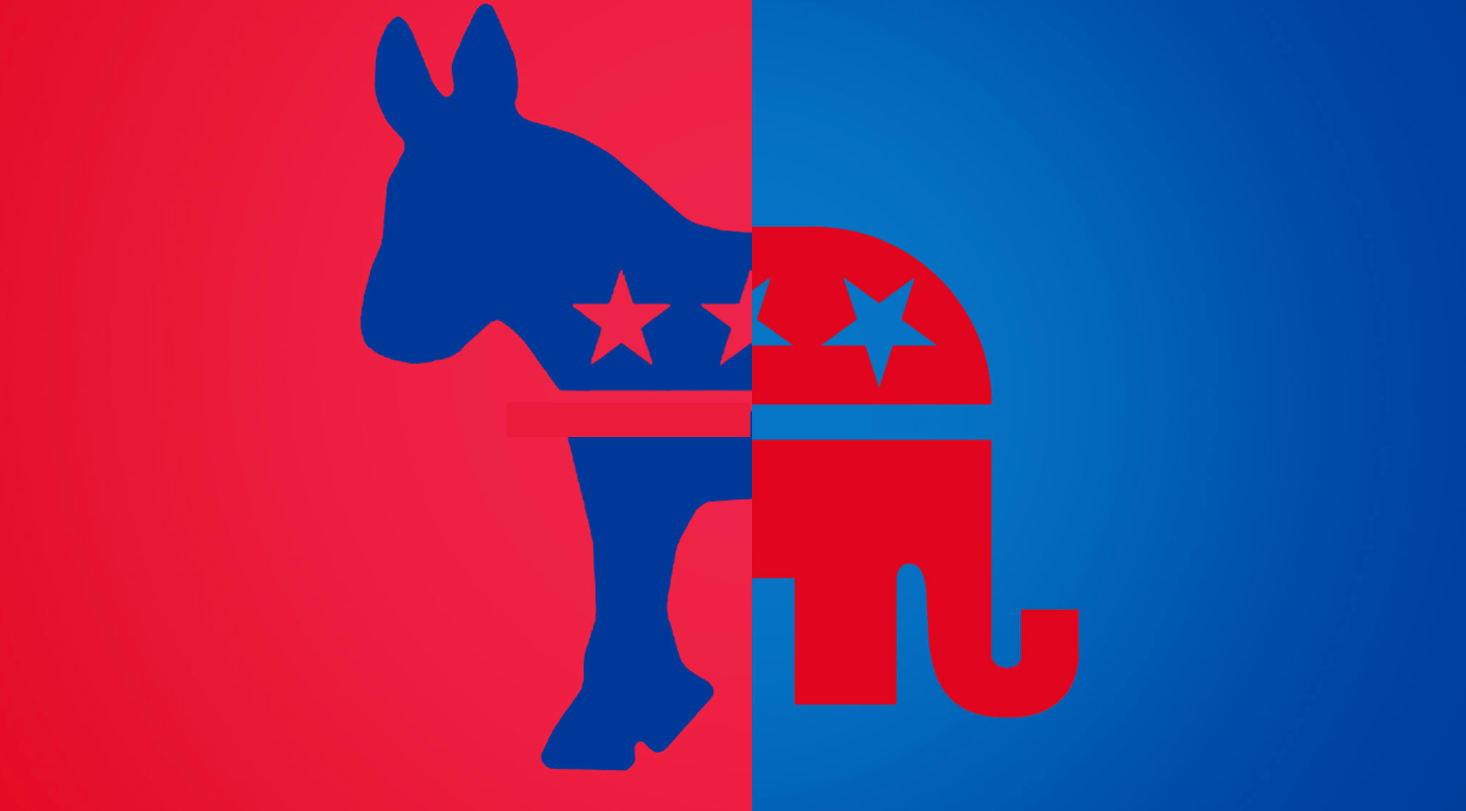
Texas presidential election winner?
PM $2.94M · K 941.8K contracts
3
6
- Reported volume
- PM $2.94M · K 941.8K contracts
- Events
- 3
- Markets
- 6
Current odds
Snapshot from
As of Nov 23, 2026, 12:00 PM UTC, the highest-priced outcome on Polymarket is Democratic at 65.5%, and on Kalshi it is Democratic party at 66.5%.
Polymarket
- Democratic65.5%
- Republican33.5%
Kalshi
- Democratic party66.5%
- Republican party33.5%
Yes prices. They are not order quotes; check each platform's rules, fees and live prices before trading.
AI Analysis
Trader mode: Market mechanics, assumptions and risks
PM $2.94M · K 941.8K contracts
Reported volume · provider units
6
Saved contracts
0
Same-question pairs
Source snapshot: Nov 23, 2026, 12:00 PM UTC
Snapshot observed Nov 23, 2026, 9:00 AM UTC. This analysis describes that snapshot and is not a live news update.
What the contract measures
These markets ask who will win the 2028 US presidential election, either nationally or in Texas. Each contract pays out according to its written rules, and its price is a snapshot of the trading price at one moment. Two providers are included. Kalshi lists a Texas-specific event, where a Yes outcome means "If X wins the most electoral votes in Texas in the 2028 presidential election, then the market resolves to Yes" [1]. Kalshi also lists a national party event, which resolves on "a representative X party" being "inaugurated as President for the term beginning January 20, 2029" [3]. Polymarket's national event resolves to "the political party whose candidate is elected the next President," using calls from the Associated Press, Fox News, and NBC [2]. Polymarket's rules also say that if those three sources have not called the race for the same party by January 20, 2029, the market "will resolve based on who is inaugurated" [2]. The wording differs across these contracts, so they are not interchangeable.
Reading the snapshot
The snapshot was observed at Nov 23, 2026, 9:00 AM UTC, and the source material was retrieved later that morning. It is not a live feed. In the Texas event, Kalshi prices Republican winning Texas at 0.615 and Democratic winning Texas at 0.385 [1]. On Polymarket's national event, Democrats are priced at 0.655 and Republicans at 0.335 [2]. On Kalshi's party event, Democrats are at 0.665 and Republicans at 0.335 [3].
These are prices within each event, not verified probabilities or executable quotes. Do not average the Democratic figures across Polymarket and Kalshi, and do not treat the gap between 0.655 and 0.665 as an opportunity. The two contracts use different resolution rules, one tied to media calls and one tied to inauguration. Volume figures are reported in different units (US dollars on Polymarket, contracts on Kalshi) and describe each platform's own event. Volume is not liquidity and does not indicate how many traders took part.
Each event includes both of its binary markets in the saved sample. The sample is complete for these saved events, but that does not mean the providers list every possible outcome.
What remains uncertain
Closing times differ. Polymarket lists an end time of Nov 8, 2028, 4:59 AM UTC [2]. The Kalshi records list Nov 7, 2029, 3:00 PM UTC [1][3], but the Kalshi source excerpts state that the listed end time is "not supplied" [1][3]. The Kalshi Texas event may also close early if media consensus projects a winner [1]. This evidence does not establish when any contract will actually resolve.
The evidence does not explain why prices are where they are, and it does not show recent news or past forecasting accuracy.
References
- Kalshi: Texas presidential election winner?. Provider data observed Nov 23, 2026, 9:00 AM UTC.
- Polymarket: Which party wins 2028 US Presidential Election?. Provider data observed Nov 23, 2026, 9:00 AM UTC.
- Kalshi: 2028 Presidential Election winner? (Party). Provider data observed Nov 23, 2026, 9:00 AM UTC.
Snapshot observed Nov 23, 2026, 9:00 AM UTC. This analysis describes that snapshot and is not a live news update.
What the contract measures
The three events ask different questions. The Kalshi Texas event resolves to Yes "If X wins the most electoral votes in Texas in the 2028 presidential election," and it may be decided early after a media projection [1]. The Polymarket event resolves to the party whose candidate is elected president. It "will resolve once all three sources call the race for the same party," and if they have not done so by the inauguration date, it resolves based on who is inaugurated [2]. The Kalshi national event resolves to Yes if a party "is inaugurated as President for the term beginning January 20, 2029" [3].
These wording differences matter. A Texas electoral-vote contract and a national party contract measure different things. The two national events also use different resolution triggers: Polymarket relies on media calls with an inauguration fallback, while Kalshi's rule is tied to inauguration [2][3].
Reading the snapshot
The provider data was observed at Nov 23, 2026, 9:00 AM UTC and retrieved at Nov 23, 2026, 10:53 AM UTC, so these prices describe that observation window and may not match prices at the time you read this. In Kalshi's Texas event, the Republican Party Yes contract was 0.615 and the Democratic Party Yes contract was 0.385 [1]. On Polymarket, Democrats Yes was 0.655 and Republicans Yes was 0.335 [2]. On Kalshi's national event, Democrats Yes was 0.665 and Republicans Yes was 0.335 [3].
These figures come from separate platforms with separate rules. Do not average the Polymarket and Kalshi national prices, and do not treat the Texas prices as a view on the national contracts. Prices are snapshots, not executable quotes or verified probabilities. Each event's coverage lists two markets with partialSample set to false, so all saved markets for these events are included. The saved events contain only the two party outcomes, but this does not establish that the providers list every possible outcome. The evidence does not say how any omitted outcome would be priced.
Reported volume is in each provider's own units: $2,940,438 on Polymarket, 920,230 contracts on Kalshi's national event, and 21,580 contracts on Kalshi's Texas event [1][2][3]. Volume is not liquidity or a count of traders, and these figures should not be added or compared.
What remains uncertain
The evidence does not explain why prices sit where they do, and it includes no recent news. Listed close times also differ. Polymarket lists Nov 8, 2028, 4:59 AM UTC [2], while the Kalshi market end dates are Nov 7, 2029, 3:00 PM UTC [1][3]. Neither Kalshi event lists a supplied event-level end time [1][3]. The Kalshi Texas event will also close early if its outcome occurs [1]. Because the platforms differ in wording, resolution sources, and close times, a gap between prices is not an arbitrage opportunity.
References
- Kalshi: Texas presidential election winner?. Provider data observed Nov 23, 2026, 9:00 AM UTC.
- Polymarket: Which party wins 2028 US Presidential Election?. Provider data observed Nov 23, 2026, 9:00 AM UTC.
- Kalshi: 2028 Presidential Election winner? (Party). Provider data observed Nov 23, 2026, 9:00 AM UTC.
AI-generated analysis based on market data. Not financial advice.
Saved Nov 23, 2026 UTCOverview
This article covers a set of prediction markets about the 2028 United States presidential election, focusing on a contract asking who will win the most electoral votes in Texas. The Texas event is listed on Kalshi, and its rules state that if a candidate, identified as X in the rules, wins the most electoral votes in Texas in the 2028 presidential election, the market resolves to Yes [1]. The rules also say the market is eligible for accelerated determination after a consensus of media organizations projects the winner, and that it will close and expire early if the event occurs [1]. The Texas event is listed as active, and its listed end time is not supplied in the saved event record [1]. The saved market records for this event show two binary contracts, one for the Republican Party and one for the Democratic Party. In the observation recorded at 2026-11-23T09:00:06Z, the Republican Yes contract was priced at 0.615 and the Democratic Yes contract at 0.385 [1]. These figures are price snapshots from one provider at one observation time. They are not executable quotes, and they are not verified probabilities of the outcome. The reported volume for this event is 21,580 contracts, which describes trading activity on that provider and does not indicate liquidity or the number of traders [1]. The Texas contract is distinct from the national party contracts. On Polymarket, the question asks which party wins the 2028 US presidential election. The rules state that the 2028 election will be held on Tuesday, November 7, 2028, and that the market resolves to the party whose candidate is elected next President [2]. The stated resolution source is the Associated Press, Fox News, and NBC, and the market resolves once all three call the race for the same party. If they have not all called the race for the same party by the inauguration date of January 20, 2029, the market resolves based on who is inaugurated [2]. The November 7, 2028 date is the scheduled election date stated in the rules, not an announced event date in any other source. The Polymarket record lists the Democrats Yes contract at 0.655 and the Republicans Yes contract at 0.335 in the same observation window [2]. Reported volume for this event is $2,940,438, which is measured in US dollars and should not be compared with Kalshi's contract count. Kalshi also lists a separate national contract titled 2028 Presidential Election winner? (Party). Its rules say that if a representative party is inaugurated as President for the term beginning January 20, 2029, the market resolves to Yes. It is eligible for accelerated resolution by a consensus of media calls, and it closes following the inauguration of a non-acting President for that term [3]. In the saved records, the Democratic Yes contract was priced at 0.665 and the Republican Yes contract at 0.335 [3]. These prices come from different providers and different contract wording, so they should be read separately rather than treated as an opportunity to trade between platforms. Historical background for the Texas contract is limited to what the supplied reference material states. Wikipedia's list of US presidential elections in Texas notes that, since statehood in 1845, Texas has participated in every presidential election except the 1864 election during the American Civil War, when the state had seceded to join the Confederacy, and the 1868 election, when the state was undergoing Reconstruction [4]. A separate Wikipedia article describes the 2016 presidential election in Texas, which took place on November 8, 2016, with primary elections held on March 1, 2016 [5]. These entries describe past elections only and do not provide information about the 2028 race.
Historical Context
Texas has taken part in US presidential elections since it joined the Union in 1845, with two exceptions noted in the reference material: the 1864 election during the Civil War, when the state had seceded, and the 1868 election during Reconstruction [4]. The 2016 Texas presidential vote took place on November 8, 2016, and Texas primaries were held on March 1, 2016 [5]. These are historical facts about earlier elections and do not describe the 2028 contest.
Why It Matters
The Texas contract measures whether a specific candidate or party wins the most electoral votes in Texas in the 2028 presidential election. Its rules set the resolution as Yes if the designated winner is determined by that result, with accelerated determination possible after a consensus of media organizations projects the winner [1]. For traders and readers, the price of each contract is a snapshot of what the market showed at one time on one platform. It reflects the market's pricing at that moment, not a confirmed forecast. The national party contracts measure a different question, namely which party's candidate becomes President, and they resolve on different terms, including the inauguration date fallback described on Polymarket [2] and the inauguration-based rule on Kalshi [3]. Keeping these definitions separate helps explain why the Texas and national prices are not directly interchangeable.
Snapshot context
The latest published provider snapshot for this topic was observed on 2026-11-23 at 09:00 UTC. It contains listings from Kalshi and Polymarket. Market descriptions and listed closing times define the contracts; they do not establish that the real-world outcome has occurred. This article does not include a separately verified news update. [1]
Frequently Asked Questions
When does the Texas presidential election market resolve?
The Texas market resolves to Yes if the designated candidate wins the most electoral votes in Texas in the 2028 presidential election. It may be determined early after a consensus of media organizations projects the winner, and it closes and expires early if the event occurs [1]. The saved record does not supply a listed end time for the event [1].
How is the national party contract on Polymarket resolved?
The market resolves to the party whose candidate is elected next President. It resolves once the Associated Press, Fox News, and NBC all call the race for the same party. If they have not all called the race for the same party by January 20, 2029, it resolves based on who is inaugurated [2].
Does a lower price mean an outcome is less likely?
The saved records show prices as snapshots at specific observation times, and the supplied sources do not establish that these prices are verified probabilities [1][2][3]. Readers should not treat any single price as a forecast.
AI-written background. References identify the evidence used; Wikipedia links under Learn More are additional reading. Prices and provider rules are dated snapshots. This is not financial advice.
Related prediction markets
Prices are catalog snapshots and may have changed. Check each market's rules and observation time.

2028 Presidential Election: Texas Winner
PM $11.7K
2027 French Presidential Election: who will be on the ballot?
PM $183.82M · K 6.16M contractsWill Marine Le Pen win the 2027 French presidential election?
Kalshi: Will Marine Le Pen appear on the official candidate list for the first round of the 2027 French presidential election?
Related contracts
Will Marine Le Pen be on the ballot for the 2027 French presidential election?
Kalshi: Will Marine Le Pen appear on the official candidate list for the first round of the 2027 French presidential election?
Related contracts
Will Jean-Luc Mélenchon win the 2027 French presidential election?
Kalshi: Will Jean-Luc Mélenchon appear on the official candidate list for the first round of the 2027 French presidential election?
Related contracts
Related or unreviewed contracts may settle differently. Their gap is not an equivalent-contract comparison.
Saved prices; check contract rules.

Presidential Election Winner 2028
PM $746.13M · K 109.53M contractsWill Marco Rubio win the 2028 US Presidential Election?
Kalshi: Will Donald Trump endorse Marco Rubio in the 2028 presidential election before Mar 1, 2028?
Related contracts
Will Alexandria Ocasio-Cortez win the 2028 US Presidential Election?
Kalshi: Will the Democratic Socialists of America (DSA) national organization endorse Alexandria Ocasio-Cortez in the 2028 presidential election, including the Democratic primaries before Mar 1, 2028?
Related contracts
Will JD Vance win the 2028 US Presidential Election?
Kalshi: Will Donald Trump endorse J.D. Vance in the 2028 presidential election before Mar 1, 2028?
Related contracts
Related or unreviewed contracts may settle differently. Their gap is not an equivalent-contract comparison.
Saved prices; check contract rules.

Who will announce Presidential run before 2028?
PM $2.08B · K 424.13M contractsJon Ossoff Democratic nomination odds leader on November 30?
Kalshi: Who will run for the Democratic presidential nomination in 2028? (Jon Ossoff)
Related contracts
Will J.B. Pritzker win the Nevada Democratic primary?
Kalshi: Who will run for the Democratic presidential nomination in 2028? (J.B. Pritzker)
Related contracts
Will J.B. Pritzker win the 2028 Democratic presidential nomination?
Kalshi: Who will run for the Democratic presidential nomination in 2028? (J.B. Pritzker)
Related contracts
Related or unreviewed contracts may settle differently. Their gap is not an equivalent-contract comparison.
Saved prices; check contract rules.

Argentina Presidential Election Winner
PM $1.66M · K 89.7K contractsWill Javier Milei win the most votes in the first round of the 2027 Argentina presidential election?
Kalshi: Who will win the next Argentine presidential election? (Javier Milei)
Related contracts
Will Javier Milei win the most votes in the first round of the 2027 Argentina presidential election?
Kalshi: Will Javier Milei win the first round of the 2027 Argentine presidential election?
Related contracts
Will Javier Milei win the 2027 Argentina presidential election?
Kalshi: Will Javier Milei win the first round of the 2027 Argentine presidential election?
Related contracts
Related or unreviewed contracts may settle differently. Their gap is not an equivalent-contract comparison.
Saved prices; check contract rules.

2028 Presidential race: exact outcome
K 217.3K contractsMarket Insights
Price gaps of 2 pp+
0
Same-question pairs
0
No outcomes on this page have been reviewed as the same question on both platforms yet.
Price differences do not establish arbitrage. Check each pair's review, current order prices, fees and settlement rules.