
How many Senate and Governor elections will Republicans win in states won by Kamala?
PM $49.8K
1
7
How many Senate and Governor elections will Republicans win in states won by Kamala?
PM $49.8K
1
7
Current odds
Snapshot from
As of Oct 27, 2026, 9:00 PM UTC, the highest-priced outcome on Polymarket is 2 at 42%.
Polymarket
- 242%
- 322.6%
- 117.3%
- 48.8%
- 03%
Yes prices. They are not order quotes; check each platform's rules, fees and live prices before trading.
AI Analysis
Trader mode: Market mechanics, assumptions and risks
PM $49.8K
Reported volume · provider units
7
Saved contracts
0
Same-question pairs
Source snapshot: Oct 27, 2026, 9:00 PM UTC
About This Event
The 2026 midterm elections are scheduled to be held on November 3, 2026. This market will resolve according to the number of US Senate and Gubernatorial elections won by the Republican Party in the 2026 midterm elections in states that were won by Kamala Harris in the 2024 US Presidential Election. All Gubernatorial elections, and all regular and special Senate elections that determine representation in the upcoming 120th Congress, that are scheduled to take place in November 2026 as of October 31, 2026 are included. Runoffs for qualifying elections will determine attribution of the relevant seat, even if they take place after November 2026. Vacant offices for which no election or special election to fill the office is scheduled to take place in November 2026 as of October 31, 2026 will not be considered. Seats are attributed to the party under which the member or governor was elected. If a member-elect or governor changes party affiliation, or vacates their office, after election day, the seat is attributed to the party under which the person was elected. Senate members elected as independents who formally caucus with, or, for newly elected members, who announce their intent to caucus with, a party will be attributed to that party. If the caucus decisions of members of the Senate elected as independents cannot be determined on the date of the election, this market may remain open until the earlier of (i) an announcement from the relevant members of their intents to caucus, or (ii) January 4th, 11:59 PM ET of the following calendar year. If no such announcement is made by January 4th, 11:59 PM ET of the following calendar year, the member will not count towards the seat count of any party. The resolution sources for this market will be official information from relevant state electoral authorities, the United States Congress, and a consensus of credible reporting.
This analysis is awaiting a background update, so its prices may be older than the odds above.
Snapshot observed 2026-10-21T00:00:05.984Z. This analysis describes that snapshot and is not a live news update.
What the contract measures
The Polymarket event asks how many U.S. Senate and gubernatorial elections Republicans will win in states that Kamala Harris carried in 2024 [1]. The source says the 2026 midterm elections are scheduled for November 3, 2026, and that the market resolves on the number of such seats won by the Republican Party [1]. It includes all gubernatorial elections and all regular and special Senate elections that determine representation in the 120th Congress and that are scheduled for November 2026 as of October 31, 2026 [1].
The rules include several details that affect how a result is counted. Runoffs for qualifying elections determine seat attribution, even if they occur after November 2026 [1]. Seats follow the party under which a member or governor was elected, even if they later change affiliation [1]. Independent senators who caucus with a party are attributed to that party, and if caucus decisions are unclear, the market may remain open until January 4, 11:59 PM ET of the following calendar year [1].
Reading the snapshot
The saved snapshot was observed at 2026-10-21T00:00:05.984Z and retrieved at 2026-10-21T02:41:14.524Z [1]. These are the times to keep in mind. The listed end time for all seven contracts is 2026-11-04T04:59:00.000Z [1]. That time falls after the scheduled election day, and it does not mean the outcome is known.
The seven "Yes" prices in the snapshot are 0.38 for two seats, 0.279 for three, 0.146 for four, 0.1025 for one, 0.047 for five, 0.0205 for zero, and 0.008 for six or more [1]. Among these, two seats has the highest Yes price in this snapshot. These figures are quoted snapshot prices, not executable quotes or verified probabilities. They also do not sum to exactly 1 (they total 0.983), so the set should not be read as a complete probability distribution. Because the contracts are different outcomes of one question, any gap between them is not an arbitrage signal.
The coverage data reports 7 total markets, 7 included, and no partial sample [1]. The source states that all saved markets are included, but it does not establish that every possible outcome is listed [1].
What remains uncertain
The snapshot does not show why prices are where they are, how many traders hold each view, or whether prices have changed since retrieval. The source does not report any race results, and it does not confirm which seats will be decided before the end time. The source also does not establish how long runoffs or independent caucus decisions will take. Readers should check the current market page and the resolution rules before relying on any figure.
References
- Polymarket: How many Senate and Governor elections will Republicans win in states won by Kamala?. Provider data observed 2026-10-21T00:00:05.984Z.
AI-generated analysis based on market data. Not financial advice.
Saved Oct 21, 2026 UTCThis saved content is awaiting a background update. It may contain outdated claims; use the dated market data and provider rules for the latest available information.
Overview
This PredictPedia contract asks how many US Senate and gubernatorial elections Republicans will win in the 2026 midterms in states that Kamala Harris won in the 2024 US Presidential Election [1]. The 2026 midterm elections are scheduled for November 3, 2026 [1]. The contract resolves on the number of such seats Republicans win, so each possible count (0, 1, 2, and so on, up to six or more) is traded as a separate yes or no market within one event [1]. The contract defines its scope in some detail. It includes all gubernatorial elections and all regular and special Senate elections that determine representation in the 120th Congress and that are scheduled for November 2026 as of October 31, 2026 [1]. Vacant offices with no election scheduled for November 2026 as of that date are not counted [1]. Runoffs from qualifying elections determine how a seat is attributed, even if the runoff takes place after November 2026 [1]. Seats are attributed to the party under which the officeholder was elected. If a member-elect or governor changes party affiliation, or leaves office, after election day, the seat stays attributed to the original party [1]. Independent senators are attributed to a party if they formally caucus with it, or, for newly elected members, if they announce an intent to caucus with it [1]. If caucus decisions cannot be determined on election day, the market may stay open until an announcement is made or until January 4, 11:59 PM ET of the following calendar year. If no announcement is made by then, that member does not count toward any party's seat total [1]. The contract lists resolution sources as official information from relevant state electoral authorities, the United States Congress, and a consensus of credible reporting [1]. The listed end time is November 4, 2026 at 04:59 UTC, while the contract's election date is November 3, 2026 [1]. The end time is a listed close for the contract, not a statement that results will be known by then. Some individual races named in background sources are the Texas Senate race, where Republican state attorney general Ken Paxton and Democratic state representative James Talarico are the nominees [2], and the Maine Senate race, where Republican incumbent Susan Collins is seeking a sixth term against Democratic former state Senate president Troy Jackson, with ranked-choice voting [3]. The sources do not establish whether these states are among those won by Kamala Harris in 2024, so they should not be treated as confirmed inputs to this contract.
Why It Matters
The contract measures a party-level outcome across a set of seats rather than any single race. It counts Republican wins among the 2026 gubernatorial and Senate elections held in states Kamala Harris won in 2024, so its result depends on which seats are attributed to Republicans under the contract's rules [1]. Because seats are attributed by the party under which the winner was elected, later party switches do not change the count, and the treatment of independent senators can keep the market open into the following January [1]. Traders following the contract therefore need to track both the election results and the attribution rules, including runoffs and caucus decisions, as described in the resolution sources [1].
Snapshot context
The latest published provider snapshot for this topic was observed on 2026-10-21 at 00:00 UTC. It contains listings from Polymarket. Market descriptions and listed closing times define the contracts; they do not establish that the real-world outcome has occurred. This article does not include a separately verified news update. [1]
Frequently Asked Questions
Which elections count toward this contract?
The contract includes all gubernatorial elections and all regular and special Senate elections that determine representation in the 120th Congress and are scheduled for November 2026 as of October 31, 2026, in states Kamala Harris won in 2024 [1]. Vacant offices with no scheduled election as of that date are not considered [1].
What happens if a winner changes party after election day?
The seat is attributed to the party under which the member or governor was elected, even if that person changes party affiliation or leaves office after election day [1].
How are independent senators handled?
An independent senator is attributed to a party if they formally caucus with it, or, for newly elected members, if they announce an intent to caucus with it [1]. If caucus decisions cannot be determined on election day, the market may remain open until an announcement is made or until January 4, 11:59 PM ET of the following calendar year. Without an announcement by then, the member does not count toward any party's seat total [1].
What sources will be used to resolve the contract?
The listed resolution sources are official information from relevant state electoral authorities, the United States Congress, and a consensus of credible reporting [1].
AI-written background. References identify the evidence used; Wikipedia links under Learn More are additional reading. Prices and provider rules are dated snapshots. This is not financial advice.
Related prediction markets
Prices are catalog snapshots and may have changed. Check each market's rules and observation time.

How many Senate and Governor races will Republicans win in Harris states?
K 32.5K contracts
Iowa Senate and Governor Combo
PM $218.0K · K 3.68M contractsBlue tsunami in 2026?
Kalshi: Will Democrats hold 215 or more seats in the House after the 2026 midterms AND hold 48 or more seats in the Senate after the 2026 midterms?
Related contracts
Blue wave in 2026?
Kalshi: Will Democrats hold 215 or more seats in the House after the 2026 midterms AND hold 48 or more seats in the Senate after the 2026 midterms?
Related contracts
Blue wave in 2026?
Kalshi: Will the number of Iowa races won by the Democratic Party among IA-01, IA-02, IA-03, the U.S. Senate seat, and the Governorship during the November 3, 2026 general election be exactly 5?
Related contracts
Related or unreviewed contracts may settle differently. Their gap is not an equivalent-contract comparison.
Saved prices; check contract rules.
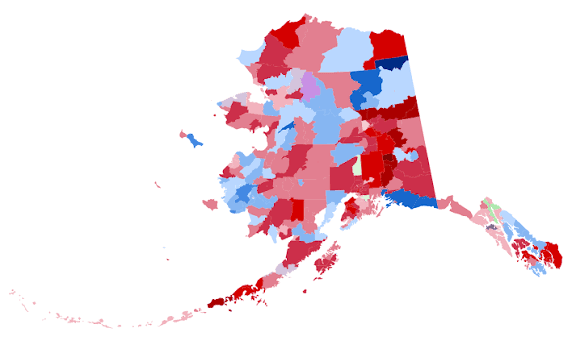
Alaska House, Governor & Senate combo
PM $77.1K · K 148.0K contractsWill Democrats sweep the Alaska Senate and Governor elections?
Kalshi: Alaska combo: Democratic sweep?
Related contracts
Will Democrats sweep the Alaska Senate and Governor elections?
Kalshi: Will Alaska Governor winner be Democratic party and Alaska Senate winner be Democratic party?
Same question, fine print differs
Will Democrats win the Alaska Governor election and Republicans win the Alaska Senate election?
Kalshi: Will Alaska Governor winner be Democratic party and Alaska Senate winner be Republican party?
Same question, fine print differs
Related or unreviewed contracts may settle differently. Their gap is not an equivalent-contract comparison.
Saved prices; check contract rules.

How many Senate seats will Republicans win in the Midterms?
K 52.8K contracts
How many states will elect a governor and senator from different parties this year? (Directional)
K 2.2K contractsHow many states will elect a governor and senator from different parties in 2026?
K 5.3K contractsMarket Insights
Price gaps of 2 pp+
0
Same-question pairs
0
No outcomes on this page have been reviewed as the same question on both platforms yet.
Price differences do not establish arbitrage. Check each pair's review, current order prices, fees and settlement rules.
