
Strait of Hormuz traffic returns to normal by November 30?
PM $1.04M
1
1
Strait of Hormuz traffic returns to normal by November 30?
PM $1.04M
1
1
Current odds
Snapshot from
As of Oct 26, 2026, 12:00 PM UTC, Yes is priced at 6.5% on Polymarket.
Polymarket
- Yes6.5%
Yes prices. They are not order quotes; check each platform's rules, fees and live prices before trading.
AI Analysis
Trader mode: Market mechanics, assumptions and risks
PM $1.04M
Reported volume · provider units
1
Saved contracts
0
Same-question pairs
Source snapshot: Oct 26, 2026, 12:00 PM UTC
About This Event
This market will resolve to “Yes” if IMF Portwatch publishes a 7-day moving average of transit calls (“Arrivals of Ships”) for the Strait of Hormuz equal to or above 60 for any date between market creation and November 30, 2026. Otherwise, this market will resolve to “No”. Daily transit calls include container, dry bulk, roll-on/roll-off, general cargo, and tanker ships. Ships not reported by IMF Portwatch will not be considered. This market will resolve as soon as IMF Portwatch publishes a 7-day moving average of transit calls equal to or above the specified level, or once data has been published for the final date in the specified period and no such value has been published. If no data has been published for the final date of the specified period within 14 calendar days (ET) after the end of that period, this market will resolve based on data published up to that point. Revisions to previously published data points made within this market’s timeframe will be considered. However, they will not disqualify a previously published data point from qualifying. Revisions to previously published data points after data is published for November 30, 2026, however, will not be considered. In case of obvious data integrity issues (i.e., erroneous data), the market may remain open until the end of the third calendar day (ET) after the date on which such data is first released to allow for corrections. Data integrity issues refer only to clerical or other similar errors in the underlying data, and do not include cases where IMF Portwatch differs from alternative sources. The resolution source for this market will be IMF Portwatch, specifically the transit calls data published for the Strait of Hormuz at https://portwatch.imf.org/pages/cb5856222a5b4105adc6ee7e880a1730, both in the chart and through downloadable files.
This analysis is awaiting a background update, so its prices may be older than the odds above.
Snapshot observed 2026-10-16T00:00:06.034Z. This analysis describes that snapshot and is not a live news update.
What the contract measures
This Polymarket event asks whether the Strait of Hormuz traffic will "return to normal by November 30?" [1] The contract defines "normal" narrowly. It resolves "Yes" if IMF Portwatch publishes a 7-day moving average of transit calls ("Arrivals of Ships") for the Strait of Hormuz "equal to or above 60 for any date between market creation and November 30, 2026" [1]. Otherwise it resolves "No" [1].
The rules count only specific vessel types, including "container, dry bulk, roll-on/roll-off, general cargo, and tanker ships," and ships not reported by IMF Portwatch are excluded [1]. The resolution source is IMF Portwatch, not general shipping news or other data feeds. The rules also state that disagreements with alternative sources do not count as data integrity issues [1].
Timing matters. The rules tie the window to November 30, 2026, but the listed end time is "2026-12-01T04:59:00.000Z" [1]. The rules also say the market may resolve as soon as a qualifying value is published, and that if no data appears within 14 calendar days (ET) after the period ends, it resolves on data published up to that point [1]. A date in these rules is a contract term, not an announced event.
Reading the snapshot
The saved snapshot was observed at 2026-10-16T00:00:06.034Z and retrieved at 2026-10-16T00:58:54.647Z [1]. It shows one outcome-pair market with a "Yes" price of 0.045 and a "No" price of 0.955 [1]. These are snapshot values from that observation time. They are not executable quotes, and they are not verified probabilities of the outcome.
The sample is complete for this provider event. It includes one market out of one total, and the sample is not marked partial [1]. The sample does not establish that every possible real-world outcome is listed, so no conclusion about omitted outcomes should be drawn.
This is a single contract, so there is no cross-platform comparison here. Any comparison with a differently worded contract would need to account for its own resolution source, threshold, window, and close time before prices could be read against each other. Differences in price alone would not indicate an arbitrage opportunity. The snapshot also does not report trading volume or the number of participants, so it says nothing about liquidity.
What remains uncertain
The evidence does not explain why the "Yes" price was 0.045 at observation time. It also does not show any current Strait of Hormuz traffic figures, recent published IMF Portwatch values, or whether the threshold has been met since the snapshot. Anyone reading this later should check the provider's current status, because the snapshot does not describe conditions today.
References
- Polymarket: Strait of Hormuz traffic returns to normal by November 30?. Provider data observed 2026-10-16T00:00:06.034Z.
AI-generated analysis based on market data. Not financial advice.
Saved Oct 16, 2026 UTCThis saved content is awaiting a background update. It may contain outdated claims; use the dated market data and provider rules for the latest available information.
Overview
This market asks whether traffic through the Strait of Hormuz will return to normal by November 30, 2026, as measured by a specific data series. The contract resolves to "Yes" if IMF Portwatch publishes a 7-day moving average of transit calls for the Strait of Hormuz that is equal to or above 60 for any date between the market's creation and November 30, 2026. Otherwise it resolves to "No" [1]. The transit calls counted include container, dry bulk, roll-on/roll-off, general cargo, and tanker ships. Ships that IMF Portwatch does not report are not considered [1]. The rules define the resolution process. The market resolves as soon as IMF Portwatch publishes a 7-day moving average at or above the specified level. If that does not happen, it resolves once data has been published for the final date in the period and no qualifying value appears. If no data is published for the final date within 14 calendar days (ET) after the period ends, the market resolves based on the data published up to that point [1]. The listed end time is 2026-12-01T04:59:00.000Z [1]. The rules also address data revisions. Revisions to earlier data points made within the market's timeframe are considered, but they do not disqualify a previously published data point from qualifying. Revisions made after data for November 30, 2026 is published are not considered [1]. If there are obvious data integrity issues, meaning clerical or similar errors in the underlying data, the market may stay open until the end of the third calendar day (ET) after the data is first released. Differences between IMF Portwatch and alternative sources do not count as data integrity issues [1]. In the saved snapshot observed at 2026-10-16T00:00:06.034Z, the Polymarket contract showed a "Yes" price of 0.045 and a "No" price of 0.955 [1]. These figures are snapshot prices from one observation time. They are not executable quotes or verified probabilities.
Historical Context
Wikipedia describes the broader background as follows: since 28 February 2026, the United States and Israel have been at war with Iran and its regional allies, following the Twelve-Day War in June 2025 and sporadic fighting during the Middle Eastern crisis [2]. The same source states that the war began when the US and Israel conducted hundreds of air strikes on targets across Iran [2]. The contract rules do not refer to this conflict, and the supplied evidence does not establish how the war has affected transit counts through the Strait of Hormuz. This article therefore provides the background only and does not treat it as the cause of any traffic change.
Why It Matters
The contract measures shipping activity in the Strait of Hormuz using a specific provider series: a 7-day moving average of transit calls published by IMF Portwatch [1]. Because the threshold is fixed at 60 and the window runs to November 30, 2026, the market turns on whether that published series reaches the threshold at any date within the period [1]. The rules make the data source, ship types, and revision handling central to the outcome, so the contract is narrower than a general question about the strait's condition [1].
Snapshot context
The latest published provider snapshot for this topic was observed on 2026-10-16 at 00:00 UTC. It contains listings from Polymarket. Market descriptions and listed closing times define the contracts; they do not establish that the real-world outcome has occurred. This article does not include a separately verified news update. [1]
Frequently Asked Questions
What does this contract actually measure?
It measures whether IMF Portwatch publishes a 7-day moving average of transit calls for the Strait of Hormuz at or above 60 for any date between market creation and November 30, 2026 [1].
Which ships are counted?
Transit calls include container, dry bulk, roll-on/roll-off, general cargo, and tanker ships. Ships not reported by IMF Portwatch are not considered [1].
Can the market resolve before November 30, 2026?
Yes. The market resolves as soon as IMF Portwatch publishes a 7-day moving average at or above the specified level [1].
What happens if data is revised?
Revisions made within the market's timeframe are considered, but they do not disqualify a previously published qualifying data point. Revisions after data for November 30, 2026 is published are not considered [1].
Does the price shown equal the probability of a Yes outcome?
The saved snapshot shows a Yes price of 0.045 and a No price of 0.955 at one observation time [1]. These are snapshot prices, not executable quotes or verified probabilities.
AI-written background. References identify the evidence used; Wikipedia links under Learn More are additional reading. Prices and provider rules are dated snapshots. This is not financial advice.
Related prediction markets
Prices are catalog snapshots and may have changed. Check each market's rules and observation time.
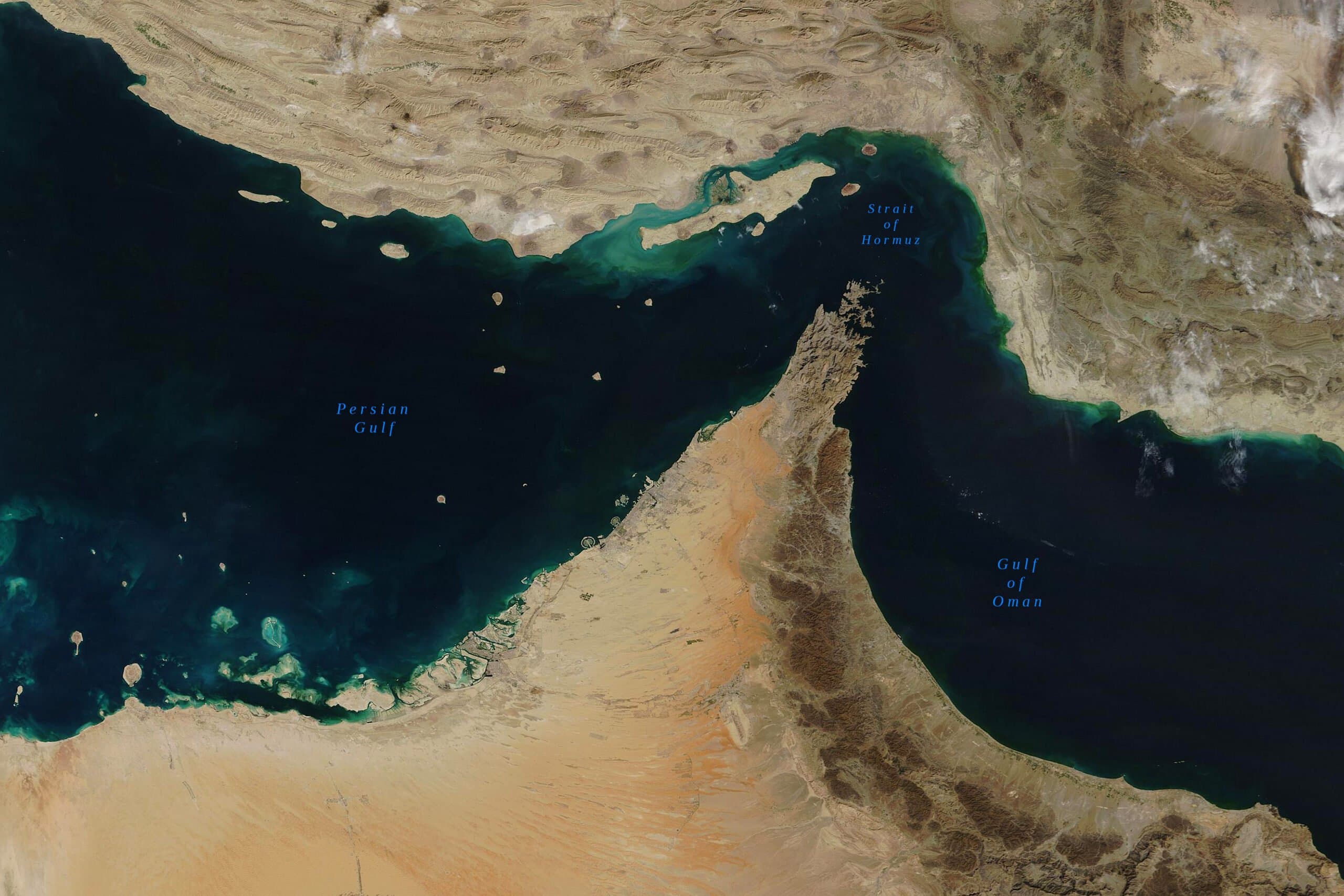
When will traffic at the Strait of Hormuz return to normal?
PM $19.59M · K 10.77M contractsStrait of Hormuz traffic returns to normal by December 31?
Kalshi: Will the 7-day moving average of transit calls through the Strait of Hormuz as reported by the IMF PortWatch be above 60 before January 1, 2027?
Related contracts
Will Strait of Hormuz traffic return to normal in October?
Kalshi: Will the 7-day moving average of transit calls through the Strait of Hormuz as reported by the IMF PortWatch be above 60 before November 1, 2026?
Related contracts
Strait of Hormuz traffic returns to normal by October 31?
Kalshi: Will the 7-day moving average of transit calls through the Strait of Hormuz as reported by the IMF PortWatch be above 60 before November 1, 2026?
Related contracts
Related or unreviewed contracts may settle differently. Their gap is not an equivalent-contract comparison.
Saved prices; check contract rules.

Peak Strait of Hormuz traffic day? (10/26 - 11/1)
K 253 contractsHow many ships transit the Strait of Hormuz week of October 26?
PM $7.4K
How high will average weekly Hormuz traffic get in 2026?
K 204.6K contracts
Traffic through the Strait of Hormuz? (10/19 - 10/25)
K 273.0K contractsTraffic through the Strait of Hormuz? (10/26 - 11/1)
K 16.8K contractsMarket Insights
Price gaps of 2 pp+
0
Same-question pairs
0
No outcomes on this page have been reviewed as the same question on both platforms yet.
Price differences do not establish arbitrage. Check each pair's review, current order prices, fees and settlement rules.