
Which Senate races will be within 5%?
PM $118.3K
1
19
Which Senate races will be within 5%?
PM $118.3K
1
19
Current odds
Snapshot from
As of Oct 21, 2026, 12:00 AM UTC, the highest-priced outcome on Polymarket is Montana at 72.5%.
Polymarket
- Montana72.5%
- Michigan71%
- Maine68.5%
- Iowa68.5%
- Texas66%
Yes prices. They are not order quotes; check each platform's rules, fees and live prices before trading.
AI Analysis
Trader mode: Market mechanics, assumptions and risks
PM $118.3K
Reported volume · provider units
19
Saved contracts
0
Same-question pairs
Source snapshot: Oct 21, 2026, 12:00 AM UTC
About This Event
The 2026 midterm elections are scheduled to be held on November 3, 2026. This market will resolve to "Yes" if the specified 2026 Senate race has a margin of victory of 5% or less. Otherwise, this market will resolve to "No". For the purpose of this market, the “margin of victory” is defined as the absolute difference between the percentages of valid votes received by the first- and second-place candidates. Percentages of the valid votes received by each candidate will be determined by dividing the total number of valid votes each of the top two candidates receives by the sum of all valid votes cast in the election. For elections that include runoffs, ranked-choice, or other multi-round elections, the relevant margin of victory will be that of the round in which the winner is determined. The resolution source for this market will be the state election authority of the specified state, however, a consensus of credible reporting may also be used.
This analysis is awaiting a background update, so its prices may be older than the odds above.
Snapshot observed 2026-10-18T03:00:06.384Z. This analysis describes that snapshot and is not a live news update.
What the contract measures
The Polymarket event "Which Senate races will be within 5%?" contains separate contracts on individual 2026 Senate races. Each market resolves "Yes" if the specified race has a margin of victory of 5% or less, and "No" otherwise [1]. The rules define margin of victory as "the absolute difference between the percentages of valid votes received by the first- and second-place candidates," with each percentage calculated by dividing a candidate's valid votes by the sum of all valid votes cast [1]. For runoff, ranked-choice, or other multi-round elections, the margin is taken from the round in which the winner is determined [1].
The resolution source is the state election authority of the specified state, although "a consensus of credible reporting may also be used" [1]. The rules state that the midterm elections are scheduled for November 3, 2026, and the listed end time is 2026-11-04T04:59:00.000Z [1]. A listed end time is a close time, not a confirmed result or resolution.
Reading the snapshot
The provider observation time is 2026-10-18T03:00:06.384Z, and the source was retrieved at 2026-10-18T05:02:00.857Z [1]. These prices describe that earlier observation and should not be read as live quotes.
Among the included markets, Yes prices range from 0.72 for Iowa to 0.325 for New Hampshire [1]. Texas is listed at 0.70, Maine at 0.67, and Michigan at 0.63 [1]. Each figure is a single contract's Yes price in one snapshot. These are not executable quotes or verified probabilities. Because each race is a distinct contract with its own margin threshold and vote base, a difference between two races does not by itself indicate an arbitrage opportunity, and the prices should not be averaged together.
What remains uncertain
Only 12 of 19 markets in this provider event are included [1]. The sample is partial, and the ranking reflects the saved Polymarket event only. The included markets should not be treated as the complete field, and no conclusions should be drawn about the excluded races.
The evidence does not explain why prices are at their observed levels or how they have changed. It also does not report trader counts or volume-based liquidity. Only Polymarket is represented here, so differences in wording or close times on other platforms cannot be assessed. Finally, the evidence contains no election results.
References
- Polymarket: Which Senate races will be within 5%?. Provider data observed 2026-10-18T03:00:06.384Z.
AI-generated analysis based on market data. Not financial advice.
Saved Oct 18, 2026 UTCOverview
This PredictPedia entry covers a Polymarket event titled "Which Senate races will be within 5%?" in the Politics category. The event groups separate contracts, one for each 2026 U.S. Senate race it includes. Each contract asks whether a specified race will have a margin of victory of 5% or less. The rules state that the 2026 midterm elections are scheduled for November 3, 2026 [1]. The event's listed end time is 2026-11-04T04:59:00Z [1]. The contract defines "margin of victory" as the absolute difference between the percentages of valid votes received by the first- and second-place candidates. Each candidate's percentage is calculated by dividing that candidate's valid votes by the sum of all valid votes cast in the election [1]. For elections with runoffs, ranked-choice voting, or other multi-round formats, the relevant margin is the one from the round in which the winner is determined [1]. A contract resolves to "Yes" if the specified race's margin is 5% or less, and to "No" otherwise [1]. The rules name the state election authority of the specified state as the resolution source, though a consensus of credible reporting may also be used [1]. Because the contract turns on a calculated percentage gap rather than on who wins, a race can satisfy the Yes condition regardless of which party or candidate prevails. The market prices shown on this page are snapshots taken at a specific observation time. They are not executable quotes, and they are not verified probabilities of any outcome. The per-race prices should be read alongside the sample coverage described in the scope note.
Historical Context
The Michigan Senate election page notes that Democratic incumbent Gary Peters is not seeking a third term [3]. Beyond that, the supplied sources do not provide further background on the history of these races or of the market.
Why It Matters
The contract measures how close a race is expected to be, not who will win it. Under the stated rules, a race with a margin of 5% or less resolves Yes, which makes the contract relevant to observers interested in competitive Senate contests [1]. The margin is calculated from valid votes only, and for multi-round elections it uses the round that decides the winner [1]. The resolution source is the relevant state election authority, with credible reporting allowed as a consensus backup [1]. The sample on this page covers 12 of 19 markets in the saved provider event, so it is a partial sample rather than the full field of Senate races in the event [1]. Each included market's price reflects the observation time shown on this page, and the prices should not be compared as a ranking across different events or providers.
Snapshot context
The latest published provider snapshot for this topic was observed on 2026-10-18 at 03:00 UTC. It contains listings from Polymarket. Market descriptions and listed closing times define the contracts; they do not establish that the real-world outcome has occurred. This article does not include a separately verified news update. [1]
Frequently Asked Questions
What does a Yes outcome mean in this contract?
A Yes outcome means the specified 2026 Senate race has a margin of victory of 5% or less, where margin is the absolute difference between the percentages of valid votes received by the first- and second-place candidates [1].
How is the margin of victory calculated?
Each of the top two candidates' percentages equals their valid votes divided by the sum of all valid votes cast in the election, and the margin is the absolute difference between those two percentages [1].
What happens in an election with a runoff or ranked-choice voting?
The relevant margin is the one from the round in which the winner is determined [1].
Which source determines how the market resolves?
The resolution source is the state election authority of the specified state, though a consensus of credible reporting may also be used [1].
AI-written background. References identify the evidence used; Wikipedia links under Learn More are additional reading. Prices and provider rules are dated snapshots. This is not financial advice.
Related prediction markets
Prices are catalog snapshots and may have changed. Check each market's rules and observation time.

Which Senate races will be within 5 points?
K 37.1K contracts
Which Senate races will be within 1%?
PM $25.6K
Which Senate races will be within 1 point?
K 6.2K contracts
How many Senate and Governor races will Republicans win in Harris states?
K 31.7K contracts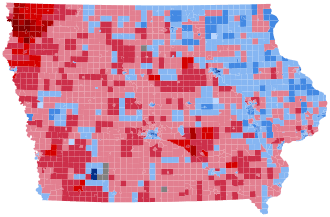
Iowa Senate and Governor Combo
PM $29.1K · K 23.9K contractsWill Democrats sweep the Iowa Senate and Governor elections?
Kalshi: Will the number of Iowa races won by the Democratic Party among IA-01, IA-02, IA-03, the U.S. Senate seat, and the Governorship during the November 3, 2026 general election be exactly 5?
Related contracts
Related or unreviewed contracts may settle differently. Their gap is not an equivalent-contract comparison.
Saved prices; check contract rules.

Dems' best tossup Senate race?
PM $11.6KMarket Insights
Price gaps of 2 pp+
0
Same-question pairs
0
No outcomes on this page have been reviewed as the same question on both platforms yet.
Price differences do not establish arbitrage. Check each pair's review, current order prices, fees and settlement rules.