
Peak traffic through the Strait of Hormuz? (11/9 - 11/15)
K 97.9K contracts
1
8
Peak traffic through the Strait of Hormuz? (11/9 - 11/15)
K 97.9K contracts
1
8
Current odds
Snapshot from
As of Nov 12, 2026, 3:00 PM UTC, the highest-priced outcome on Kalshi is Above 3 at 95.5%.
Kalshi
- Above 395.5%
- Above 484.5%
- Above 567.5%
- Above 637%
- Above 721.5%
Yes prices. They are not order quotes; check each platform's rules, fees and live prices before trading.
AI Analysis
Trader mode: Market mechanics, assumptions and risks
K 97.9K contracts
Reported volume · provider units
8
Saved contracts
0
Same-question pairs
Source snapshot: Nov 12, 2026, 3:00 PM UTC
About This Event
11/9 - 11/15 If the highest single-day number of transit calls through the Strait of Hormuz as reported by the IMF PortWatch is above X from Nov 9, 2026 to Nov 15, 2026, then the market resolves to Yes. The Expiration Value is determined by identifying the highest single-day count from Nov 9, 2026 to Nov 15, 2026. The market will resolve no earlier than Tuesday at 9 AM following the end of the period, once complete data is available.
This analysis is awaiting a background update, so its prices may be older than the odds above.
Snapshot observed 2026-11-11T03:00:05.967Z. This analysis describes that snapshot and is not a live news update.
What the contract measures
This snapshot covers a Kalshi event asking about peak traffic through the Strait of Hormuz for November 9 to 15, 2026 [1]. The event rules say that if "the highest single-day count from Nov 9, 2026 to Nov 15, 2026" is above a threshold, the market resolves to Yes, and the count is based on transit calls "as reported by the IMF PortWatch" [1]. Each listed contract uses a different threshold, from more than 3 to more than 10 [1].
The rules also state that the market "will resolve no earlier than Tuesday at 9 AM following the end of the period, once complete data is available" [1]. The market records list an end date of 2027-02-15 for every contract, but the source states that its listed end time was "not supplied" [1]. The end-date field is a provider record, not an announced resolution date, and the evidence does not say when resolution will occur.
Reading the snapshot
The provider observed these markets at 2026-11-11 03:00 UTC, and the record was retrieved at 03:37 UTC the same day [1]. These prices describe that moment only. They are not live quotes, not executable prices, and not verified probabilities.
Within this single event, the Yes prices fall as the threshold rises. The more-than-3 contract was priced at 0.955, the more-than-4 at 0.845, the more-than-5 at 0.725, the more-than-6 at 0.435, the more-than-7 at 0.245, and the more-than-8 at 0.075. The more-than-9 and more-than-10 contracts were each priced at 0.015 [1]. The No prices for each contract are the complement of these values in the snapshot [1].
The sample is complete for this event. All eight saved markets are included, and the record reports no partial sample [1]. Because the sample comes from one platform and one event, no cross-platform comparison applies. Volume and trader counts are not in the evidence, so the snapshot says nothing about liquidity or how many participants hold each view.
What remains uncertain
The evidence does not explain why prices sit where they do. It also does not establish that the provider lists every possible real-world outcome. The source warns that the saved markets "do not establish that the providers list every possible real-world outcome" [1]. The provider status is recorded only as "active" [1], and no other status changes appear in the supplied evidence.
Readers should also note that the data count is based on IMF PortWatch reporting, and the evidence does not describe any changes to that reporting [1]. Any movement after the snapshot time is outside this record.
References
- Kalshi: Peak traffic through the Strait of Hormuz? (11/9 - 11/15). Provider data observed 2026-11-11T03:00:05.967Z.
AI-generated analysis based on market data. Not financial advice.
Saved Nov 11, 2026 UTCOverview
This contract is a Kalshi event titled "Peak traffic through the Strait of Hormuz? (11/9 - 11/15)" [1]. It asks about the busiest single day for transit calls through the Strait of Hormuz during the week of November 9 to November 15, 2026, as counted by the IMF PortWatch data that the rules name [1]. Each threshold in the event is its own yes-or-no question. For example, one market asks whether the highest single-day number will be more than 3, another whether it will be more than 4, and so on through 10 [1]. The settlement rule is specific. The Expiration Value is the highest single-day count from November 9 to November 15, 2026. If that figure is above the stated threshold X, the market resolves Yes [1]. The rules say the market will resolve no earlier than Tuesday at 9 AM after the period ends, once complete data is available [1]. A contract's resolution therefore depends on the count for the whole window, not on traffic on any one day during the week and not on how the strait looks at the time a price is observed. A separate Wikipedia excerpt describes the background that makes this count unusual. It states that shipping through the strait has been largely blocked by Iran since 28 February 2026, when the United States and Israel launched an air war against Iran [2]. It also says the Iranian Revolutionary Guard Corps issued warnings forbidding passage, boarded and attacked merchant ships, and laid sea mines in the strait [2]. The same excerpt notes that before the war, about 25% of the world's seaborne oil trade and 20% of its liquefied natural gas passed through the strait [2]. These statements are described in that Wikipedia article as of its retrieval, and they do not by themselves establish current traffic levels for November 2026.
Historical Context
The Wikipedia excerpt on the 2026 Strait of Hormuz crisis says that shipping has been largely blocked by Iran since 28 February 2026, when the United States and Israel launched an air war against Iran [2]. It also reports that from 13 April to 29 May 2026 the United States simultaneously blockaded Iranian ports [2]. A second Wikipedia excerpt, on the economic impact of the 2026 Iran war, quotes the International Energy Agency as describing the disruption as the "largest supply disruption in the history of the global oil market" [3]. That article also compares the episode with earlier oil shocks. It says that in several past cases the initial price spike proved larger than the eventual sustained increase, and that oil prices returned to pre-crisis levels within months after some earlier conflicts [3]. These are historical comparisons drawn from the cited sources, and the article does not in the excerpt predict how the November 2026 transit count will turn out [3].
Why It Matters
The contract measures a single number: the highest count of transit calls on any one day in the November 9 to 15, 2026 window, as reported by IMF PortWatch [1]. Because the market is built on a maximum rather than an average, one busy day can satisfy a Yes outcome even if other days are quiet [1]. The strait carries a large share of world seaborne oil and LNG trade, so the count is closely tied to energy shipping [2]. The saved market snapshot lists thresholds from 3 to 10, with observed Yes prices running from about 0.015 at the top thresholds to about 0.955 at the lowest [1]. Those prices are snapshot values from one provider event and are not executable quotes or verified probabilities. A higher-priced threshold is not an arbitrage opportunity against a lower one, because each market has its own rule and threshold.
Snapshot context
The latest published provider snapshot for this topic was observed on 2026-11-12 at 09:00 UTC. It contains listings from Kalshi. Market descriptions and listed closing times define the contracts; they do not establish that the real-world outcome has occurred. This article does not include a separately verified news update. [1]
Frequently Asked Questions
What does the contract actually resolve on?
It resolves on the highest single-day count of transit calls through the Strait of Hormuz from November 9 to November 15, 2026, as reported by the IMF PortWatch data. If that count is above the threshold in the specific market, the market resolves Yes [1].
When will the market resolve?
The rules say the market will resolve no earlier than Tuesday at 9 AM following the end of the period, once complete data is available [1]. The saved market data also lists an end date of 2027-02-15 [1], but that is a listed value in the snapshot and not a stated resolution announcement.
Why does the strait matter for this contract?
A Wikipedia excerpt states that about 25% of the world's seaborne oil trade and 20% of its LNG passed through the strait before the war began in February 2026 [2]. The contract counts transits through the same waterway, so shipping conditions bear directly on the measured number [1][2].
Do the prices show the chance that a threshold will be reached?
No. The prices are snapshots from the saved provider event and are not executable quotes or verified probabilities [1]. Trading volume is also not a measure of liquidity or the number of participants.
AI-written background. References identify the evidence used; Wikipedia links under Learn More are additional reading. Prices and provider rules are dated snapshots. This is not financial advice.
Related prediction markets
Prices are catalog snapshots and may have changed. Check each market's rules and observation time.

Peak Strait of Hormuz traffic day? (11/9 - 11/15)
K 24.4K contracts
Traffic through the Strait of Hormuz? (11/9 - 11/15)
K 241.9K contracts
Traffic through the Bab el-Mandeb Strait? (11/9 - 11/15)
K 70.3K contracts
Strait of Hormuz: highest single-day traffic (November 2026)
K 9.8K contracts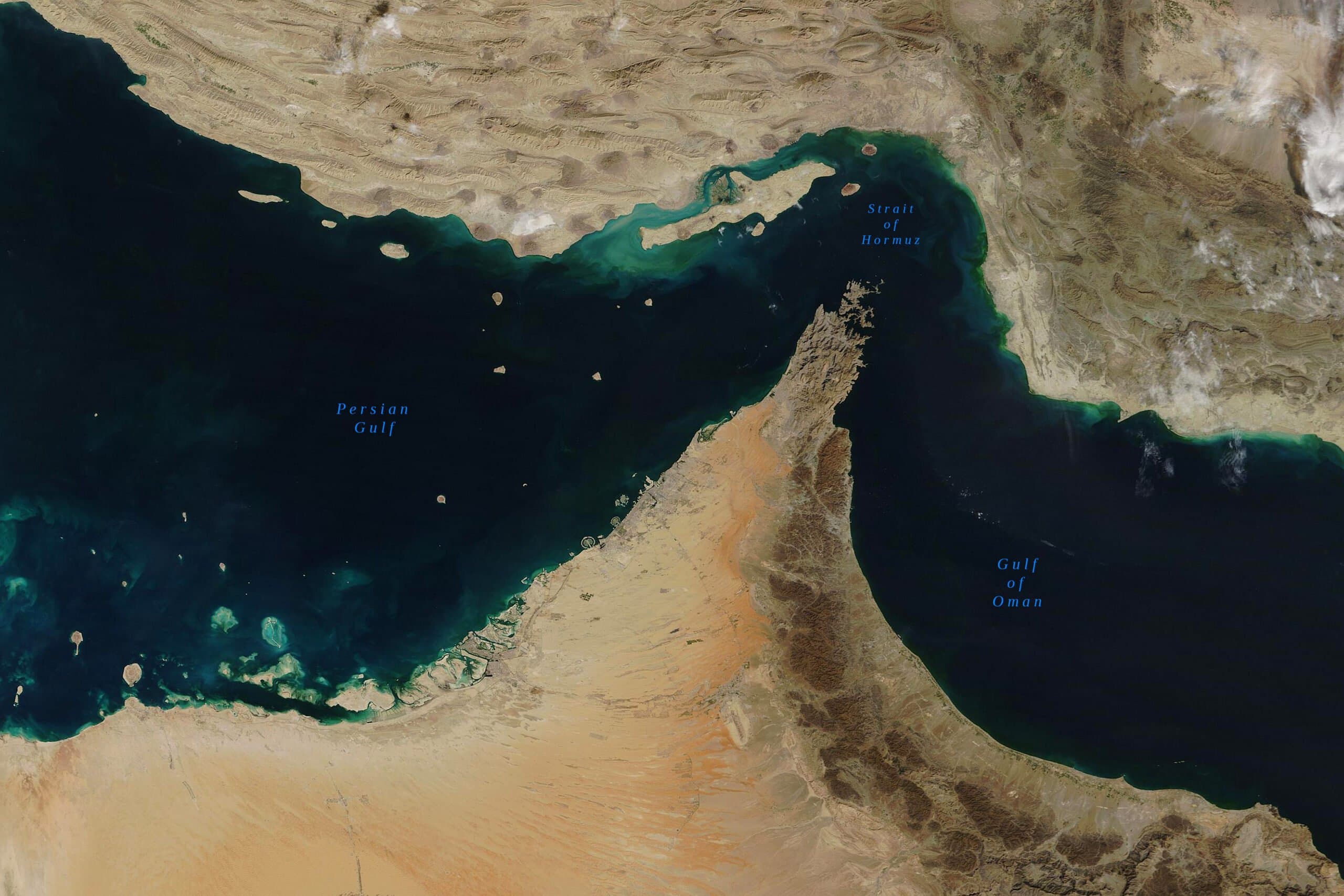
When will traffic at the Strait of Hormuz return to normal?
PM $19.73M · K 9.38M contractsStrait of Hormuz traffic returns to normal by December 31?
Kalshi: Will the 7-day moving average of transit calls through the Strait of Hormuz as reported by the IMF PortWatch be above 60 before January 1, 2027?
Related contracts
Strait of Hormuz traffic returns to normal by November 30?
Kalshi: Will the 7-day moving average of transit calls through the Strait of Hormuz as reported by the IMF PortWatch be above 60 before December 1, 2026?
Related contracts
Related or unreviewed contracts may settle differently. Their gap is not an equivalent-contract comparison.
Saved prices; check contract rules.
How many ships transit the Strait of Hormuz week of November 9?
PM $843.75Market Insights
Price gaps of 2 pp+
0
Same-question pairs
0
No outcomes on this page have been reviewed as the same question on both platforms yet.
Price differences do not establish arbitrage. Check each pair's review, current order prices, fees and settlement rules.
